In frontline retail hiring, speed is everything. If the process is too slow, candidates take offers elsewhere, and stores are short-staffed, hurting both service and revenue. AI-powered automation is now helping some organizations close that gap, cutting hiring times, saving thousands of hours, and driving measurable financial value for the business.
The organizations seeing real results started with the problem, not the technology, because layering AI onto a process that isn’t working only makes things worse. They also had to answer a question that rarely gets asked: how quick is too quick, and when does speed start to feel impersonal? The goal isn’t to remove humans from the hiring process. It’s to remove the noise so candidates reach the right people faster.
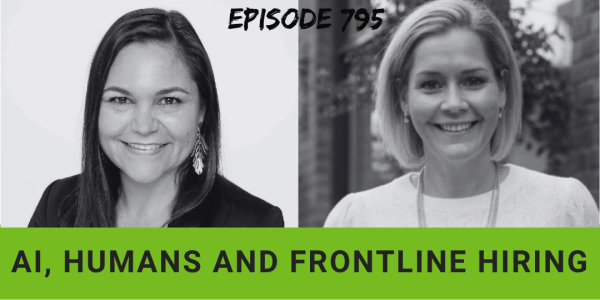
My guests this week are Stef Nikitas, Director of Talent Acquisition at Ace Hardware, and Rachel Allen, Senior Director of Talent Acquisition at 7-Eleven. In our conversation, they share how they transformed frontline hiring with AI, the results it delivered, and where they chose to keep humans firmly in the process.
In the interview, we discuss:
• Why speed matters in frontline hiring
• The danger of automating broken processes
• Leading with the problem, not the technology
• How quick is too quick?
• What remains human and why
• How automation improves the candidate experience
• Time savings and measurable business value
• Advice for TA on change management
• What does the future look like
Follow this podcast on Apple Podcasts.
Follow this podcast on Spotify.
00:00
Matt Alder
In frontline retail, hiring speed can make or break you. AI powered automation is already delivering real results, but if the process underneath isn’t working, automation only amplifies the problem. So how do you get this right? Keep listening to find out. Support for this podcast comes from Paradox. You know, I’ve recently heard some crazy success stories when it comes to hiring with AI. FedEx is sending offers to candidates within 10 minutes. General Motors saved $2 million in recruiting costs in a year. Chipotle reduced time to hire from 12 days to 4 and 7. Eleven is saving their store leaders 40,000 hours per week. The craziest thing is all of these companies did it by leveraging the same technology. Paradox acquired by Workday in 2025, Paradox pioneered conversational hiring.
01:00
Matt Alder
Whether acting as your ATS or automating the hiring process on top of your existing hcm, Paradox streamlines the entire experience. And if you’re a workday customer, Paradox now operates seamlessly within their Talent acquisition suite as the Workday Paradox Candidate Experience Agent. Driven by a 247 AI assistant, Paradox can handle up to 95% of the hiring process for deskless hiring teams or just automate specific time consuming tasks like screening, interview scheduling and onboarding to allow recruiters to focus on recruiting. Paradox continues to help hundreds of the world’s top employers simplify hiring and save money while creating great candidate experiences. Spend more time with people, not software. You can find out more by going to Paradox.ai. That’s Paradox.ai.
02:19
Matt Alder
Hi there. Welcome to episode 795 of Recruiting Future with me, Matt Alder in Frontline. Retail Hiring speed is everything. If the hiring process is too slow, candidates take offers elsewhere and stores are short staffed, hitting both service and revenue. AI powered Automation is now helping some organizations close that gap. Cutting, cutting hiring times, saving thousands of hours in the recruiting process and driving measurable financial value for the business. The organization seeing the real results started with the problem they’re trying to solve, not the technology. Because layering AI onto a process that isn’t working only makes things worse. They also had to answer a question that rarely gets asked. How quick is too quick? And when does speed start to feel impersonal? The goal isn’t to remove humans from hiring, it’s to remove the noise so candidates can reach humans faster.
03:21
Matt Alder
My guests this week are Stef Nikitas, Director of Talent Acquisition at Ace Hardware, and Rachel Allen, Head of talent acquisition at 7/11. In our conversation they shared how they transformed frontline hiring with AI in their organizations, the results it delivered and where they choose to keep humans firmly in the process. Hi Rachel. Hi Stef.
03:44
Matt Alder
Welcome to the podcast. It is an absolute pleasure to have you on the show. Please could you both introduce yourselves and tell everyone what you do.
03:52
Stef Nikitas
I’m Stef Nikitas. I’m the Director of Talent Acquisition at Ace Hardware. Ace to helpful place. I have been with the company for the last 11 years and I have really built up the function to what it is now. I was the OG in recruitment. Started out as a part time sourcer.
04:07
Matt Alder
Wow.
04:07
Stef Nikitas
Worked my way through recruiting pretty much across the entire company in all of our business units and areas. And then Covid kind of disrupted my world just like everybody else. Built from the ground up our TA operations function. Got the opportunity to lead that at the tail end of COVID and then a little over two years ago was given the opportunity to now lead the entire function as the director.
04:30
Matt Alder
Fantastic, Rachel.
04:33
Rachel Allen
I am Rachel Allen and I lead town acquisition at 7/11 and I am one of many boomerangs at 7/11. So this is my second stint there. I was there for five years for the first go around and then left and went to a company called Schneider electric for about six or seven years and then just came back to 7/11 over four years ago. This point and within the talent acquisition world we’ve got field recruitment, all of field recruitment, what we call store support center recruitment, which is really the above store, non field recruitment, and then the TA operations team recently taking on strategic workforce planning as well.
05:13
Matt Alder
Talk us through some of the challenges that you’re facing in the industry at the moment.
05:17
Stef Nikitas
So in retail, which is where we both sit, I would say like our CEO for ACE always talks about you have to differentiate or you’re going to die. Right. Like retail is fast moving, it’s ever changing. It’s very much based on the customer experience, on the brand promise. So from a talent acquisition standpoint, our big challenge is our customers are our candidates and our candidates are our customers. So we have to make sure that the experience is on par with what a consumer has in the store from a TA standpoint. And candidate experience I think really had kind of a second birth during COVID when everything was thrown into disruption.
05:51
Stef Nikitas
So I would say that is the number one challenge that we always try to solve for everything that we do and how we do it is it creating a good experience because you don’t want that experience to transition to a bad experience on the consumer side, because then that impacts the bottom line. And as far as challenges, I would say in my world particular right now, it’s skilled trades, finding plumbers, electricians, HVAC technicians. I feel like we’re doing a really good job on the corporate front in our subsidiaries as well as our distribution centers. But the skill traits, a, they can pick anywhere they want to go, you know, $0.25 more across the streets, they’re gone. You don’t have the benefits they want, they’re gone. You don’t look at them the right way, they’re gone.
06:30
Stef Nikitas
So finding ways to really engage that audience and creating a good experience for them, not only from an onboarding and recruitment standpoint, but then an employment experience that they want to stay with you is probably the biggest challenge in my business today. Yeah.
06:45
Rachel Allen
And I would echo a lot of what Stef just said. For being in retail, it is so important to remember that your candidates are your customers. And if they have a poor customer or a candidate experience, they can vote with their dollars and end up not, you know, coming back to the store. So you really need to make sure that the candidate experience is the North Star. And to Stef’s point, that continually changes and evolves. So you can’t just have the set it, forget it strategy and hope that it continues to work the way that it does. You have to make sure that you’re listening to the voice of your customers, which are your candidates, to make sure you’re delivering an experience that they expect.
07:26
Rachel Allen
And I would also say, you know, as we enter the world of AI as humans, change can be hard. And, oh, yeah, we don’t know what we don’t know, and that can be a struggle. Right. So one of my personal challenges is bringing the team along on this journey together, having leaning into it so that we can help design what that future looks like versus letting it just wait and happen to us. Because then it could be some, you know, something that we don’t want or don’t like. So we need to make sure we have a voice and a stance on the direction that we want it to go. I also think we’re at a point right now where it makes sense to slow down, to speed up.
08:09
Rachel Allen
And what I mean by that is, you know, layering AI on top of a process that isn’t working only exasperates a broken process. Right. So I think it’s time for everybody to slow down and foundationally make sure they’ve got certain things in place. So that when you embed an AI into the different processes and the ways that you work, it actually adds value. And what I love at this conference, you’re really starting to hear that AI is not just a one for one replacing people.
08:42
Matt Alder
Yeah.
08:42
Rachel Allen
But instead it is empowering and enhancing the work that humans do so that they can focus on the moments that matter. And so that’s. That’s really what we’re focusing on right now, is not getting over our skis, making sure we’re slowing down to speed up. We. We have the foundation. But then making sure, well, being wise, everyone’s doing okay in a tremendous time of change and transformation, that you’re not losing your team along the way to just, you know, back to change, you know, who moved my cheese. It can be scary. So.
09:13
Matt Alder
Yeah, absolutely. And as you mentioned, we’re recording this at Unleash in Las Vegas where it is very hot at the moment. And we’re also. We’re also talking in a corridor in the best tradition of conference poll, podcast recording. Why not? But yeah, exactly.
09:27
Stef Nikitas
Making it work.
09:28
Matt Alder
But you’re both on stage later, presenting together. Tell us a little bit about what you’re presenting about as a particular sort of solution to a challenge that you had. Just give us a kind of a quick sort of overview of what you’re going to be telling everyone.
09:41
Rachel Allen
Sure. So we’re both going to be talking about our journey through the frontline hiring and what we have done to enhance it. And we have a.
09:50
Stef Nikitas
With AI.
09:51
Rachel Allen
With AI. Thank you. Yep. A couple of little different perspectives. While we’re both retail and we both use AI for the frontline hiring, we both have a little bit of a different perspective. So I’ll let Stef talk to hers. But for us, for 7 11, we automated 95% of our frontline hiring process. But were very clear in when we set out to do that, number one that were solving for. For an actual challenge and a problem. We identified what our challenge was first and foremost, made sure it aligned to our strategy. We did not go after the shiny object first. So that’s something that we really like to talk about, is you don’t lead with the technology, but instead lead with what the problem is that you’re trying to solve for.
10:35
Rachel Allen
And then were very intentful and purposeful around not removing the human from the process, but instead removing the noise from the process so that we could get our candidates to the humans faster and focus on those moments that matter, like we talked about. So I’ll be sharing the journey of 711 and how we implemented AI at frontline hiring.
10:56
Stef Nikitas
So for ace, very similar challenges to Rachel. For us, the big thing was during COVID like I said, very disrupted. In our world, were deemed an essential business. So very quickly, within like 90 days, our hiring needs like tenfolded, we needed to hire thousands of people into our distribution centers, which in Rachel’s world, the front line is the stores. In my world, frontline means distribution centers because the stores are all independently owned. So I needed to hire warehouse specialists, CDLA drivers by the thousands in a very short period of time. And we identified very quickly. Our applications are too long. They’re hiding behind account creations. People are falling into black holes. We’re having no calls, no shows. It just dragged out the process. It was a very bad experience. So we really needed to find a way to address that.
11:45
Stef Nikitas
And then the scheduling back and forth. Especially when you work with a high volume, unskilled workforce that is not necessarily tied to their phones or emails like we are on a daily basis, we really needed to find a solution. And so paradox was presented to us as an option. And we looked into really automating that front end experience and how the candidate finds the opportunity, applies for the opportunity. So shortening that application and then the scheduling, like letting the candidate dictate when they have availability and want to come to interview, as opposed to traditionally the hiring manager tells you when they’re available. And that for us really was the game changer in that journey to get to where we are today.
12:23
Matt Alder
And you talked a little bit about how the experience for the candidate changed there. What about from the 711 perspective? How did the experience for the candidates sort of evolve?
12:31
Rachel Allen
Yeah, very similar. So when I came over to seven, we had recently done the acquisition of Speedway. So just adding a little bit of context that there was some complexity going through an acquisition integration. But regardless of brand, when you looked across all banners, we saw very similar concerns and issues. And it was to Steph’s point, it was moving too slow and there was the black hole. So the way that we used to solve for high volume hiring was using Evergreen Rex and. And that just means that the wreck is always on. There were some cases where we would have individual store leaders that would open a wreck only when they needed it.
13:08
Rachel Allen
But you’re talking about a store leader who is the hero in our operations that wears 20 different hats every day, Having to stop and open a wreck and go through that manual process. It was not ideal and it impacted the candidate experience. Whether you had that Evergreen wreck On or the store leader had to take the time to manually open it. The candidates still got lost into this black hole because there wasn’t the time to search through and go through the candidates and set up the interviews in the back and forth. And because were moving so slow, were losing our candidates to the competition down the road within a couple of days. Right. We were taking too long. So the experience for our candidates greatly improved because we are 247 operation, but weren’t responding or supporting our candidates 24. 7 In any way.
13:55
Rachel Allen
Now our candidates can apply at 2am and they get an instant connection, you know, with our assistant that can engage with them on the moment. So that really improved the candidate experience. When we did survey and reach out to ask what they liked about it, they loved instantly being able to engage and ask questions and quickly get interviews scheduled, which dramatically improved our no show issue. So prior to implementing Paradox, which is the solution went with for Frontline hiring. Prior to that, I talked about the black hole. But then for us, two candidates no showed and get ghosted all the time.
14:32
Matt Alder
Yeah.
14:32
Rachel Allen
Mostly because they already got three offers down the road.
14:35
Matt Alder
Yeah.
14:35
Stef Nikitas
By the time we finally got to them.
14:37
Rachel Allen
By the time we finally got to them. So by solving for speed or you know, we solved for the candidate ghosting, but we also solved for quality that we didn’t realize that we would solve for because by solving for speed, were getting to that top talent faster. And so what was interesting is we actually saw our attrition go down and retention go up, which was really great.
14:59
Matt Alder
Yeah, it makes a lot of sense. And what other sort of business value came out of this in terms of results for both of you?
15:05
Stef Nikitas
I know the big thing from our standpoint, from a recruiter, time savings like were able to see, save like 6,000 hours a year in just scheduling. Wow, that’s a lot, right? It now enables my recruiters to actually do some project work, to spend some time on sourcing, to actually have a conversation with the hiring manager as opposed to just running to and from constantly. So like giving them some time to really slow down and be more intentional, to actually become more advisory, influential, strategic, not just tactical and execution based. There’s still that nta, let’s be honest. We are still very tactical and we are still very reactive in many ways. But I feel like on our journey to where we want to go, eventually this really has helped set them up to have those components, I guess in their work now.
15:49
Stef Nikitas
And I would say the other piece of it for us, really was around decreasing turnover. So, like, since we implemented to the end of last year, I would say we’ve. We’ve decreased our turnover by about 15% across the distribution centers, which in the world of warehousing is huge.
16:06
Matt Alder
Yeah.
16:06
Stef Nikitas
Like, during COVID we would be like, somewhere in the mid-1100s as far as turnover, which was totally normal at that point. Now we’re sitting, like, at this point in time, we’re somewhere around 60% collectively, which is phenomenal.
16:19
Matt Alder
Yeah.
16:20
Stef Nikitas
And having that experience is a big part of that.
16:22
Matt Alder
Yeah, absolutely. Absolutely.
16:25
Rachel Allen
Yeah. For us, a big component of it was time savings, too. So we looked at the time were able to save our store leaders, and it was over 40,000 hours a week, which equaled over 2 million hours a year in hours saved for our store leaders, which is huge. You know, when you do free up that time and energy, there’s more ability to focus on the actual employee experience then including onboarding, which also helped with the whole attrition issue that we had before. In addition to that, went from over 10 days of hiring, we are now less than three days. And frontline, that’s huge. Again, you’ve got to get to the talent first before they get the five offers down the road. So those were some really big metrics that were impactful, that had a lot of meaning to the business.
17:14
Rachel Allen
And for us, the reason that this was a concern, we knew that the business needed to care about is when a store is not properly staffed, it’s a vicious cycle. When one person isn’t there at the store, the rest of the employees have to pick up the slack, and that gets cumbersome. And so maybe another person leaves, and then you’re impacting the customer experience, and then you’re hitting the bottom line. Right. It’s a revenue issue. You’re hitting the bottom line if you’re not fully staffed. And so we knew this was something we needed to solve for. And by automating 95% of the process, saving our store leaders over 2 million hours a year and taking us from 10 days to less than 3 was hugely impactful.
17:55
Stef Nikitas
If I may add, like what you said, like, it’s funny, when I listen to your impact is immediate. My impact is delayed because the distribution center feeds the in store.
18:04
Rachel Allen
Right.
18:05
Stef Nikitas
Experience. Right. From a product standpoint. So if I don’t have the people in the D.C. to move the product now, my service levels are affected, my revenue is affected, because if the product’s not available in the store, even if I have the Staff in the store, they’re not able to sell it to the consumer. The consumer. Consumer is going to go somewhere else. There is the lost dollars right there.
18:24
Matt Alder
I wanted to just ask about the time aspect of things because you’ve both said how important it is to respond quickly so the candidates don’t get competing offers. So they’re getting that level of service that they get if they’re a customer of your business.
18:39
Matt Alder
We kind of live in a world.
18:40
Matt Alder
Where theoretically AI could make recruiting almost instantaneous in some circumstances. How quick is too quick? Where’s the human AI balance?
18:50
Stef Nikitas
There is a fine line.
18:51
Matt Alder
Where’s that? Where’s that line?
18:52
Rachel Allen
Yeah, and that’s a really great question and I think the best way to answer it is to I would recommend asking the candidates what they want. So the experience that we provide the candidates that we see at the front line is not the same as the experience we provide at the store support center hiring. And that’s on purpose because that’s what we hear our candidates telling us what they want to. So through the surveys they will say if it felt inauthentic or they didn’t feel that they were getting the attention that they needed. And we’ll often see that at the store support center side versus at the front line. If they didn’t get immediate connection, they immediately moved on. And so for the, for us, we wanted to be immediate for our frontline, but we do not mimic that in other processes.
19:39
Rachel Allen
And that’s on purpose. We are meeting our candidates where they are. We are meeting our candidates with the needs they’re saying they have and the experience that they want to have and design a process to deliver on their expectations versus what’s easiest and best for us.
19:51
Matt Alder
Yeah.
19:52
Rachel Allen
And again, to what Steph brought up earlier, our candidates are our customers. And so if we’re going to be customer obsessed and keep customer as our North Star, then that means we have to do the same thing for our candidates. So I think, you know, on the non frontline side of hiring, I still think an immediate acknowledgment of wanting to engage is still makes sense. I don’t think there’s any such thing as too fast for that. What can be too fast and feel inauthentic on the non store side is too quick of a disposition message. Even if it’s because maybe right after the candidate applied we actually moved someone else to hire and we’re closing the wreck it that we, if we don’t have the opportunity to explain that yes. Perception is.
20:45
Matt Alder
Yeah.
20:46
Rachel Allen
AI dispositioned me.
20:47
Matt Alder
Yeah, absolutely.
20:48
Rachel Allen
So we do need to be thoughtful in the experience that we provide. Depending on the roles that they’re applying for and the depending on. Depending on where in the process our candidates are. Yeah.
20:59
Matt Alder
Stef.
21:00
Stef Nikitas
Yeah. From, from ACEs perspective, I would say it really centers around the brand for us on how much automation we include in the process. So you think of companies out there that have it fully automated, where a candidate goes on the website, applies, goes through the screening process, has an interview with AI robots, gets hired on the spot, never spoke to a human, shows up the next day and has a job.
21:21
Matt Alder
Yeah.
21:21
Stef Nikitas
ACE is never going to be that place. Our stores don’t have kiosks for self checkout for a reason. Our our slogan, ACE to helpful place is not just a jingle, it is a jingle for the consumers. Right. That’s how we’re known. But when you really think about this helpful piece, it’s the pillar of our culture and that comes with human interaction. And it’s not just in the store. When you walk in, you’re greeted by a friendly face that asks you, what can I help you find? Today we take that magic question, what we call it the magic question of helpful into everything that we do on the corporate side. Every process, every strategy. And from a TA standpoint, that means we have to be very intentional in how the candidates go through that process and where the human decisions and the human interaction happens.
22:04
Stef Nikitas
So we will never be a company that will fully automate anything.
22:07
Matt Alder
Yeah, makes sense.
22:08
Stef Nikitas
And that can be good and bad depending on who we talk to.
22:11
Rachel Allen
Yeah, agree.
22:12
Stef Nikitas
But for us, we know the right way is to go the way with the brand because that’s what people expect even in a fast moving market where everybody is cutthroat and looking for the, you know, to fill their funnel and hire as fast as they can. We will take that step back to make sure we not only get the right quality, but we’re representing the brand in an accurate way too. Because that’s what they’re gonna experience when they transition from candidate to employee because then it will be their mission to uphold that promise moving forward. So we got to find the right balance of automation and human in that process.
22:45
Rachel Allen
Completely agree.
22:46
Matt Alder
So it’s obviously a very disruptive time. There’s lots of TA leaders I know who are listening who are sort of facing this disruption and you know what you’re talking about. Here are two very big change management projects. What advice would you give to TA leaders in terms of, you know, managing Those kind of changes with their TA teams, with their hiring managers and kind of other stakeholders.
23:08
Stef Nikitas
Stakeholders in the business.
23:09
Rachel Allen
One of my favorites.
23:10
Matt Alder
What have you learned?
23:12
Stef Nikitas
So I would say the biggest lesson that I have learned in this is patience as a TA leader because you’re going to field and I’m not kidding, hundreds of questions from it, from your TA leaders or whoever you report to. If it’s the chro, depending on how up to date they are on AI and automation and tech in general, how intimate they are with the recruitment process in some cases. You talked about change management. Just getting them to understand what it is you’re trying to do. Takes a ton of education with it. Legal, data privacy teams, HR compliance, the list goes on. And I feel like, especially right now, we briefly talked about this before we started podcast like the legislation changes that are happening in states around AI is changing the way we have to provide consent options in or out for candidates.
24:04
Stef Nikitas
The way we disclose that we’re using AI in the process, our candidate privacy policies. Right. Like all the legal jargon that nobody reads, but that we still need to protect the company. It’s a lot, right?
24:18
Matt Alder
Yeah.
24:19
Stef Nikitas
But that’s a result of all the vendor partners that we want to implement with and look at. Right. Like we’re a workday shop. So even if I’m trying to do something within workday, they release a new feature or even with Paradox, I’m going through that right now. We’re trying to upgrade to the dynamic chat to apply, where the integration into workday is a little bit more seamless and the changes you make are instant as opposed to having to rebuild on the other side. I’m fielding tons of questions from a team that understands we currently have this solution, but we’re now making some changes to it because it’s bringing in, I’m going to call it the scary term generative AI and it’s changing the way it’s doing it, but the fundamentals are still the same.
24:57
Stef Nikitas
So even when you’re working within the same technology, you’re going to feel those questions so long answer, short patience is probably the biggest thing that I have learned as a TA leader in going down the path on getting any new vendor partner, any new technology, because the moment you’re touching personal data, the questions start.
25:15
Rachel Allen
Completely agree. And I think what’s key through that is making sure you understand how to deliver the wifm. What’s in it for them. I also learned what’s really valuable is to speak the language of the business that you’re speaking with, you know, if you’re talking to the cfo, you’re talking in the process. If you’re speaking to the chief marketing officer, you’re evoking emotion. Right. So understanding your audience, being very clear in what the problem is that you’re solving and what’s in it for them, why they should be on board for this journey we’re about to go on together. And then from there, making sure that change management is embedded in the entire in process from the get go.
25:57
Rachel Allen
It is often seen as an afterthought where you throw together a quick quote, unquote deck comms plan or deck, a timeline and a couple of communications and we check the mark of change management that is not effective change management. And it is after the thought. So it needs to be from the get go, from the beginning, understand what this decision, what this change in process, what this whatever you’re implementing, understanding who it impacts and getting the voice of who it impacts from the get go.
26:29
Matt Alder
Yeah.
26:29
Rachel Allen
Understanding, you know, a lot of times, a lot, I mean, even laws are done in a way that it have great intentions.
26:35
Stef Nikitas
Yeah.
26:35
Rachel Allen
And then once it goes into place, when you see the outcomes, you’re like, oh, that’s not what we intended. That’s not what we wanted. So we have really great intentions of no one is going into this wanting to make lives harder. Everyone’s going in with really great intentions.
26:50
Stef Nikitas
Agreed.
26:50
Rachel Allen
But sometimes we forget to ask the people that it impacts. Right. So from the get go, making sure you understand who all it impacts, understand who your stakeholders are, bring them on the journey with you, actively listen to their opinion and what this means. Actively adjust based on the feedback that they do give you along the way and create these cheerleaders with you that help push it across the finish line. And then you create this pull versus this push kind of a scenario. And then they also feel like they had a say and then their stamp is on it when they, when it does go live. There’s some pride there also that they. That they helped make this happen.
27:30
Rachel Allen
So I think the most important part is change management is huge and needs to happen from the get go, not an afterthought at the end with the thrown together comms plan and understand the. The impact and what’s in it for everybody else and speak the language of those that you’re working with.
27:48
Stef Nikitas
Yeah. Transparency is huge in that.
27:50
Rachel Allen
Yeah.
27:50
Stef Nikitas
Y.
27:51
Matt Alder
So final question. What does the future hold? What do you think the future of talent acquisition looks like?
27:57
Stef Nikitas
Do we have a crystal ball?
27:58
Matt Alder
Well, well, no. But or what do you hope the future of talent acquisition looks like?
28:05
Rachel Allen
I’m actually hopeful that we are entering a world where we are going back to some basics and leaning into being human.
28:15
Stef Nikitas
Even that’ll be our superpower.
28:17
Rachel Allen
It is, I do believe being human is about to be the superpower. And what will differentiate those within the talent acquisition space are those that are really good at being human. Going back to the basics of more of that white glove experience, a concierge experience, bringing candidates through on a much more high touch where again identifying the moments that matter and making sure that the human element of that is very high touch and white glove. I really think that’s where it’s going to go. I do think we are going to see a change in what, you know, the organizations look like as far as where those moments that matter, you know, the people that you have within those roles. I think we’ll see some adjustments there. I also think the Ta Ops teams are about to get bigger.
29:10
Rachel Allen
I think that those are going to get bolstered. There’s role. Whenever new technology comes into, you know, there’s all this talk about what it replaces human wise. What it’s not talking about are all the roles it’s creating. Yes, there’s a lot of new need for things. So it’s more of a shift than it is a one for one trade off of, you know, AI replacing humans. But instead it’s shifting where the focus is. And I think within talent acquisition we’re going to see a shift increasing, increasing what the Ta Ops team does to support and empower our recruitment teams to be able to be more human and focus on those moments that matter and kind of go back to some of the basics.
29:52
Rachel Allen
Yeah, I actually have challenged our team or asked like do you see a world in which maybe you don’t post anymore? Right. Because AI exists for candidates too and the volume of candidates we get with every posting is very hard to go through. A candidate can literally apply to a thousand roles in minutes. Do we stop posting and really start building networks and using our CRMs and truly sourcing and truly nurturing and that old school reaching back out to candidates. I could see a world where maybe that happens potentially.
30:30
Matt Alder
Well, absolutely.
30:31
Rachel Allen
Yeah.
30:32
Stef Nikitas
Yeah, I agree with everything you said. I think based on what we’ve seen in the last 12 months, particularly with AI, you know, ChatGPT, Claude, Gemini, Copilot, whichever one you want to use. There has been this race to like go adapt, go do go automate, automate. It’s jazz hands. Right. I feel like the next six to 12 months are going to be pivotal to really identify, okay, we know now it’s not actually going to replace people.
30:58
Rachel Allen
Right.
30:59
Stef Nikitas
It’s going to replace certain pieces of a job. It’s not able to replace a whole job. So I think that part is starting to calm down a little bit more to reality. And I think that will kind of change the conversations at the officer tables and boardrooms to say, okay, how do we utilize AI to really identify the actual efficiencies that we can create as portions of jobs and functions? No longer trying to replace people with it. As Rachel mentioned, naturally through that, you’re going to decrease headcount sizes on certain teams, which is fair, but you’re also going to add new teams that don’t exist today. Like TA Ops didn’t exist prior to Covid, really. Right. Not like it is now. So I think in that evolution, the recruiter role will naturally change and shift with. With that too.
31:49
Stef Nikitas
We keep talking about the talent advisor. I think that’s even going to change. Like we’re all trying to get them to elevate from reactive and tactical to this advisory, more influential role to have the talents for the hiring managers. But I think even that will further evolve in the next year, 12 months, 18 months, to something that I don’t even know what it’s going to be. But I know one thing for sure. We as TA are no longer seen as an afterthought, like you’re part of personnel. We’re actually now breaking really into our own function and we’re getting the recognition of our own function in a way we’ve never seen before. And what I mean by that is, for the first time, I feel like boardroom CEOs actually see us as we’re building the organization for the organization.
32:31
Stef Nikitas
The people we bring through the front door are leading the organization tomorrow. And through that, naturally, we’re all starting to shift our focus towards correct quality. How do we create more quality, focused candidate pools? Do we do it through the CRMs? Do we do it with LinkedIn? You know, like, what are the tools that we’re going to use to be the best at that in the future? We’re certainly not going to post and pray anymore. I think it’s going to become more of what they’re calling nowadays, quiet hiring, where we don’t necessarily post a role. We’re actually starting to go out and act like an agency recruiter and start building our talent pools through networking, through phone calls, through old fashioned network, the old Rolodex that’s now digital.
33:12
Stef Nikitas
So I think it’s going to like really shift in how we go about it in the future and then we’re going to be able through that and with that connection to building the organization, I think we’re going to now be able to position ourselves strategically to the direct business impact, which is not something HR in general has been able to do very well because same thing, HR hasn’t been given a seat at the table. TA is finally getting that seat at the table because they’re relying on us to bring the top talent more so than ever.
33:40
Rachel Allen
Agree. Add a little to that. Right. The most important asset of any company is its people, period. And that’s becoming more evident as we move into this AI world, which is, I think that’s hopeful to me of a really great future where there is still a focus on the experience of our people and the value in our people. And because there is this understanding now to Steph’s point, that, oh wait, HR and talent acquisition has a huge impact on our most important asset in an organization, which is people, we’ve gotten that seat at the table. We are seen as strategic advisors and leaders and we are consulted on a lot of the largest projects that happen within a company now. So within the TA space, that’s pretty exciting to see.
34:35
Rachel Allen
And just the acknowledgement now around people are the biggest and most important asset of the company and we really need to focus on that. It’s promising. That part’s exciting.
34:45
Stef Nikitas
I agree with you. And I would encourage all the TA leaders out there to really embrace it. It is scary, it is fast moving, it is very uncomfortable. But we all know unless we’re uncomfortable, we’re not growing.
34:56
Matt Alder
Absolutely.
34:57
Stef Nikitas
So I would challenge everyone to follow that path because it’s going to happen if you want it or not.
35:01
Rachel Allen
Yeah. And then if you, like I said earlier, if you don’t lean in and have a point of view and a stance, it’s going to just happen to you.
35:09
Stef Nikitas
Exactly.
35:10
Matt Alder
Rachel, Stef, thank you very much for talking to me.
35:13
Stef Nikitas
Thanks so much for having us.
35:14
Rachel Allen
We appreciate it.
35:15
Matt Alder
My, my thanks to Stef and Rachel. You can follow this podcast on Apple Podcasts, on Spotify or wherever you listen to your podcasts. You can search all the past episodes at recruitingfuture.com on that site. You can also subscribe to our weekly newsletter, Recruiting Future Feast and get the inside track on everything that’s coming up on the show. Thanks very much for listening. I’ll be back next time. And I hope you’ll join me.