
Get my free whitepaper “10 Ways AI Will Transform Talent Acquisition” – Download Now
Transform Talent Acquisition – Find out how my digital course will help you shape the future of talent acquisition in your organization – Click Here
Providing a quality candidate experience remains a significant challenge for many organizations. This challenge has been intensified in recent years by evolving candidate expectations, volatile talent markets, shrinking TA teams, and technology that has yet to be designed with the candidate in mind.
However, are we on the cusp of an era when technology, rather than making the candidate experience worse, can actually help provide the high-quality, personalized candidate experience we have all been seeking?
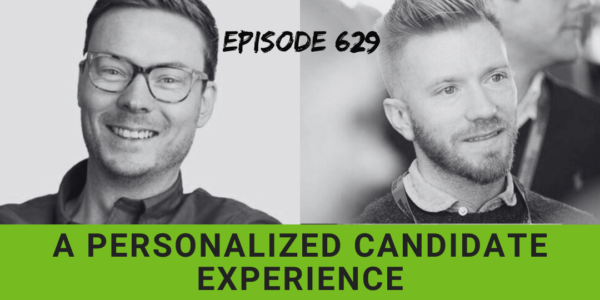
My guests this week are Luke Smith, Talent Acquisition & Experience Specialist at Toyota GB, and Euan Cameron, CEO at Willo. This discussion offers many great insights into what personalization is possible now and what will be possible in the future.
In the interview, we discuss:
• Toyota’s customer-centric approach to candidate experience
• Automating the process
• Busting myths about video interviewing
• Giving candidates control and flexibility
• Reducing bias in Recruitment Marketing
• Wellbing the interview process
• Sentiment analysis
• What does the future look like?
Download Willo’s “Hiring Humans” eBook
Follow this podcast on Apple Podcasts.
Matt Alder: Support for this podcast is provided by Willo, a video interviewing platform for scaling businesses. As the talent market evolves, you’re probably thinking about how to build a more inclusive candidate experience that doesn’t require long days on Zoom, Teams or Skype. Willo is a virtual interviewing platform, where candidates can record responses on their own time using video, audio or text. It’s used by some of the fastest growing businesses like Coinbase, Hotjar and HelloFresh.
Willo’s flexible platform means candidates can truly be themselves and recruiters get a consistent, transparent process. It’s also excellent for the candidate experience. 35% of candidates interview with Willo between the hours of 06:00 PM and 06:00 AM. Willo also integrates seamlessly with over 5,000 business applications such as Workday, Workable, Lever, Greenhouse and Teamtailor. There’s a free trial to try everything. And if you need more, Willo’s tailored plans include features to help you expand your talent pool and streamline recruiting operations, all with 24/7 live support. Request a personalized demo today at willo.video. That’s W-I-L-L-O dot Video.
[Recruiting Future theme]
Matt Alder: Hi, there. Welcome to Episode 629 of Recruiting Future, with me, Matt Alder.
Providing a quality candidate experience remains a significant challenge for many organizations. This challenge has been intensified in recent years by evolving candidate expectations, volatile talent markets, shrinking TA teams, and technology that has yet to be designed with the candidate in mind.
However, are we on the cusp of an era when technology, rather than making the candidate experience worse, can actually help provide the high-quality, personalized candidate experience we have all been seeking?
My guests this week are Luke Smith, Talent Acquisition & Experience Specialist at Toyota GB, and Euan Cameron, CEO at Willo.
There are lots of great insights in this discussion, about what is possible now in terms of personalization and what will be possible in the future.
Matt Alder: Hi, Luke. Hi, Euan. And welcome to the podcast. It’s an absolute pleasure to have both of you on the show. Please could you just introduce yourselves and tell us what you do.
Luke Smith: Cool. Thanks for having me, Matt. My name is Luke. My official title is Talent Acquisition & Experience Specialist. And I work for Toyota GB. So, we are the sales and marketing functions of Toyota and Lexus in the UK.
Euan Cameron: Hi, Matt. Pleasure to be here again. I’m Euan, the CEO and co-founder of Willo. We produce video interviewing software that’s helping employers in over 150 countries get to know the human behind the CV.
Matt Alder: Awesome stuff. So, I’ll start by asking Luke a question to give us a little bit more background about what you do in terms of talent acquisition, how does it work, who do you recruit, what are the kind of volumes that you deal in? Give us a little bit of background about what you do in terms of your team in your organisation.
Luke Smith: Cool. Thanks, Matt. So, at TGB, we have quite a long length of service, which means that we do loads of internal moves, and therefore our external recruitment is much less. Because of that we’re able then to dedicate more time to supporting with that recruitment. So, we’ve got a couple of bulk streams in terms of our emerging talent, so internships, students and graduates. But in terms of our experienced hires, we can dedicate a lot more time to be able to give them a great experience with them interacting with us before they then hopefully join at the end of the process.
Matt Alder: Tell us a little bit about the experience that you have, or what makes you different from your competitors in terms of the way that you do recruiting.
Luke Smith: We really think it’s great to have a personalised recruitment experience for all of our candidates, but also treat them like customers. We want people to come through the process. And even if they don’t get the outcome that they were hoping for, so they don’t get hired or don’t get the job that they had applied for, we still want them to be brand advocates and still think about owning a Toyota or a Lexus vehicle or one of our mobility solutions. So, I guess that’s key in all that we do in terms of thinking about their experience and how they are left feeling even if they don’t get, yeah, the outcome that they were hoping for which ultimately is to be hired, I should think.
Matt Alder: And what are some of the ways that you do that? Because it’s obviously an aspiration that lots of organizations have. Whenever we talk about the candidate experience, people sometimes say quite similar things, but that doesn’t always reflect in the full flow of how they recruit and things like that. How does your process reflect those values and those objectives?
Luke Smith: Okay. Yeah. We’ve got Euan here to talk about the video interviewing platform that he supports with. And that’s something that we really rate and we really value. That’s a way for candidates to bring their CVs to life. But also, in terms of our recruitment funnel, it means that when people have got through that part of the process, there’s less people to be able to give a personalized experience to.
So, traditionally, if we were looking at a traditional recruitment funnel, they’d have applications, CVs and then there’d be some kind of telephone screening, which when you’ve got a lot of candidates to get through is really tricky to give a genuine supportive experience, with the enhanced level of having a video interview at that point.
First of all, completing the video interview and getting through to the next stage, candidates are already brought in. They already think that they’ve already feel like they’ve got to the next part of the process, so they’re more willing to first of all give their time to you, but also, they’re bought in when you speak to them about the next steps.
So, the first, or the next interaction from that is for us to give them a call and organize the process which is a face-to-face interview where we’ll answer any questions that they’ve got. We talk to them about all of the stuff we do to be able to support them as a candidate, to enable them to be their best when they come and meet us face to face. There are those points where we’re able to, because we’re not rushed in those points. We haven’t got loads of those calls to make. We’re able to spend a bit more time to get to know the candidates a bit more. We use that information that we gain in those conversations throughout the process, so it might be that–
We’ve called somebody to ask them if they’d like to come for an interview, and we can hear the dog in the background, and then that’s a bit of a running theme for us. So, when they come in and meet us, we can say, “How’s your dog, or are they still barking at the postman,” kind of vibe? Even when we go through to the office stage, if they’ve talked to us about a time that they can’t make the interview because they’re going on holiday, then at the office stage, we talk to them about what their holiday is going to look like. It might be a celebration, a celebratory holiday, get an extra bottle of Bubbly out on the beach when you’ve had good news from us, kind of thing.
So, yeah, we use the information to be able to personalize their experience a bit more because we are people ultimately at the end of the day.
Matt Alder: To take a step back and perhaps bring you in at this point, one of the things I hear quite often from commentators in the space and some sort of TA people as well, is, “Video interviewing in itself is impersonal and unfriendly, and candidates don’t like doing it.” It sounds to me that actually in your experience that the very opposite is the case. What view do the candidates have on the video interviewing aspect of this? Is there anything that you do to make that feel friendly and personalised?
Euan Cameron: This is obviously one of my favourite questions to answer, because it was really the founding reason for starting Willo in the first place was candidates. Luke mentioned a minute ago, candidates in traditional hiring processes would submit a CV, submit an application form and then if they were lucky, they got a telephone call during the working day. It was 30 minutes, and it was pretty impersonal and it was normally quite rushed. That was the process traditionally.
If you Zoom in on the telephone screening part in particular, having spoken to hundreds of candidates about that telephone screening part, they didn’t like that part. That part is not personal, it’s not enjoyable and it’s really inflexible as well. I’m sure we’ve all been on this call. We’ve all had telephone screening at some point in our lives.
It’s normally like 02:00 in the afternoon when you’re already working. You’ve got to run out to the doctors or go and sit in your car or hide through the back of the office or something, it’s just a horrible experience. So, candidates don’t like that. This is the real reason that we wanted to create something more flexible like Willo.
So, Willo, they get the link from Toyota, or whoever it is, they click on that link and then they get to answer the questions in their own time and that’s the key to making the experience more enjoyable and more personal. The fact that you’re actually willing to accommodate their schedules and put them in control is massive. That’s huge. So, although they might not be speaking to a person one on one, the benefits of having the flexibility and the control far outweigh that–
We see that in the data. I was just saying earlier on to another customer that about 70% depends on the day of the week, but around 70% of our interviews on the platform take place outside of normal 09:00 to 05:00 working hours. So, 70% to 75% of people getting an opportunity to do something that they wouldn’t otherwise have had the opportunity to do, so there’s a huge amount to be said for the control and the flexibility that the folks like Luke are giving the candidates that they otherwise wouldn’t have. I think that, as I said, makes up for any kind of omission of that one-to-one conversation, which, like I said is quite rushed and quite stressful anyway, so why not give the candidates full control?
Matt Alder: Luke, what do you do to really market the culture and the company during that early part of the process when you don’t have the luxury of speaking to people individually, as you say, obviously you do later on, how do you make sure that the culture and the personality and the benefits of the business and the role really come through?
Luke Smith: In terms of our adverts, we had some really great feedback that our adverts probably weren’t indicative of our culture and the roles themselves. So, we worked really hard on revamping those and recreating those. We also had some feedback that they might be slightly biased in terms of any level or experience. Again, we’ve worked really hard at taking out all of the acronyms and making them less gender biased by using some online tools where you can pass the language through and it’ll give you pointers in terms of how the adverts looking and what you’re appealing to.
In terms of– I think you talked about– The question was around culture, wasn’t it? So, one of the things that we’ve introduced recently that we haven’t had a lot of people take us up on the offer, but I think knowing that we do this is an indication of the culture that we’re trying to promote, but also that we really are trying to enable people to be their best when we see them for face-to-face interviews. So, what we’ve introduced and what we’re offering is some pre-interview mini-meditation sessions with one of our wellbeing ambassadors.
So, our Eco-HQ in Surrey, we’ve got a gym and wellness facility. As part of that, we’ve got some people to support with people’s wellnesses. So, yeah, something that we offer is a mini meditation session pre-interview, just to try and alleviate or support with these kind of candidates to be their best, but also to get some of the nerves out the way, to talk a little bit about the role and what their barriers might be in terms of being able to be their best in that face-to-face interview with the manager.
Matt Alder: And do many people take you up from that?
Luke Smith: We haven’t had a lot of people take us up. I think just knowing that it happens is sometimes enough to put people at ease. The people that have taken us up on the offer have really embraced it and enjoyed it. This is another thing. Like we’ve said previously, we want people to go away even if they don’t have the outcome that they were hoping for. We want them to go away feeling good about the process. Actually, having something like that as part of the process, I think gives people that good feeling and a good buzz about the interactions that they’ve had with us as an organization.
Matt Alder: Just to circle back to the video interview part of that, what do people say about their experience during that part of the process?
Luke Smith: I think the way that you worded your first question to Euan, which was around, people feel like it, something that they wouldn’t want to do or they feel a bit alien about it. I guess the key things for us and the reason that we like the video interviews as part of our process is, first of all, it’s an opportunity for the candidate to bring their CVs to life. CVs can be quite dry. They’re quite linear and one sided. So, the opportunity to bring those to life I think is real opportunity for the candidate.
If we’re looking at our internal potential model, which is what we use to base our questioning criteria on, a part of that is agility. We want people to be agile. So, it’s actually okay for it to be a completely alien process if somebody hasn’t done it before, but they’re really willing to embrace that new technology and give it a go, even if they’re not comfortable doing it, for us is quite a big green tick. If we’ve got people that say, “It’s too far out of my comfort zone. I’m not willing to take it,” or “I don’t want to try something new. The technology scares me a little.” It might be that ours is the wrong company for them to join.
Matt Alder: How long has it taken to design and refine this process? What benefits have you seen along the way? Have you speeded things up? What’s the evolution of your recruiting process been like?
Luke Smith: This is the third or fourth company I’ve introduced video interviewing to. It’s always been a positive experience. One thing that the hiring managers are really short on is time. So, if you are enabling the manager to spend less time screening candidates and interviewing, but the time that they have dedicated to spend in those interviews and in those screenings, the candidates are more relevant, then that is a big win for us. So, we’re finding that managers are seeing less candidates, but they’re more relevant and therefore, the percentage of face-to-face interviews to actual hires then goes up.
Instead of having CVs, telephone conversations and booking in five interviews, we’re having CVs, video interviewing, then telephone conversations and then maybe booking in two or three really relevant interviews.
Matt Alder: Are they typical numbers and benefits that you see?
Euan Cameron: Yeah, definitely. While you were chatting there, folks, I was just looking up some of the emotions. So, we have a survey at the end of our process. The purpose of that survey is to really capture the emotions that candidates feel as they’re going through the hiring process.
I’m just going to call out some of the stats here, because it’s quite interesting. So, these are the four emotions that candidates report them feeling through that process that Luke’s just described. 23% of candidates are saying confident is how they feel when they get through to the Willo screening stage. 30% are saying happy, 20% are saying excited and then 13% are saying relieved. So, those are the four emotions.
I think it’s quite interesting. So, confident, happy, excited and relieved, which I think if you look at traditional hiring processes of grilling interviews, face to face or phone screening interviews are completely cold. During the day, those emotions are very different from what we see. So, it’s quite interesting that process that Luke’s describing there, particularly when you’re enabling hiring managers, you’re getting hiring managers probably feeling quite happy and confident as well about the process. It sounds like an overall better experience, which we can see in the data there. That is based on 223,000 candidate responses. So, it’s a fairly good sample size.
Matt Alder: Yeah, I think that’s really interesting. I think that sometimes in the discussions about recruiting processes and how we improve them, people don’t always benchmark against what things were like before or what things are like before innovations came in. So, I think that’s really interesting. It’s always interesting to hear it from the candidate’s perspective in terms of how they really feel about it.
Luke, you mentioned, I think you said this is the third company you’ve worked at where you’ve introduced video interviewing technology. What is it that you look for in a provider, and how do you go about putting that into the process?
Luke Smith: Like the experience that we’re trying to deliver, we want all of our providers that we work with to be on a similar wavelength. If there is a question that we have that maybe the provider doesn’t know, then what we want them to do is to ask why and then think about the question that we’ve asked and maybe implement some improvement. I know that we’ve had a couple of suggestions to the Willo platform that we’ve shared with them, and those implementations have come about.
So, it’s great to be able to then influence the platform, not just for us as users and our customers or the people going through the process, but also then for other customers of Willo as well, in terms of, yeah, improving the platform and improving the process. So, that’s important for us, really.
Matt Alder: Tell us a little bit more about the rest of the recruitment process, because you were talking about how you were gathering information about people to help things feel more personalized. How does that personalization, that customer centric approach, how does that go through the rest of the recruiting process?
Luke Smith: We get lots of data from having these conversations. This isn’t numerical data that we can put a marker on, but it is picking up little parts about people having children, or they’ve got pets outside of home, or they love baking or whatever it might be. So, just continuing those conversations through the process. We’ve had times where we’ve sent out confirmation emails previously and not heard back from people in a quick, timely manner, and we make those assumptions that then they’re not interested when actually, because we’ve had the conversation beforehand, we know that they’re on holiday or they’re flying at that point. The reason they haven’t replied quickly is because they’re away. So, it’s nice to have those nuances to be able to support the process.
But also, it’s really great to be able to, as part of the onboarding process, to say, “I hope you had a great holiday. Please send us a copy of your passport,” whatever it might be. So, I think just continuing that throughout the onboarding process as well as the recruitment just makes people feel like we care, and they’re individuals and they are customers of our service that we’re providing.
Matt Alder: What do you hope the future might look like? Because obviously, we’re in a time of huge technological disruption, and innovation and lots of things going on in terms about how talent acquisition looks like in the future, how the recruiting process evolves. What are your hopes going to happen? How do you think things could improve from a candidate perspective, from an efficiency perspective, from a quality perspective? What do you hope is going to happen next?
Luke Smith: I like the idea of having less admin and the pen pushing stuff to do, but I think it’s really crucial to retain those personalized touch points with candidates. We don’t want them to feel like a number. We want them to feel like their application matters to us. To be able to enable them to be their best, we want them to put a lot of effort into their application and an effort into their preparation for the interview. To support them and encourage them to be able to do that, we need to treat them like people.
There are elements in our bulk recruitment in terms of student and graduate recruitment where we’ve got– I think our record is like 1,700 applications for our student roles. So, it would be amiss to suggest that we were going to telephone call all of those candidates or even have time to video interview them and give any time to responding to those video interviews.
So, there has to definitely be some kind of automation to support us to get down to that level. But at those points where we say, “You’re not being taken forward to the next part of the process or your application isn’t being taken forward to the next part of the process,” it’s important that we give feedback as to why that is or an indication as to what we were looking for and didn’t see in that application, so that, yeah, they’ve got a good experience.
Matt Alder: So, you’re really looking at as much personalization as you possibly can on a human perspective. Are there other ways that technology might help you to do that?
Luke Smith: I don’t know that– Technology’s moving at such a fast rate. There might be something in the pipeline that’s going to be able to really support us to do that really well. I’m not sure that we’re completely there yet. And because we don’t do a lot of external recruitment, it’s tough to comprehend what the possibilities could be. I think maybe in terms of bulk recruitment, there’s probably something extra we can do just to make sure that we continue to give that great experience. But yeah, we’re definitely open to suggestions. So, yeah, if anyone out there’s got any suggestions about how we can keep the process personalized but also automate it, then we’d definitely be interested in hearing.
Matt Alder: Euan, that sounds like your cue to tell us about how technology is going to develop to make sure that recruiting is as personalized as possible.
Euan Cameron: Yeah, absolutely. I think the piece that Luke mentioned there, which stuck out to me was that to be personal at scale, you have to automate certain things. If you’re talking about 1,700 graduate applications, obviously, you can’t manually go through every single one of them because you just wouldn’t have the resource, like organizations don’t have the resource to do that. But at the same time, you do want to give an element of personalization to them all. I think this is where AI and automation will have a place in the future. It’s already starting to have in Willo and in other platforms, it’s starting to already have a bit of an impact. So, for example in the Willo platform, one of the key actions that folks like Luke and his team take is they’ll watch the Willo interviews and then take notes, like shorthand notes.
Now, obviously, having the ability to look at this over and over again with hundreds of different customers, the notes that they’re taking, certain parts of those notes can be automated. For example, there’s just certain bits of information that candidates reveal that we can capture through AI. You don’t need to watch that, and listen to that and then note it down. And then, for example, Luke mentioned that the candidate might say that they’re on holiday next week.
That’s an amazing piece of data that you would want to extract from an interview, because like Luke said, you can then use that to tailor your response, so there’s no point badgering them next week if they’re under their well-earned holiday. But what Willo is working on is being able to actually extract some key information like that, and surface that to Luke’s team, so that the person that’s then delivering the personalized experience has that information to hand.
That’s exciting, because I think that’s where you can deliver personalization at scale and become a person that’s able to deliver a better experience than before. Its technology that’s enabling that. Technology isn’t taking that away. It’s not automating out. It’s actually just putting at your fingertips, because like I said, people spend a huge amount of time sifting videos or sifting audio data, which is unstructured data, we would normally refer to that as unstructured for these pieces of structured data. What we’re seeing with AI is the ability to actually turn that unstructured data into structured, which you can then do something with, which is quite exciting. The possibilities are obviously endless. You can do whatever you want with that structured information once you have it.
So, yeah, I’m excited about what the future means for delivering a personalized experience, not only for candidates, but also for customers. You obviously spoke about the fact that Toyota GB treats candidates like customers. We see it in the customer realm too. So, it’s interesting to see how the ability to apply technology to certain interactions allows you to personalize that scale. So, quite excited about what that means in the future.
Matt Alder: Luke, one of the things that really strikes me about this is, in some ways, the technology itself is irrelevant, because it’s all about having that core strategy about we want to treat anyone who applies to our roles as a potential customer and give them a great experience. That’s really the guiding light that goes through all of this, isn’t it?
Luke Smith: Definitely. They’re a customer of the role that they have applied for, but also, they’re a customer for the wider brand in terms of Toyota and yeah, the mobility solutions. We wouldn’t want anything to happen as part of the recruitment process that would put them off Toyota as a brand.
Matt Alder: And very lastly, Euan, tell us a little bit about your new eBook that’s come out.
Euan Cameron: Absolutely. So, I’m very pleased to say that we launched our most recent eBook. It featured Luke himself. So, Luke was actually one of the contributors to our most recent eBook. eBook’s Hiring Humans. The purpose of that eBook was really to look at AI in the context of hiring humans. So, the context is really that Willo was founded by Woody and I to help employers hire people, real people, not paper, not CVs, not resumes, but real people. How do you get to real people? Well, you need to see and hear them, and you need to see that full 360-degree candidate. You can’t just read a bit of paper.
So, we were obviously founding based on this ability to hire people. And then AI came to the forefront. It’s maybe a bit of a buzzword as well at the moment. But it came to the forefront. Now everyone’s talking about AI. There’s also this huge question mark, “Well, how do you hire real people with AI?” That was obviously the purpose of the eBook, was how do we successfully do that? Hopefully, I just touched on that a minute ago.
There’s a huge amount of application for AI, but the applications for AI in our minds, in our world, need to be for the benefit of those human interactions and making better human interactions than we had yesterday. That’s exciting. But there is a lot of, I guess, challenges to navigate. There is unfortunately organizations and players out there that are completely automating out the process, so that the AI is making the decisions. That’s quite terrifying for, both employers and candidates. We don’t advocate for that.
I don’t believe that will ever be the future. I don’t think anyone wants to live in a world where their future employment is decided by a black box of AI. It’s not great for employers either, because at the end of the day, companies are people and their success is based on people. If you don’t really know how those people got there in the first place, then how are they going to have success in the future? So, there is a lot that we’ve tried to tackle in this eBook around implementation successfully while still retaining this human element.
Luke’s obviously shared his views in that book, which are great, along with a number of other experts in the industries to try, and I guess to break down a lot of those concerns and a lot of those myths as well. There is a lot of noise out there, which is not necessarily helpful.
Matt Alder: I will make sure that I put a link to that in the show notes. Luke, Euan, thank you very much for joining me.
Luke Smith: Thanks for having us, Matt.
Euan Cameron: Thank you.
Matt Alder: My thanks to Luke and Euan.
You can follow this podcast on Apple Podcasts, on Spotify or via your podcasting app of choice. Please also subscribe to our YouTube channel by going to mattalder.tv.
You can search all the past episodes at recruitingfuture.com. On that site, you can also subscribe to our weekly newsletter, Recruiting Future feast, and get the inside track about everything that’s coming up on the show. Thanks very much for listening. I’ll be back next time and I hope you’ll join me.
[Recruiting Future theme]
[Transcript provided by SpeechDocs Podcast Transcription]