
Understanding human behavior in recruitment is far more complex than it appears on the surface. Employers often misinterpret what truly motivates candidates to accept positions. At the same time, recruiters and hiring managers remain unaware of how their own unconscious biases influence selection decisions. Traditional approaches built on assumptions rather than evidence leave organizations vulnerable to poor hiring outcomes and missed opportunities with ideal candidates.
So, how can talent acquisition professionals leverage behavioral science to gain a meaningful advantage in understanding and influencing human behavior throughout the recruitment process?
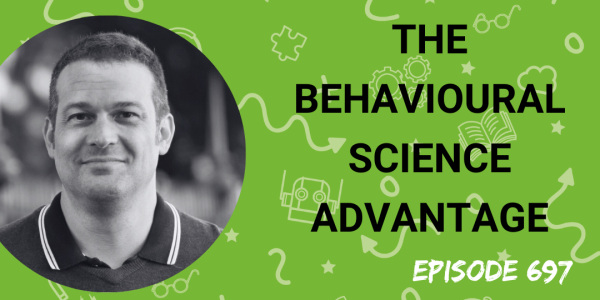
My guest this week is Dominic Ridley-Moy, founder of the Behavior Change Network, a genuine expert in applying behavioral science to real-world business challenges. Dominic brings specialized insight into how our brains make decisions and explains how behavioral science offers employers substantial advantages in creating recruitment processes that align with how people actually think and behave.
In the interview, we discuss:
• How behavioral science is being applied in business
• Using counterintuitive solutions to problems
• Metal shortcuts, unconscious bias, and social stereotypes
• The problems with relying on “gut feel”
• The recruiting cheat code of uncovering a candidate’s real motivations
• The vital importance of the first interaction in recruiting
• Example of behavioural science being used effectively in recruiting
• The danger of simple solutions
• What does the future look like at the intersection of behavioural science and technology
Follow this podcast on Apple Podcasts.
Follow this podcast on Spotify.
00:00
Matt Alder
What if everything you think you know about why candidates accept job offers is wrong? What if the gut feel you rely on to make effective hiring decisions was biased in ways you’ve never even considered? The growing field of behavioral science reveals counterintuitive truths about human motivation that offers employers who understand it a powerful advantage in today’s talent landscape. Keep listening and be prepared to challenge your assumptions about how people really make decisions. Support for this podcast comes from Indeed. They’re a brand that I’m sure you all know as the hiring and matching platform where employers can connect with over 580 million job seeker profiles. But did you also know that their front row seat to the global economy gives them a massive data set which you can access for free?
00:54
Matt Alder
This allows you to see the latest information on job postings, salary trends and much more. Or did you know that Indeed’s new AI tools make it easier than ever for you to find and connect with active and passive job seekers? There’s much more to Indeed visit Indeed.com. Welcome to episode 697 of Recruiting Future with me, Matt Alder. Understanding human behavior in recruiting is far more complex than it appears on the surface. Employers often misinterpret what truly motivates candidates to accept positions. At the same time, recruiters and hiring managers remain unaware of how their own unconscious biases are influenc their decisions. Traditional approaches built on assumptions rather than evidence leave organisations vulnerable to poor hiring outcomes and missed opportunities with ideal candidates.
02:11
Matt Alder
So how can talent acquisition professionals leverage behavioral science to gain a meaningful advantage in understanding and influencing human behaviour throughout the recruiting process? My guest this week is Dominic Ridley Moy, founder of the Behavior Change Network. Dominic is a genuine expert in applying behavioral science to real world business challenges. He brings specialized insight into how our brains make decisions and explains how behavioral science offers employers substantial advantages in creating recruiting processes that align with how people actually think and behave.
02:50
Matt Alder
Hi Dominic and welcome to the podcast.
02:53
Dominic Ridley-Moy
Thank you for having me on Matt.
02:55
Matt Alder
Absolute pleasure to have you on the show. Could you just introduce yourself and tell everyone what you do?
03:01
Dominic Ridley-Moy
So my name is Dominic Ridley-Moy and I run the Behavior Change Network. Which is all about bringing behavior change theory to life and essentially helping people make better choices.
03:13
Matt Alder
Fantastic. Now I was really excited to have you on the show because behavioral science is kind of coming up more and more in day to day conversations in our industry and I’ve had a kind of, a couple of people come on and talk about it, but I wanted to talk to a, of a genuine expert who does this for a living, give us a little bit of context, tell us, you know, what is behavioural science and how does it actually get applied to, you know, real world problems, business problems, those kind of things.
03:37
Dominic Ridley-Moy
So just to bring it to life, I’m going to start off with a quick anecdote from Rory Sutherland, who often talks about what behavioral science is and brings it to life really eloquently. So if you don’t know him, he’s.
03:51
Dominic Ridley-Moy
The vice chairman of the advertising agency Ogilvie and he set up their behavioural science division and often talks about the power of behavioral science, especially his book Alchemy, which is a great read.
04:04
Dominic Ridley-Moy
And one of the examples that really.
04:06
Dominic Ridley-Moy
Brings it to life for me is around Red Bull.
04:10
Dominic Ridley-Moy
So Red Bull is one of those drinks that when it came out, it broke all the conventional rules of marketing.
04:18
Dominic Ridley-Moy
It tasted strange when people tried it, when they did focus groups on it, a lot of the people came back.
04:26
Dominic Ridley-Moy
And said they didn’t really like it.
04:28
Dominic Ridley-Moy
It wasn’t very nice to drink, it.
04:30
Dominic Ridley-Moy
Was expensive compared to other soft drinks.
04:34
Dominic Ridley-Moy
And it was much smaller.
04:35
Dominic Ridley-Moy
So it didn’t follow the normal logical rules and rational rules of business marketing.
04:40
Dominic Ridley-Moy
But it worked.
04:42
Dominic Ridley-Moy
And that’s because. And what you’ll often find with behavioural.
04:45
Dominic Ridley-Moy
Science, it’s about those counterintuitive solutions to problems that we face every day and getting to the bot of what is the behaviour that you’re actually trying to change and being clear about what affects human behaviour.
04:59
Matt Alder
Absolutely. Tell us a little bit about the work you do because you do some really interesting work in the public sector and beyond, you know, how are you sort of applying behavioural science to in practice yourself?
05:11
Dominic Ridley-Moy
I do a lot of work with organisations thinking about how can you get.
05:15
Dominic Ridley-Moy
To the bottom of a problem. So a lot of the time it’s.
05:18
Dominic Ridley-Moy
Thinking about what’s an organizational challenge. And I do a lot in the.
05:22
Dominic Ridley-Moy
Field of social good.
05:23
Dominic Ridley-Moy
So things like CL change, recycling, lots about looking at organizations and their products and services and thinking about how can.
05:32
Dominic Ridley-Moy
You work out what a very specific.
05:34
Dominic Ridley-Moy
Problem is and how can you turn it into better services and better communications. So there’s a lot on things like.
05:41
Dominic Ridley-Moy
Climate change, for instance.
05:43
Dominic Ridley-Moy
So if we want people to be more climate conscious, whether that’s as a consumer or in an organization, it’s thinking about what are those very specific behaviors we want people to do differently and.
05:55
Dominic Ridley-Moy
With a lot of the climate actions.
05:57
Dominic Ridley-Moy
It might be switching your energy supplier.
06:02
Dominic Ridley-Moy
It’s about what are the things that.
06:03
Dominic Ridley-Moy
Motivate you to make that change.
06:06
Dominic Ridley-Moy
And often it’s things like when you move house, you’re much more likely to change energy supplier.
06:11
Dominic Ridley-Moy
It’s about cost, it’s about ease, it’s not necessarily about saving a planet. And sometimes that’s the thing that makes the least difference. When we’re talking about getting people to take action.
06:26
Matt Alder
No, absolutely. I remember we’ve known each other for a while. I remember talking to you about food recycling. And actually what drives people to do that was sometimes a lot more around convenience than the notion of saving the planet.
06:38
Dominic Ridley-Moy
Exactly.
06:38
Dominic Ridley-Moy
And that’s the thing that a lot of the time people don’t necessarily think.
06:42
Dominic Ridley-Moy
That convenience and ease and those environmental.
06:46
Dominic Ridley-Moy
Barriers, that’s the biggest driver of what people will do or not do. But we don’t often start with that, particularly people working in communications roles.
06:58
Matt Alder
And you kind of identify those sort of very specific and sometimes counterintuitive behaviors. What’s the next stage from that? What do you advise people to do with that information?
07:09
Dominic Ridley-Moy
So I think there’s probably there’s a.
07:12
Dominic Ridley-Moy
First step where it’s kind of thinking.
07:13
Dominic Ridley-Moy
About, well, what is it that drives human behavior? What is it that is making that difference? So looking at things like, something like 80% of our decisions are driven by emotions.
07:27
Dominic Ridley-Moy
Sometimes we use the logical or rational part of our brain and other times we use the automatic part of our.
07:34
Dominic Ridley-Moy
Brain and other times we’re doing things like a habit will kick in. So that’s when our kind of brain.
07:41
Dominic Ridley-Moy
Stops fully participating in a decision making process.
07:45
Dominic Ridley-Moy
And then we have all these kind of biases which is really important in.
07:49
Dominic Ridley-Moy
The field of human resources.
07:51
Dominic Ridley-Moy
So thinking about what are those kind.
07:52
Dominic Ridley-Moy
Of mental shortcuts we use on a.
07:54
Dominic Ridley-Moy
Day to day basis which lead to.
07:57
Dominic Ridley-Moy
Conscious and unconscious biases. So being aware of all those things.
08:01
Dominic Ridley-Moy
That drive human behavior is probably one.
08:04
Dominic Ridley-Moy
Of the most important things you can do.
08:06
Dominic Ridley-Moy
Think about what is the problem you want to solve? Why aren’t people doing what you want them to do?
08:11
Dominic Ridley-Moy
What are those barriers and what’s the next thing you can do?
08:14
Matt Alder
So I kind of sort of asked you in advance to have a think about how this might work in a talent acquisition perspective.
08:20
Matt Alder
What do you think?
08:21
Matt Alder
What have you found? Where do you think behavioral science could be and behavioural change could best be applied in the world of talent and recruitment?
08:30
Dominic Ridley-Moy
So when it comes to talent and recruitment, I think one of the things that everyone needs to be aware of.
08:37
Dominic Ridley-Moy
In the industry is very much thinking about biases and biases.
08:42
Dominic Ridley-Moy
They affect how we make decisions and what we do. And I think the problem is that.
08:48
Dominic Ridley-Moy
People don’t always necessarily look at biases in the correct way.
08:52
Dominic Ridley-Moy
So a bias is basically, it’s one.
08:55
Dominic Ridley-Moy
Of those shortcuts that we have in our brains.
08:58
Dominic Ridley-Moy
So as humans, we often make fast.
09:01
Dominic Ridley-Moy
Efficient decisions based on past experience, based on mental shortcuts. So we make something like 35,000 decisions in a day. And to tackle that, we use these kind of shortcuts, these cognitive bias, unconscious.
09:15
Dominic Ridley-Moy
Biases, all those kinds of things that help us get by in a day.
09:20
Dominic Ridley-Moy
So looking at the root cause of these biases can be really powerful, especially when you’re talking about unconscious bias and the social stereotypes that people hold and how that feeds into the recruitment.
09:33
Dominic Ridley-Moy
Process and means that we make decisions that aren’t always the best ones to make.
09:38
Matt Alder
One of the areas that I think is really interesting is when it comes to, you know, recruiters selecting candidates and all those kind of that kind of area, obviously a lot of people have a lot of experience at doing it. They talk about they kind of using their gut feel to say who’s going to fit. And, you know, that to me seems like an obvious place for the kind of bias that you’re talking about. But on the converse side, I think, you know, we read lots of business advice that says go with your gut feel because it’s all your experience distilled and it’s that it’s the right thing to do. Where do you stand on that? What’s going on there?
10:13
Dominic Ridley-Moy
The problem with using your gut feel.
10:15
Dominic Ridley-Moy
Is that what you end up doing.
10:17
Dominic Ridley-Moy
And there’s loads of evidence to back this up, is that you can end.
10:21
Dominic Ridley-Moy
Up making a poor decision.
10:22
Dominic Ridley-Moy
Because what’s happening with unconscious bias is the automatic part of your brain is kicking in, so you don’t know that.
10:30
Dominic Ridley-Moy
You’Re making necessarily a decision that is a bad decision. So you’re trying to make the right decision and you’re trying to be objective, but it can backfire. So you have all these biases.
10:41
Dominic Ridley-Moy
So things like affinity bias is a typical one. So that’s the bias that we gravitate.
10:46
Dominic Ridley-Moy
Towards people who are similar to us and share the same qualities.
10:50
Dominic Ridley-Moy
So as a hiring manager, people tend to be much more likely to hire.
10:55
Dominic Ridley-Moy
Someone from the same school or grow up in the same city, same ethnic background as them, all those kinds of things.
11:02
Dominic Ridley-Moy
And then there’s loads of other biases as well.
11:04
Dominic Ridley-Moy
So gender bias Being a particular one as well.
11:08
Dominic Ridley-Moy
And although we think we’re not being biased, if we’re relying on our gut feel and these automatic, the automatic part of our brain, it’s something that we.
11:19
Dominic Ridley-Moy
Do without even thinking about it, potentially.
11:21
Matt Alder
Yeah, exactly. There’s no sort of filter between what is a not very useful bias and actually, you know, what someone sort of applying their experience and things like that. The other thing about cognitive bias that I’ve noticed is obviously talent acquisition is being massively disrupted or potentially will be massively disrupted by AI and automation. A kind of a set of changes that we’ve not really seen on this kind of scale since the Internet in the early 90s. And when people are discussing those kind of changes, I sort of see a lot of bias in the way that people think about the future. So lots of kind of status quo bias, wanting things to stay the way they are. The other one I read about was anchoring bias, where people go with the first thing that they hear about something.
12:09
Matt Alder
And, you know, I think it’s kind of really holding people back as we sort of try and imagine what the future looks like. How do you agree, do those kind of biases apply and how could people get around them to actually plan properly for the future?
12:23
Dominic Ridley-Moy
Yeah, definitely. And I think you make a good.
12:26
Dominic Ridley-Moy
Point because one of the issues with.
12:27
Dominic Ridley-Moy
AI is that what you can get back from AI in particular can be.
12:33
Dominic Ridley-Moy
Quite biased because of the data that’s in there.
12:36
Dominic Ridley-Moy
So if it’s skewed towards.
12:42
Dominic Ridley-Moy
The Western world, for instance, and that’s where it pulls most of its data, there’s those inherent biases already in lots.
12:48
Dominic Ridley-Moy
Of the AI models. So that’s something to be aware of. But in terms of overcoming these biases and thinking about what you can do to tackle it, there’s a number of.
12:59
Dominic Ridley-Moy
Different things and it’s the same, I.
13:01
Dominic Ridley-Moy
Think, for a lot of behavior change problems and looking at the wider picture.
13:06
Dominic Ridley-Moy
So there’s lots of things you can.
13:07
Dominic Ridley-Moy
Do, I suppose, starting at looking at.
13:10
Dominic Ridley-Moy
How people make choices.
13:12
Dominic Ridley-Moy
And if we think about the talent.
13:14
Dominic Ridley-Moy
Acquisition and recruitment process, it’s just thinking.
13:17
Dominic Ridley-Moy
Tips, like things like just being aware of the problem, being aware that these biases exist, looking at other factors that.
13:24
Dominic Ridley-Moy
May be influencing people’s decisions, looking at the past, being curious, having a really.
13:29
Dominic Ridley-Moy
Open and open growth mindset, that kind of thing, and also looking at different perspectives. A lot of the time we seek out views that reinforce our existing perspectives, particularly with confirmation.
13:44
Dominic Ridley-Moy
Bias is a really common bias.
13:46
Dominic Ridley-Moy
So what we’ll do is we’ll look.
13:48
Dominic Ridley-Moy
For information that supports our existing beliefs. Being aware of that can make a big difference. But that’s just the tip of the iceberg.
13:59
Matt Alder
Sort of setting bias to one side just for a second. One of the other big aspects of recruitment and behavioural changes is that obviously we’re trying to persuade people to move jobs and persuade them that actually the opportunity that we’re talking about to them is better than what they’re doing already. And obviously sometimes people can stay indoors for years doing the same kind of thing. So it’s a kind of a behavioral change thing. I don’t know if I’m pushing that too far. How can this work in terms of sort of persuading people, helping to move people into new opportunities, those kind of things.
14:35
Dominic Ridley-Moy
So I think that’s a really interesting example and a great one to focus on from a behavior change perspective, because.
14:43
Dominic Ridley-Moy
Actually a lot of the time it’s working out what the very specific problem is. So that kind of thing where actually.
14:50
Dominic Ridley-Moy
People who move to your company thinking.
14:52
Dominic Ridley-Moy
About what is that kind of that.
14:54
Dominic Ridley-Moy
User journey and using Personas and things like that, but actually working out what.
15:00
Dominic Ridley-Moy
Drew them to apply for a job.
15:03
Dominic Ridley-Moy
At your company organization, because a lot of the time it’ll be very.
15:07
Dominic Ridley-Moy
Different from what you think or what you believe. And sometimes there’s those counterintuitive solutions to these problems.
15:14
Dominic Ridley-Moy
So there’s lots of examples that where.
15:18
Dominic Ridley-Moy
If you’re trying to attract a certain.
15:20
Dominic Ridley-Moy
Type of candidate rather than waiting for.
15:23
Dominic Ridley-Moy
Them to come to you, proactively approaching.
15:25
Dominic Ridley-Moy
People can make a big difference.
15:27
Dominic Ridley-Moy
So that’s a simple change that you.
15:28
Dominic Ridley-Moy
Can make as an organization.
15:30
Dominic Ridley-Moy
But just thinking about what’s that experience.
15:32
Dominic Ridley-Moy
Like, if you want to attract certain people when they have that first interaction with your company, when they go to.
15:39
Dominic Ridley-Moy
Your web page, what they see, what’s that user experience like?
15:43
Dominic Ridley-Moy
Is it hard to navigate your website? Is it hard to apply for a job? What’s the language you use in a job application form? All those kinds of things that people don’t necessarily look at in great detail.
15:55
Dominic Ridley-Moy
But those first impressions are so.
15:57
Dominic Ridley-Moy
Important and we don’t always give them.
15:59
Dominic Ridley-Moy
The attention they need.
16:01
Matt Alder
Yeah. And I suppose the bit about uncovering people’s true motivation is kind of the. Is almost the cheat code for this, isn’t it? Because as you say, very often it’s not what people think it is. It’s just kind of struck me that I know lots of employers will do surveys and Ask people and all those kind of things and maybe they don’t always get to the kind of the real truth behind it. Is there a trick to do that? How do you really get to the bottom of what someone’s motivation is for doing something?
16:30
Dominic Ridley-Moy
So I think if you want to.
16:31
Dominic Ridley-Moy
Understand what motivates people, there’s lots of different frameworks out there that really helpful to get to the bottom of what motivates people.
16:41
Dominic Ridley-Moy
And it’s different in different contexts.
16:44
Dominic Ridley-Moy
And a lot of the time it can be about thinking about what people, what values people hold, things like that, but also looking at kind of what motivates people and also the context in.
16:56
Dominic Ridley-Moy
Which you’re making a decision. So if you’re using a kind of.
16:59
Dominic Ridley-Moy
Emotional part of your brain versus the.
17:01
Dominic Ridley-Moy
Rational part of the brain, all those.
17:03
Dominic Ridley-Moy
Kinds of things, there’s lots of things that affect how we make decisions and why we make them.
17:10
Dominic Ridley-Moy
And those factors aren’t always thought through.
17:12
Dominic Ridley-Moy
As much as they could be. So if you want to uncover the real reasons about why people move jobs.
17:19
Dominic Ridley-Moy
It’S really important not just to have.
17:21
Dominic Ridley-Moy
A tick box exercise, really think about what it is that informs.
17:28
Dominic Ridley-Moy
Why people take action. And the reasons can be multiple. So having some sort of survey will be useful. But actually having loads of data sources. So focus groups just speaking to people, doing different things and really getting to the bottom of what the problem is.
17:45
Dominic Ridley-Moy
And finding out why people made the.
17:47
Dominic Ridley-Moy
Decision they made can be really important. And just looking at all those different things. So a survey will some things, but focus groups will unpick that even further.
17:58
Dominic Ridley-Moy
And get into the bottom of or what was it that attracted you to this job?
18:04
Dominic Ridley-Moy
And always when I run focus groups, you get much more in depth conversations and there’s always things that surprise you.
18:10
Dominic Ridley-Moy
So a lot of the time people just think, oh well, the reason was.
18:13
Dominic Ridley-Moy
X or the reason was Y. But when you look into it in.
18:16
Dominic Ridley-Moy
A bit more detail, you find that.
18:18
Dominic Ridley-Moy
Actually what you thought was the case wasn’t necessarily the thing that motivated people the most for.
18:24
Matt Alder
And I think that’s an amazing point.
18:26
Matt Alder
Because I think that’s something that I don’t think employers do very well. I think that people might ask, you know, might have some kind of post hire surveys, but I don’t think they go into it in that level of detail. And there’s obviously some incredibly valuable information for, particularly for sort of different types of roles and types of people that you’re recruiting for that would really kind of Inform, as you say, you know, the whole marketing and the whole candidate experience around that as well. So, obviously lots of people listening, lots of people will have come across cognitive, unconscious biases before and all that sort of stuff. What’s the practical way to do this? What sort of first steps do people need to take and how much can people do themselves and where would they benefit from working with an expert on this?
19:15
Dominic Ridley-Moy
So I think the thing that makes.
19:16
Dominic Ridley-Moy
The biggest difference, so there’s definitely things that people can do themselves, and for.
19:21
Dominic Ridley-Moy
Me, it’s working out what is the problem and what are the barriers that.
19:27
Dominic Ridley-Moy
Prevent people from doing what you want them to do.
19:29
Dominic Ridley-Moy
So if it’s in terms of something like recruitment, it’s really thinking about what.
19:35
Dominic Ridley-Moy
Steps people make in the decision that you want them to do.
19:39
Dominic Ridley-Moy
And I think the benefit of having an expert is working out what will work and what won’t work. So thinking about those counterintuitive solutions and.
19:52
Dominic Ridley-Moy
How can you shortcut that and make those decisions much more quickly so that you get to a solution which is much more effective? So there’s this great example from MIT.
20:05
Dominic Ridley-Moy
Where they had a problem with their mechanical engineering department. There were a lack of female members of the faculty, and what they wanted to do was to recruit more women to the department. And it was one of those interventions.
20:25
Dominic Ridley-Moy
That requires multiple interventions. It wasn’t just about doing one thing, and that’s where having an expert is really important.
20:33
Dominic Ridley-Moy
So what they did was they tried.
20:36
Dominic Ridley-Moy
To recruit to new positions, try to.
20:39
Dominic Ridley-Moy
Increase the number of women that were in the department. But what caused a big issue was that they made the recruitment process even worse, because what they did was when.
20:54
Dominic Ridley-Moy
They put job adverts out, they recruited to a very specific subfield of mechanical engineering. So that narrowed the potential field of.
21:04
Dominic Ridley-Moy
Female applicants even further and exacerbated the problem.
21:08
Dominic Ridley-Moy
So initially what they did was make one small change. They focused instead of focus on subspecialties.
21:15
Dominic Ridley-Moy
In their recruitment, they looked at a wider pool of candidates, focusing on research, which meant that it was open to many more female candidates. And then they did a number of.
21:28
Dominic Ridley-Moy
Other changes as well.
21:31
Dominic Ridley-Moy
So before they just put a job.
21:33
Dominic Ridley-Moy
Advert out and hope for the best.
21:36
Dominic Ridley-Moy
But then they looked at female candidates who were proactively approached. So they went to people rather than.
21:43
Dominic Ridley-Moy
Just hoping for the best. Previous applications were revisited. And also the dean personally reviewed each.
21:51
Dominic Ridley-Moy
Application from a woman.
21:55
Dominic Ridley-Moy
So this was really important because it was looking at multiple different things.
21:59
Dominic Ridley-Moy
Multiple points, not just focusing one behaviour.
22:03
Dominic Ridley-Moy
And for me, that’s One of the.
22:04
Dominic Ridley-Moy
Things that’s really important. And as you’d expect, you ended up with more women joining the faculty.
22:12
Dominic Ridley-Moy
And as is always the case, there’s.
22:13
Dominic Ridley-Moy
Unintended consequences to this intervention.
22:18
Dominic Ridley-Moy
So what happened was you had more female undergraduates choosing to take engineering because.
22:24
Dominic Ridley-Moy
There were more female members of staff at the faculty.
22:28
Matt Alder
That makes sense. And I think that you make a really important point there that I think sometimes this is particularly true in our industry. There can be a tendency to find what looks like the perfect simple solution to a problem, you know, so kind of what aspect of behavior or one bias or whatever, and then just use that as the tool. But as you say, these things are multifaceted and there’s lots of things going on, multiple interventions. So it’s a lot more complex than people think it isn’t it?
22:54
Dominic Ridley-Moy
Yeah, that’s definitely the case. And I think that’s one of the.
22:56
Dominic Ridley-Moy
Biggest mistakes that people can make.
22:59
Dominic Ridley-Moy
It’s thinking about whether you’re going to.
23:01
Dominic Ridley-Moy
Try and do something where you just.
23:02
Dominic Ridley-Moy
Focus one behavior and think, well, actually that’s going to make a bit of a difference. But actually a lot of the time it’s really looking about a kind of.
23:11
Dominic Ridley-Moy
Culture of your organization or something else.
23:14
Dominic Ridley-Moy
Or multiple problems, and you just need to be clear on what it is you’re trying to achieve and whether one.
23:21
Dominic Ridley-Moy
Or two simple solutions will solve it.
23:24
Dominic Ridley-Moy
Or if it’s a bigger problem where.
23:26
Dominic Ridley-Moy
Multiple interventions will work best.
23:29
Matt Alder
Absolutely. And a final question for you. Kind of a bit about the future, a bit about technology. I mean, what do you think the future looks like? Do you think that you mentioned some of the risks with AI? Do you think technology play a big part in this moving forward? What are you excited about? What are you worried about?
23:45
Dominic Ridley-Moy
Yeah, definitely.
23:47
Dominic Ridley-Moy
I think from a behavioral science point.
23:49
Dominic Ridley-Moy
Of view, it’s really thinking about how.
23:52
Dominic Ridley-Moy
Behavioural science works with other solutions, because behavioral science can help with certain things.
23:58
Dominic Ridley-Moy
But there’s lots of other disciplines that will make that big difference. So how does behavioral science work with technology? How does it work with sociology?
24:12
Dominic Ridley-Moy
How does it work with economics? How does that all come together to.
24:16
Dominic Ridley-Moy
Make society a better place and to help people make better choices? And I think technology is going to have a really big part. I already use AI a lot and it’s something that I think will be really useful. So for me, it’s to help me do that research more quickly, to help structure my thinking.
24:36
Dominic Ridley-Moy
So I think that’s going to be really exciting.
24:40
Dominic Ridley-Moy
But on the flip side.
24:41
Dominic Ridley-Moy
We just need to be wary of what we’re getting from AI.
24:45
Dominic Ridley-Moy
So obviously there’s an issue with factual accuracy, but where those biases creep in as well.
24:51
Dominic Ridley-Moy
So how biased is the data? Where is it pulling its sources from? And just be mindful of that.
24:57
Matt Alder
Dominic, thank you very much for joining me.
25:00
Dominic Ridley-Moy
Thank you for having me. Really enjoyed it.
25:03
Matt Alder
My thanks to Dominic. You can follow this podcast on Apple Podcasts on Spotify or wherever you get your podcasts. You can search all the past episodes at recruitingfuture.com on that site. You can also subscribe to our weekly newsletter, Recruiting Future Feast, and get the inside track on everything that’s coming up on the show. Thanks very much for listening. I’ll be back next time, and I hope you’ll join me.