
Application volumes have surged in recent years, and many talent acquisition teams are struggling to keep up. Candidates apply and disappear into a black hole, never hearing back, never getting a real chance to show what they can do. When volumes reach into the millions, the traditional recruiting model simply breaks. There aren’t enough recruiters to give everyone a fair hearing.
Some organisations are now rethinking this entirely, using AI not to replace human decision-making, but to open the door wider than any human team ever could.
So what does it actually look like when a company goes AI-first across every stage of hiring?
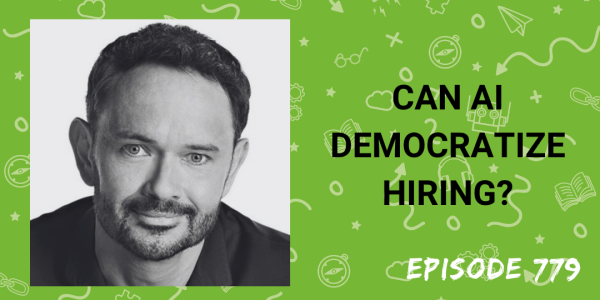
My guest this week is LJ Brock, Chief People Officer at Coinbase. In our conversation, he explains how they’ve deployed AI across five core areas of recruiting, why they now assess every candidate on AI fluency, their focus on talent density to constantly raise the quality bar, and what hiring will look like in the future.
In the interview, we discuss:
• The shift from volume to quality and value
• What does talent density mean at Coinbase?
• AI first recruiting to democratize access to the company
• Evaluating candidates on AI fluency
• Human connection in the hiring process
• Augmenting recruiters, not replacing them.
• Will all recruiting look like executive search in the future?
Follow this podcast on Apple Podcasts.
Follow this podcast on Spotify.
00:00
Matt Alder
Coinbase receives 1.5 million job applications a year, far too many for any human team to properly assess. So how are they using AI to democratize access to the company? Keep listening to find out.
00:17
Matt Alder
Support for this podcast comes from smart recruiters. Are you looking to supercharge your hiring? Meet Winston Smart Recruiter’s AI powered companion. I’ve had a demo of Winston. The capabilities are extremely powerful and it’s been crafted to elevate hiring to a whole new level. This AI sidekick goes beyond the usual assistant, handling all the time consuming admin work, so you can focus on connecting with top talent and making better hiring decisions. From screening candidates to scheduling interviews, Winston manages it all with AI precision, keeping the hiring process fast, smart and effective. Head over to smartrecruiters.com and see how Winston can deliver superhuman results.
01:22
Matt Alder
Hi there.
01:22
Matt Alder
Welcome to episode 779 of Recruiting Future with me, Matt Alder. Application volumes have surged in recent years and many talent acquisition teams are struggling to keep up. Candidates apply and disappear into a black hole, never hearing back, never getting a real chance to show what they can do. When volumes reach into the millions, the traditional recruiting model simply breaks. There aren’t enough recruiters to give everyone a fair hearing. Some organizations are now rethinking this entirely, using AI not to replace human decision making, but to open the door wider than any human team alone ever could. So what does it actually look like when a company goes AI first across all the stages of hiring? My guest this week is LJ Brock, Chief People Officer at Coinbase.
02:17
Matt Alder
In our conversation, he explains how they’ve deployed AI across five core areas of recruiting, why they now assess every candidate on AI fluency, their focus on talent density, to constantly raise the quality bar, and what hiring will look like in the future.
02:34
Matt Alder
Hi, LJ and welcome to the podcast.
02:36
LJ Brock
Hey, great to be here. Thanks for having me.
02:39
Matt Alder
An absolute pleasure to have you on the show. Please, could you introduce yourself and tell us what you do?
02:44
LJ Brock
Yeah. My name’s L.J. Brock. I, for the last seven years have been the Chief People Officer at Coinbase. We’re obviously one of the largest crypto exchanges in the world. In that role, you know, I lead all aspects of the people team. Hiring, total rewards, learning and development, talent management, our employee experience group. Before that, I spent three years at Citadel, the hedge fund and market maker, where I was also the Chief People officer. And then before that, I spent eight years at Red Hat, which was or is an enterprise software company and open source. I, when I started Red Hat was the global head of recruiting and over the eight years I was there, sort of expanded my remit into more areas of hr and that’s how I headed down the path of being a chief people officer.
03:28
Matt Alder
Very cool.
03:28
Matt Alder
And obviously from a talent acquisition hiring perspective, very disruptive time at the moment for lots of reasons, whether that’s technology or the economy or whatever it is. I mean, what are you seeing in terms of the way companies approach hiring? You know, what are the sort of the best patterns that you’re seeing and how’s your sort of own thinking evolved, you know, over time in terms of the situation that we’re in right now?
03:54
LJ Brock
Yeah, I think that, you know, one of the broader trends I think we’re seeing certainly at least I think in the tech space is a shift from volume, right where there was many years, let’s say from after the 2008 financial crisis all the way up until, I don’t know, last couple of years. So probably like a good 14, 15 year run where there was just a huge emphasis on the volume of hiring, on sort of a very traditional pyramid in, in technology companies. I think what you’re seeing in the shift today, both maybe because of the economic environment, because of AI, is an overall trend towards less focus on volume and more focus on quality and value and how you really find fewer people that are incredibly strong fits for your organization and have great capabilities.
04:47
LJ Brock
And the value of each hire at all levels I think is increasing. And then for me, you know, what’s generally top of mind as sort of a derivative of that is I do think as we’re seeing more, as we’re seeing these models improve from the AI vendors, I do think we’re at the very beginning of seeing how that is beginning to impact some of the nature of the workforce. And I, and I do think there’s probably a looming shift in organizational composition where I do think that, you know, the traditional pyramid may be more challenged in so much as I think some of the early in career work that many people do may not need to be done by people anymore.
05:25
LJ Brock
There’ll be AI agents that can do that work and your investment in hiring early in career will largely be to develop people more rapidly into middle and senior roles that are leveraging those AI agents.
05:39
Matt Alder
Yeah, I think that’s really interesting and it’s certainly very disruptive and it’ll be interesting to see how it plays out. Talent density is really the. The phrase that’s sort of generating a lot of discussion around this, and it kind of obviously speaks to what you were just sort of talking about. What does that mean in terms of coinbase and how. How do you achieve it? How do you achieve some of the things that you just spoke about?
06:01
LJ Brock
I think for us, at the end of the day, the bottom line, talent density is about constantly raising the bar, your talent bar. And that plays out probably in a couple of ways. I mean, you know, from a hiring perspective, it plays out in a world where we want to make sure that every hire we make is in some way raising the average of the capability of the firm. You know, we’re trying to pull the average up. And then similarly for our. For everyone, once they’re here, for our existing people, the way that we think about talent density is that the expectations continue to amp up that, you know, what got you to be successful in 2025?
06:36
LJ Brock
We’re going to crank up and ask people to get a little more efficient, a little more impactful, and have a little bit better capability and incrementally raise the bar across the organization. So for us, I think talent density is just never. It’s really about not pausing and being satisfied. It’s about constantly raising expectations in hiring and in performance in a reasonable way and supporting people through those raised expectations, but being focused on continual improvement, continual learning to stay ahead of the market at large.
07:04
Matt Alder
Coming back to talk about AI, I mean, from an AI perspective, how are you using AI to sort of really help you do this? You know, how is it contributing? What is it helping you achieve?
07:15
LJ Brock
Yeah, I mean, you know, there’s kind of a couple of ways to think about this for us. First, from a hiring perspective, I think of us as like, AI first across the board. We have at least five core technologies that we’ve deployed in our hiring process, including AI powered phone screens. You know, over a year ago, I laid out a vision for the team where I told them, you know, I want anybody to be able to click a button and say, start, interview now, and interview any time of day, anywhere remotely with our. With our virtual assistant, you know, and we. We get upwards of 1.5 million applicants a year.
07:52
LJ Brock
AI in that sense is a great way to sort of democratize access to the company, because there was no way were ever going to have a large enough team to get to 1.5 million applicants. Now we have a tool that can do that. We have An AI driven sourcing tool that’s helping us, you know, better match candidates. We have an AI tool that help us transcribe interviews and rate interview performance. We have an AI tool that helps us with our scheduling. So we’ve gone AI first to permeate every aspect of the recruiting lifecycle. I think from a HR perspective, AI is sort of the leading front, is clearly in the recruiting world. And then as it is, as it relates to the company at large, we put in an AI fluency framework that we’re now evaluating everybody on.
08:37
LJ Brock
So we want to make sure that we are hiring people in the same way. We just talk about talent density that are net accretive to the AI capabilities of our existing workforce. So now when you interview at Coinbase, you’re getting evaluated to some degree relative to your role on your AI fluency and your ability to use AI to be more efficient and more effective in your role.
09:01
Matt Alder
That’s really interesting. What, what are the kind of the, the levels that you have there? How does that, how does that work in practice? What do you, what are you actually sort of looking for? In most roles,.
09:12
LJ Brock
You know, it can vary by role. Right. So in an engineering capacity, you know, we can have an assessment that asks people to use AI coding tools to help them be more efficient for more of our roles and sort of our core HR or sorry, our core back office operations, if you will. So sort of like, you know, marketing, finance, hr, legal, we can infuse, we often give people work trialers where we ask them to sort of perform some type of work and present that work. We can ask them to do that, including AI, and share with us how they used AI. So we’re actually sort of decentralizing this to every hiring manager and asking them what’s the reasonable way to evaluate AI fluency for the role you’re hiring or. And then we work with them to sort of build a custom application.
09:57
LJ Brock
The core thing is we want to make sure we’re checking the box that we’re finding people who have interest and capability in using AI in some capacity in their role. That varies a lot by the type of role and the level of the person. And then the assessment varies based on that as well.
10:14
Matt Alder
And you obviously mentioned that. Obviously with the volume of applications that you’ve got, it makes perfect sense that AI is a fantastic opportunity to kind of widen access, democratize that sort of opportunity. At the same time, how do you balance using AI to handle that kind of volume of interest with the human connection that people expect in the hiring process. How do you kind of make that balance?
10:42
LJ Brock
Yeah, I mean, let me be clear. We’re not removing human involvement from our hiring process. We’re trying to augment our hiring process to reach more people. And so I think of AI as works best still with human involvement and really complementing our workflows. We haven’t replaced interviewers, you know, so you may do that first AI interview and then that just helps us better match people based on their experience and their interview questions to move forward to a recruiter interview. We still have, you know, several steps of in person interviews for people. So by no means do I think there’s a world, you know, I don’t know, can’t see far around the corner. But right now I can tell you we’re not thinking around the world that says, oh, you get hired at Coinbase without human intervention and a lot of human interaction.
11:28
LJ Brock
We see that as essential to us both making the right selections, making the right connections with our potential employees, and really making sure that people understand, you know, why they should want to work at Coinbase. So for us, it’s just about augmenting our capability, getting to more people and making the best decision possible and coming.
11:47
Matt Alder
Back to talent density. You were talking about, you know, constantly sort of raising the high hiring bar. What advice would you give to the TA leaders who are listening in terms of how to do that? I mean, what are the signals? What should they be looking for to know that they’re getting that transformation?
12:05
LJ Brock
Well, the first thing I think that one thing I think about in this is, you know, TA leader, you know, I don’t think does today anywhere, but, you know, can’t be working in a vacuum. I think you have to understand, you know, what are the signals of high performance and high trajectory inside your company? Use the data that you have around people who are raising your average internally and identify, you know, the key aspects that are allowing them to outperform. And then I think you want to see how can you then backtrack that into your selection process. Right. And begin to pressure test people for those attributes.
12:41
LJ Brock
So for me, you know, this is less about some really unique, different way of doing things and more about having the rigor to understand what differential performance looks like in your org and then having the thoughtfulness and the rigor to apply that into your assessment process. And I think, you know, for a lot of companies, that’s going to vary. For us, you know, we added things in like cognitive assessment on the front end and you know, we’ve had, as I said, work trials and we’ve continued to evolve those work trials. But I think for other organizations, they may look different depending on, you know, what they see as the attributes of the people who are raising the bar already inside the organization.
13:25
Matt Alder
It’s obviously a very difficult question to ask about the future, but as a final question, what do you think it’s going to look like? I mean, how hiring and talent acquisition going to evolve over the next sort of three to five years, or how do you hope they’re going to evolve?
13:40
LJ Brock
You know, my best guess on this is I think all of recruiting will look more and more like executive recruiting. I think that, you know, look, I grew up in a world of, you know, I shared with you. I went to, I worked at Red Hat. I was there and were 2500 people. We grew to, I don’t know, almost 10,000 people. Before I left, I joined Coinbase and it was 700 people. We got to 7,000 people within three years. Much of our recruiting engine at the time, I think for many tech companies was around a high volume process that could have high standards, but was really more around processing workflows at scale.
14:16
LJ Brock
I think AI is going to change the work landscape, as I’ve said to you earlier, and I think it’s going to attack a lot of that and handle a lot of that process at scale. And I think where recruiters are going to become even more valuable, I think recruiters are going to become even more valuable, but I think it’s going to be a very different work. It’s probably going to be less around sourcing and less around the ability to manage workflows at scale and more about the ability to craft and lead a process that has a really refined outcome on picking the best candidate for every level.
14:50
LJ Brock
So when you’re hiring an entry level person, I think you’re going to be hiring at a level that’s probably more detailed and more crafted and with more sort of precision insights into why they would be right. Like you would have done an exec recruiting in the past. And that’s kind of where we’re seeing our team go already.
15:05
Matt Alder
That’s a really interesting perspective and I 100% agree with you on that one. LJ, thank you very much for talking to me.
15:13
LJ Brock
Yeah, happy to do it. Really appreciate you making the time. Great to be here.
15:18
Matt Alder
My thanks to LJ. You can follow this podcast on Apple Podcasts on Spotify or wherever you listen to your podcasts. You can search all the past episodes at recruitingfuture.com on that site. You can also subscribe to our weekly newsletter, Recruiting Future Feast, and get the inside track on everything that’s coming up on the show. Thanks very much for listening. I’ll be back next time and I hope you’ll join me.