The pandemic forced organizations to rethink how they engage their people, with many old rules torn up almost overnight. Five years on, AI has arrived and changed the game again.
Leaders are now facing a new set of questions. How do you design experiences that attract and retain talent while driving the performance your business needs? And how do you prepare for a future that’s increasingly impossible to predict?
So, how do you build a truly future-ready strategy for employee experience?
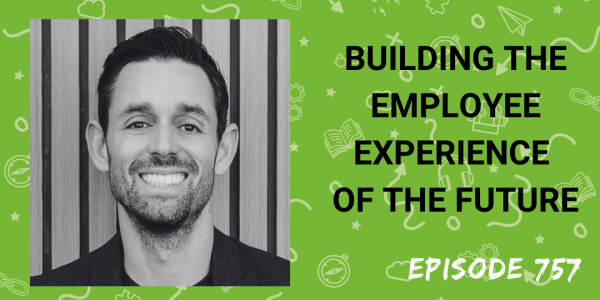
My guest this week is Jacob Morgan, author of the upcoming book The Eight Laws of Employee Experience. In our conversation, Jacob shares insights from over 100 CHRO interviews that he has conducted around employee experience and reveals the principles that separate thriving organizations from those struggling to keep up.
In the interview, we discuss:
• What’s changed about the employee experience in the last five years?
• Proactively planning for the future
• The eight laws of employee experience
• Empathetic excellence
• Using AI to amplify humanity
• Enablement and augmentation
• Personalization at scale
• Run culture like an operating system
• TA & the employee experience
• What are the biggest changes going to be in the next two years?
Follow this podcast on Apple Podcasts.
Follow this podcast on Spotify.
Transcript:
Matt Alder 00:00
Since the pandemic, the employee employer relationship has been in constant flux as AI reshapes expectations on both sides. What does it take to build an employee experience for a truly future ready organization? Keep listening to find out
Matt Alder 00:19
Support for this podcast comes from smart recruiters. Are you looking to supercharge your hiring? Meet Winston. Smart recruiters. Ai powered companion. I’ve had a demo of Winston. The capabilities are extremely powerful, and it’s been crafted to elevate hiring to a whole new level. This AI sidekick goes beyond the usual assistant handling all the time consuming admin work, so you can focus on connecting with top talent and making better hiring decisions, from screening candidates to scheduling interviews, Winston manages it all with AI precision, keeping the hiring process fast, smart and effective. Head over to smart recruiters.com and see how Winston can deliver superhuman results.
Matt Alder 01:24
Matt, Hi there. Welcome to Episode 757, of recruiting future with me. Matt alder, the pandemic forced organizations to rethink how they engage their people with many of the old rules torn up almost overnight, five years on, AI has arrived and changed the game again. Leaders are now facing a new set of questions. How do you design experiences that attract and retain talent while driving the performance your business needs? And how do you prepare for a future that’s increasingly impossible to predict. So how do you build a truly future ready strategy for employee experience? My guest this week is Jacob Morgan, author of the upcoming book The eight laws of employee experience. In our conversation, Jacob shares insights from over 100 CHRO interviews that he’s conducted around employee experience and reveals the principles that separate thriving organizations from those struggling to keep up. Hi Jacob and welcome back to the podcast. Thank you for having me. Absolute pleasure to have you on the show. Please. Could you introduce yourself and tell everyone what you do?
Jacob Morgan. 02:40
Sure. My name is Jacob Morgan. I am a professionally trained futurist. I am a speaker. I’m an author, and I have a new book that is coming out on February 3 called the eight laws of employee experience. And I talked to over 100 Chief Human Resource Officers from companies around the world, and really wanted to help people understand where employee experience is going over the next five to 10 years. I actually wrote an employee experience book that came out in 2017 and obviously a lot has changed since 2017 and I decided it was time to make an update.
Matt Alder 03:11
So awesome. So yeah, let’s sort of dig into this a little bit a little bit more then about why you wrote the book. So you said that things have changed since you wrote about employee experience before. What do you mean by that? What’s happened? What was it that really motivated you to do the research and write, write this version?
Jacob Morgan. 03:28
Well, I mean, there are quite a few things that have changed. I think, two. Well, several. One, the pandemic, I think, was a big turning point for organizations in a lot of different ways. It definitely tested organizations around the world. And I think that one of the negative aspects of what happened during the pandemic, and even post pandemic, is that organizations became so desperate to attract and retain talent that they tried to be anything and everything to anybody. And that became a big challenge. And so organizations went very heavy on perks. They went very heavy on, you know, we want anybody to work here. They went very heavy on empathy, while reducing standards and accountability and responsibility. And I think it caused a lot of challenge and negative consequences for organizations. Another big change was, of course, what we’re seeing with technology. When I wrote my book in 2017 nobody was really talking about AI in the context of how it’s going to change work the way that it is now. There was no chat GPT, there was no Gemini, there was no grok, none of these tools and platforms existed. And I don’t even think anybody was even thinking of making these platforms. So it’s a very, very different world. You know, there’s a lot of talk, for example, around the entitlement culture that’s been here that’s coming up. There’s a lot on the pace of change. There’s a lot on AI. There’s a lot on multiple generations, Gen Z in the workplace, the pandemic. So all of these different things, I think, made it time to write a new employee experience book.
Matt Alder 04:57
And you said that in research the book you. Spoke to 100 CHROs. What’s your kind of process with that? Are you listening to them asking the same questions? How have they sort of informed the content of the book?
Jacob Morgan. 05:10
So it’s it’s a mix of different things. So these were all done over hour long conversations. Some of them were done by follow up conversations. And I would ask all of them similar, similar questions around trends that they’re paying attention to, challenges, how they see the world of work, changing what they’re doing with their employee experience strategies. And depending on which section of the book I was working on, I would dive deeper into specific areas. So maybe it was around learning, maybe it was around culture, maybe it was around accountability, and I would really have these deep dives on these particular topics to really learn more about how CHROs are thinking and what they’re doing inside their companies, and also where, where they’re projecting things to go over the next five to 10 years. Yeah, and
Matt Alder 05:51
I think that’s an interesting that’s certainly an interesting part, because the you know, the sort of the subtitle of the book is how to build a future ready organization. And I know that your trained futurist is a big part of what you what you do. How do you kind of plot that? How can you know, you know people sort of anticipate the future, perhaps a bit better than they are now, and really sort of proactively plan for it.
Jacob Morgan. 06:16
There are a few concepts that I talk about in the book. I mean, the whole book is centered around these eight laws. And the whole point of the book is to say that over the past few years, we’ve really lost sight of what matters inside of organizations. We’ve lost sight of the fundamental relationship and understanding of what business is about, and it’s about value, exchange value between an employee and an organization where there’s mutually created and distributed value among both And so really, these eight laws are kind of a call for us to get back to the eight most important things that we should be doing inside of our organizations, to make sure that we can not only drive performance and be productive and also shape what the future of work looks like, but also To make sure that employees are part of an organization where they can do their best work. And so I can quickly run through what these eight laws are. And then we can dive into any of them, if you want one of them. Law number one is called decode the human signal, which is really understanding your people. Number two is empathetic Excellence, which is, I think, the best new framework that we should use to evaluate people, both in terms of new employees and existing employees. Number three is grow or go. Number four is designed for flexibility. Number five is make people the first principle. Number six is lead like the experience starts with you. Number seven is use technology to amplify humanity. And the last lot is run culture like an operating system. And so for me, when I think of building a future ready organization, a future ready organization is one that is able to follow and put these eight laws into practice. It’s one that uses foresight as a way to unlock the potential of people while being able to drive
Matt Alder 07:58
business outcomes. Absolutely. I mean, that makes a lot of sense, and it’s kind of a it’s a shame that we don’t have time to sort of dive into all eight of them. But also, I’m sure you would like people to read the book as well. So let’s sort of pick, sort of a couple to kind of dig a little bit deeper into there. The one that kind of rested out was the one you were talking about empathetic excellence. Talk us through that particular
Jacob Morgan. 08:19
part, sure. So the concept of empathetic excellence is really about three elements that we should be using when thinking about current and existing or potential employees inside of our organization. And so the framework, it’s a very simple equation called the empathetic excellence equation, which is competence plus merit plus empathy equals empathetic excellence. So competence is a combination of the skills, the knowledge, the behavior, the abilities that allow someone to deliver superior job performance. This can be technical skills related to a job, like coding. It can be interpersonal skills like communication or collaboration. It’s the skills that you have to be able to do a good job. Merit is about the recognition or value that a company assigns to your contributions or achievements. So in other words, employees get promoted or paid or rewarded based on the outcomes or demonstrated results. And so the way to think about it is, if competence is the ability to deliver, then merit is the reward for that delivery, and then empathy is kind of the glue that binds everything together. And this means seeing the full person in terms of their challenges, their aspirations and their growth potential. Now very important that empathy here is not about coddling. It’s not about avoiding accountability. It’s really about understanding what someone needs in order to succeed, and then creating those conditions when possible. And so together, when you bring those three elements, that is what happens when you get empathetic equity. Ones in the book, I have this kind of Venn diagram of how these three things overlap. And so I’ll just keep, I won’t go through all the scenarios, but I’ll give you maybe, like, one or two examples. Sure. One example is what happens inside of an organization where you have merit and empathy but no competence. In other words, employees are being rewarded. You have a lot of empathy, but competence to how good at your job doesn’t play a critical element. This is, I think, largely, what we saw during the pandemic. We were very empathetic to people, and we were, you know, rewarding employees and giving bonuses. And I have all sorts of interesting stories in the book. When you only focus on those two things, you get what I call the coddled mediocrity trap. In other words, there’s no incentive for anybody to be a high performer. Everyone is coddled. Everyone’s in a safe zone, so to speak, and everyone feels good and everyone’s getting rewarded, but there’s no drive to go above and beyond. That performance is struggling. The organization struggles similarly. What happens if you only have merit and competence, but no empathy, then you get what I call the performance treadmill, where everybody’s on this perpetual treadmill of do more, do better, do stronger, do faster, like here’s more money, go, go, go, and there’s no focus on the human element, you get the performance treadmill. And so that’s just kind of two examples of why you need all three. And the ideal is you want to have all three of those things together, and that’s kind of the argument that I make for this. And I have a couple stories from from fiction. You know, there was a book that was written a little while ago. Well, there were two books, actually. One is from Harrison from Kurt Vonnegut, called Harrison Bergeron, which is a fictional story. Another one is called, I think, the the myth of meritocracy, which is another book that was written. So I have, I have these different stories that I use and cite in the book, but largely that’s kind of the the idea of those three elements
Matt Alder 11:54
that makes a lot of sense. I mean, let’s sort of address the technology part of this, the the AI, as you mentioned, and just how it’s kind of really, sort of shaping the way that we think about the future. So your law number seven is use technology to amplify humanity. Let’s dive into that one.
Jacob Morgan. 12:13
This is an important one. There’s a lot of obsession, I guess you can say with AI. It’s all over the news today, and pretty much, anywhere you look, we’re talking about AI. And I think it’s been pretty interesting to see how the conversation around AI has changed, because even today, as we’re recording this now, the big topic of conversation is, are we in an AI bubble? Are the promises of AI exaggerated? Is AI actually causing more problems than delivering solutions. You see these articles of employees who are being overwhelmed by having to use AI. There’s this concept of work slop where employees are turning to AI and submitting work that AI delivers for them, but there’s no checking. There’s no quality control over the work, and so other employees are having to now fix mistakes that AI makes due to hallucinations or misinterpreting data or just making up data. So there’s a lot of interesting debate and conversation around the impact that AI is having. And so the way that I think about it is we should use AI. We should be all in on technology, all these platforms and all these things that are out there, but we need to do so in a way that actually unlocks the potential of people and helps augment them, not in a way that replaces them. And so I think there are three fundamental ways where technology can amplify humanity. Number one is insight. So insight used to be a report that landed in your inbox, you know, once a quarter, if you’re lucky, and it would analyze engagement scores and surveys, and, you know, you’d get a little dashboard and stuff like that. And that’s what we used to think of as insight. And the next version of insight is going to be not just data, but but data with dialog. And so imagine an organization in, I don’t know, 123, years, we can actually have discussions with your AI tools and ask it things like, which employees on my team are under leveraged based on their skills and potential, which teams are thriving most under their leaders, and what are some of the reasons for why? And imagine just literally being able to type this in or use voice command and really get these types of insights by having a conversation with some of the tools and the platforms that are out there. And so this will be very, very interesting as we plug more of our tools, more of our systems, more of our data into AI, we’re going to be able to learn a lot about our workforce and about our people. We’re going to be able to create personalization for employees at scale. We’re going to be able to support our employees proactively, so not wait for something to happen, but try to anticipate. We’ll be able to understand why something is happening and what something what’s next. And so those are all you know, pretty interesting. Scenarios there. The second big area is around enablement. And so when we talk about enablement, enablement is really around highlight human capabilities, make people better, and remove mundane tasks. And this is also, I think, really, really important, because removing mundane tasks from employees is going to allow us to focus more on the human aspects of work, the critical thinking, the leadership, the mentorship, the, you know, these human aspects of work. And then the last one is around connection. I misspoke actually when I said insight. What I meant for insight. Insight is around bringing people closer together. It’s about collaboration and communication at scale. And connection is really about the proactive support. This is what allows personalization at scale. This is what allows us to understand why something is happening and what’s next. And so I really think that the as we get more capable tools. I mean, we’re chat GPT 5.2 just released. I mean, imagine chat GPT six and seven and eight and just the things that it’s going to be able to do, I think it’ll be really mind blowing
Matt Alder 16:05
data, that insight, and we kind of, you know, we’re already seeing the sort of the tech companies kind of assembling around that. So it’s going to be a really interesting, really interesting thing to watch. The final one, though, that I want to pick out is actually the eighth one that comes sort of directly after this one, which is run culture like an operating system. Tell us a little bit about Matt.
Jacob Morgan. 16:25
I very much view culture like an operating system. And what I mean by that is, if you look at any piece of software, on your phone, on your computer, you know the way that operating systems work. You have a kernel, which is your kind of the core values that power everything you have, the processes that sit on top of that. In the context of culture, these are the behaviors and the norms that are built on top of those values, you know, built on top of the kernel. Then you have the interface. This is how employees see and feel the culture. And then after that, you have the updates. And updates are, you know, these are things that change over time. And so, for example, let’s say you are a part of an organization, and I’ve done many of these types of interviews, even on my podcast with CHROs, and I can, you know, kind of hear how they think through and how they go through this. But let’s say your values are, I don’t know, transparency. Your values are things like taking care of people, innovation, you know, customer obsession, all those types of things. So the next step is, what are the processes? What are the behaviors and norms that are built on top of those values? You say you’re customer obsessed, you say that you’re innovative, but what are the processes that you put into place to actually drive so how do you drive innovation? Do you have internal innovation programs? Do you have an internal incubator where employees can come up with ideas like, what does that look like? Then on top of that is the interface. How do employees do employees see and feel the culture? Is it just values that are hanging on your wall, or is it something that they experience on a regular basis? Is it experienced through the leader interactions? Is it experienced through town hall, meetings, through me, you know, like, how does the kernel manifest, so to speak, and then updates, so updates can happen. You know, when you get a new CEO of the organization and they come in with the kind of the new sense of new direction that they want to take Mergers Acquisitions, you frequently have to update your culture based on what’s happening in the world. And so, just like you think of software in terms of this context, you need to think of culture in terms of your context, like this as well. Yeah.
Matt Alder 18:20
Again, makes perfect sense. A lot of people listening are working in talent acquisition. How do you see employee experience relating to talent acquisition? How can you know thinking like this help people who are trying to find the best talent for the organization?
Jacob Morgan. 18:39
Well, talent acquisition obviously a critical, a critical aspect of HR. I think there are a lot of changes specifically we think of talent acquisition around where where employees come from, and how we think of employees. I mean one big area that you can think of, for example, and you tell me if this is kind of what you had in mind, or if you want something broader, but one specific challenge that a lot of people in talent acquisition are facing is no longer being able to rely on educational institutions as a way to pre train new potential employees. And so a lot of organizations out there are thinking, Well, how do we create our own talent academies? How do we create our own version of micro learning so that employees can be ready? How do we partner with educational institutions where maybe we’re teaching courses and we’re teaching programs inside of colleges to get employees ready. Not only that, but a lot of companies are also thinking about, well, do we even need entry level employees anymore? If we can have ai do these things instead? And here the big challenge is short term. That sounds like an interesting idea, right? Short term, if I’m a company, it’s very tempting to say, well, I don’t really need entry level employees, because I can have ai do that job. But medium and long term, what starts to happen is you kill your leadership pipeline. And so one day, you’re going to show up to work and you’re going to say, hey, we need, you know, 10 new mid level leaders, or we need 10 new. Directors or five new VPS, and you’re going to say, wait a minute, we don’t have anybody to fill those roles. We don’t have anybody to fill those roles because we never put anybody at the beginning of our pipeline to begin with. So for talent acquisition, they really need to rethink how talent acquisition works, both in terms of how employees enter the pipeline to begin with, and also in terms of the impact that AI is going to have on how they think about their pipeline going forward, and to me, at least for talent acquisition, those are the two most interesting areas.
Matt Alder 20:31
No, 100% I think that they’re both both conversations and debates that absolutely needs to be had. Final question for you, what do you think that you know, out of all of this, out of all the work that you’ve done, what do you think the biggest changes are going to be in the next couple of years as we sort of move forward into this future?
Jacob Morgan. 20:52
The biggest changes you said, oh my goodness, I think there’s, there’s a few. Obviously, the one that everybody talks about is around AI, and I guess it depends on biggest changes in what context? Because there’s a lot of ways that something like AI can impact something so AI, obviously, I think a huge change in terms of how we think about talent, in terms of how we think about people, 2026 for example, and I’m actually working on a sub stack article around this, 2026 is going to be the year of accountability. Again, I really think that during and post pandemic, we relaxed standards too much. And 2026 is going to be the year of accountability, of responsibility, of getting back to understanding why work exists, the relationship between the employee and the employer. And so 2026 I think, will be very, very interesting to pay attention to with kind of what we’re going to see there. But AI, I mean, is obviously the biggest one that everybody can point to. Everything else seems to flow from that. I mean, the hybrid work debate has been going on for a long time. I think it will continue. There’s always going to be companies who mandate employees to come into the office. There’s always going to be companies who don’t. But AI is unique, because it is impacting every other aspect and element of work. And I don’t think we’ve ever seen anything like that before?
Matt Alder 22:02
No, 100% 100% and lastly, just tell us a little bit more about when the book’s coming out and where people will be able to get hold of it.
Jacob Morgan. 22:10
Sure. So people can go to the number eight ex laos.com that’s eight ex laws.com you can already get it for pre order, and it is scheduled to officially be released in February, February 3, 2026, and again, it’s got a lot of really cool frameworks and models and visuals and great stories from some of the executives that I’ve interviewed.
Matt Alder 22:34
Jacob. Thank you very much for talking to me. Thank you for having me my thanks to Jacob. You can follow this podcast on Apple podcasts on Spotify, or wherever you listen to your podcasts. You can search all the past episodes at recruiting future.com on that site. You can also subscribe to our weekly newsletter, recruiting future feast, and get the inside track on everything that’s coming up on the show. Thanks very much for listening. I’ll be back next time, and I hope you’ll join me.