
Strategic partnerships in talent acquisition can mean the difference between incremental improvement and transformational change. But what does a true strategic partnership actually look like? How do you move beyond the traditional vendor-client relationship to genuine co-creation?
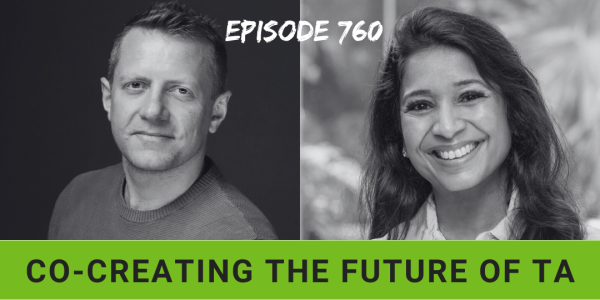
My guests this week are Simon Bishop, Head of Talent Acquisition at SoftwareOne, and Ritu Mohanka, CEO at VONQ. Their partnership spans employer branding, recruitment marketing, and agentic AI deployment, all while Software One was navigating the complex integration challenge of merging two TA functions post-acquisition.
Their collaboration was central to VONQ’s recent launch of EQO, their agentic AI platform. SoftwareOne was a development partner, helping shape the product through real-world testing and feedback. You can watch the full launch on VONQ’s LinkedIn page.
In the interview, we discuss:
• How the partnership evolved over time
• Building employer brand in competitive markets
• Multi-channel brand-led recruitment marketing campaigns
• Piloting and implementing agentic AI
• The vital importance of transparency and explainability
• Managing change and recruiter adoption
• Candidate reactions to AI screening
• Navigating TA through a major acquisition
• What the future of talent acquisition will look like
Follow this podcast on Apple Podcasts.
Follow this podcast on Spotify.
00:00
Matt Alder
A lot of vendor relationships stay transactional, but what happens when a TA team and a technology vendor actually build something together? Keep listening to find out why the results might change how you think about partnerships. Support for this podcast comes from Vonq. Vonq supports global enterprises worldwide, driving efficient hiring through AI powered job distribution and recruitment intelligence. Vonq recently unveiled Echo, a new AI agent ecosystem designed to make overwhelmed TA teams and outdated funnels a thing of the past. Echo rebuilds the hiring process for speed, clarity and fairness without losing human control. To find out more, go to vonq.com and Vonq is spelled V O N Q. That’s Vonq. Hi there. Welcome to episode 760 of Recruiting Future with me, Matt Alderman. Strategic partnerships in talent acquisition can mean the difference between incremental improvement and transformational change.
01:27
Matt Alder
But what does a true strategic partnership actually look like? How do you move beyond the traditional vendor client relationship to genuine co creation? My guests this week are Simon Bishop, Head of talent acquisition at SoftwareOne, and Ritu Mohanka, CEO at Vonq. Their partnership spans employer branding, recruitment, marketing and agentic AI deployment, all while SoftwareOne was navigating the complex integration challenge of merging two TA functions post acquisition. Their collaboration was central to Vonq’s recent launch of echo, their Agenti AI platform. SoftwareOne was a development partner helping shape the product through real world testing and feedback. You can watch the full launch of echo on Vonq’s LinkedIn page.
02:17
Matt Alder
Simon hi Ritu and welcome to the podcast. Simon, your first time on the show. Can you introduce yourself and tell everyone what you do?
02:27
Simon Bishop
Sure, yeah. Hi Matt, Great to be with you today. So yeah, I’m Simon Bishop. I’m the global Head of talent acquisition for SoftwareOne. SoftwareOne is a AI powered software and cloud solutions provider based all over the world in 70 countries. We’ve got about 13,000 people working for us right now and we help our clients to navigate complex IT environments, really giving them that confidence to make the right decisions about the future setup of their IT infrastructure. And I think particularly was worth calling out this year. That’s been a big year for us. We have been going through an integration with another company called Crayon. So this year has all been about that combination and putting the best of both those companies together to really drive us forward.
03:08
Matt Alder
Wow, that sounds like quite a challenging year and we’ll sort of dig into that as we get into the conversation Ritu, great to have you on the show again. Can you quickly introduce yourself and tell everyone what you do for people who may not have seen you on the show before?
03:21
Ritu Mohanka
Absolutely. Always a pleasure to be here, Matt. Thank you for having me. I’m Ritu Mohanka. I’m the CEO of Vonq. You didn’t mention one big thing, which I will mention our launch, which we did a couple of weeks ago. It was such a great day and if you’d missed the launch, please do go watch it if you didn’t catch it or reach out to us and tell us if you have any thoughts. So more about Vonq. We’re a recruitment technology company solving a really critical challenge around. How do you find, screen and assess candidates at scale while keeping the process fair, transparent and human centered? As I mentioned, we’ve developed launched Echo, our agentic AI that conducts dynamic screening and interviews and generates really comprehensive dossiers for each candidate. And we’re embedded in over 70 ATSs and HCM platforms globally.
04:11
Matt Alder
Fantastic. And I think the partnership that your two companies have is kind of really interesting and that’s why Ruth’s really keen to sort of this conversation and you know, dive into that in a bit more detail. So let’s kind of start with that. So Simon, you’ve been working with Vonq for a while. How did everything start?
04:30
Simon Bishop
Yeah, probably going back sort of four or five years ago I think is how long the actual partnership has been working together. But I’d split it into two halves. So, you know, the origins of our relationship was using Vonq as a multi posting tool aligned to our ATS. And then I think when Ritu came on board with Vonq a couple of years ago, we invited them to join us at our TA leadership meeting in Amsterdam. And it was a really, it was kind of like a reset moment because Richie was new, she wanted to hear from one of her customers and I think she sat in a room with all of my leaders and yeah, I think there was some quite open and honest exchanges and feedback.
05:06
Simon Bishop
And what I mean by that is that we absolutely saw the value in the tool that we partnered with, but I don’t think were realizing the value out of it. So out of that meeting there really became a really strong positive conversation that was Vonq trying to understand what is it were trying to achieve as opposed to maybe looking backwards at maybe some of the things we didn’t get right the first time around. And it was the beginning of that conversation that really took us to, I Guess where we are today while we’re here talking? Because it felt like a genuine sort of two way conversation rather than a technology provider just trying to pitch you a product that would solve a single problem.
05:40
Matt Alder
Absolutely. Ritu, what was that experience like?
05:43
Ritu Mohanka
Gosh, I remember that Amsterdam meeting. Simon’s team was skeptical, rightfully so. And they certainly didn’t hold back when it came to feedback. They’d seen, of course, a lot of HR tech vendors making big promises. But what I really appreciated of that conversation was they were very clear about their pain points. That’s when we knew we could actually help, but more importantly that we could learn from them. SoftwareOne is a sophisticated global tech company. They weren’t just going to implement what we built, but rather they were going to challenge it, break it, even, help us make it better. We first ensured all TA leaders knew exactly how we could potentially help when it came to job distribution and recruitment, marketing.
06:23
Ritu Mohanka
We did a ton of refresher training and enablement on what our technology did and how we can help them both reach both passive and active candidates. So it was a, it’s been a journey.
06:34
Matt Alder
Yeah, absolutely. And Simon, why did you decide to kind of go, you know, deeper into to what Vonq do than, you know, what you were sort of currently working with them on?
06:43
Simon Bishop
Yeah, well, I think a couple of parts, I think that’s kind of reset to sort of realize the value in the bit that were already doing with them. So sort of that was the reset part. But then it was out of that conversation. As I say it was that listening, I suppose that part of it’s like what is it that, where do you want to go to over the next couple of years? What your problems, what are your challenges? And then Vonq sort of being very open with their own development and where they were going as well and I guess sort of going back maybe 12 months ago now. That was when they approached us about becoming a developer development partner on their new AI screening capabilities.
07:15
Simon Bishop
Because Richard heard me talking about that in meetings and saying, look, you know, this is the future. We all know that’s the future. We need to identify the right tool to go with. But it’s not just about the tool. It’s about being with a company that actually understands what you’re trying to achieve. And the ability to be in a developmental side of that as well was really interesting because it’s not just buying an off the shelf solution, it’s actually having the ability to work with their team to actually get exactly what we want out the end of just felt like they were listening and it felt like we had a say and that could deliver us better results than some of the other auctions were looking at.
07:51
Ritu Mohanka
And from our perspective, we specifically chose SoftwareOne as one of our first development partners because we’d already proven we could deliver for them. On the marketing side, we understood their business, we understood their challenges, and of course, most importantly, their ambitions for the future. When were ready to develop the agent tech AI, we didn’t just want any customer. We wanted a sophisticated global tech company that could push us, that could challenge us, that could help build something truly transformational. And Simon’s team was perfect for that because the feedback loop that was invaluable, that collaborative approach meant that implementation was smoother because they were shaping the product to their needs in real time. And our product became stronger for all our customers as a result of that.
08:36
Ritu Mohanka
And from our perspective, we saw an opportunity to support SoftwareOne holistically, not just making screening more efficient, but helping them build a much more proactive strategic TA function that could compete for the talent incredibly competitive markets.
08:50
Matt Alder
Absolutely. And I’m really keen to dive in and talk about the, you know, the agentic AI and kind of how that developed. Before we do though, let’s just talk a little bit about employer branding and the employer branding stuff that you kind of worked on. So when it comes to employer branding, Summer, what’s the challenge that you’re trying to solve or the challenge that you were trying to solve at the time?
09:12
Simon Bishop
I think. Well, I mean, I’ve been here nine years, so quite a long journey with the company. But I think we kind of have faced the same challenges the whole way along. That which is obviously the tech market is massive and there’s some very big companies in there and we’re no longer, I would say, a small fish, but we’re certainly a medium sized fish at best. So when it comes to trying to attract the best talent and really landing SoftwareOne as an employer of choice in that very competitive market, we’ve always needed to make some noise. And it’s.
09:40
Simon Bishop
So the whole branding, the employer branding journey aligned to that has been about positioning us as to why are we an organization that maybe feels a bit different, that can really give candidates a different kind of exposure and a different kind of work experience compared to maybe some of the bigger tech companies, which they’ll all know, and they’re the brands that everybody would want to speak against. So we focus an awful lot on our culture as an organization, the fact that maybe we’re a little bit leaner, but whilst we are now 13,000 people, as opposed to just about a thousand people when I started, we still have some of that agility of a smaller company. We still allow people to really drive their own careers, but they can really make a difference. They can actually see the impact of what they’re doing.
10:22
Simon Bishop
They’re not just sort of lost in a large organization. So it’s about transferring all of that into that brand which goes out into the market, getting that seen as far and wide as possible, but also in a very targeted way as well, because we’re quite certain as to the kind of talent we want and where they exist and where they sit, whether that’s geographically or the industry. So we need sort of like the big bang branding about. Here we are, this is what the company is. But then we need the more targeted recruitment, marketing and branding which is actually hitting the screens of the desk of those people that we actually want to get.
10:54
Matt Alder
Yeah, absolutely. And you’ve, as part of that, you kind of run campaigns across multiple channels. Give us some kind of examples of some of the things that you’ve done.
11:05
Simon Bishop
Yeah, so we’ve really diversified. I mean, so our branding journey, actually, once I said I’ve been here nine years, it’s probably only the last sort of four or five years that our branding has really taken off. And as in, we’ve actually had dedicated people in the TA team actually driving IT expertise amongst that group as well. Now that’s translated into us being able to go beyond just doing, you know, your basics on LinkedIn.
11:27
Simon Bishop
So going into things like Instagram, YouTube, TikTok, exploring things like Reddit, Google Ads as well, we try and meet, you know, try and find out where the candidates and then try and engage with them in the right format on those platforms as opposed to that sort of one size fits all approach, which is what I would say was probably like the first year or two of what were doing just to establish some noise in the market. I think within that, you know, some of the. Just to call out a couple of examples.
11:52
Simon Bishop
I mean, so in this combination that we’ve gone through the last year, one of the big sort of public announcements we wanted to make is that because both companies were known in the tech space, is that how were coming together as a company, how were combining our core values, which is something that both our employees and our customers really value about us? So we put together a quite a long Video, actually it was three minutes because it was actually explaining the process of how we brought these two core value sets together and what that was going to feel like to the company, to our customers. So it ended up as a three minute video which we worked with Von Gone to create a YouTube in feed ad, which is the first time we’d actually done that.
12:29
Simon Bishop
And despite the length of the video, because most things you’ll hear about will say that you should keep it below 30 seconds, but despite the three minute length, actually that’s getting about one and a half million impressions in just the first 20 days of that. And not only were the impression rates high, but actually was nearly a 50% video through rate as well. So it was clearly engaging because people were actually authoring to stay to watch through to the end.
12:52
Matt Alder
Fantastic. I want to get kind of Ruka’s thoughts on that in a second, but before we do, just talk us through the kind of results. So huge amounts of impressions, obviously a lot of attention. How did that convert into engagement and applications?
13:08
Simon Bishop
Yeah, well, I mean, obviously we’ve seen spikes in the traffic coming through to our main website as well as the career sections within that. There’s been spikes in applications for all of our jobs across the board at that time as well. It’s also, if you look at our other sites on Instagram and so the follower rates that’s going up on all the sites has gone up massively. I think our Instagram followers went up about a thousand percent this year off the back of not just this campaign, but a few of the other ones that we did as well. So we’d kind of reached a plateau where were a bit stuck with sort of getting to that next level of engagement.
13:40
Simon Bishop
And I think the way that these campaigns have been set up with the targeting working behind them has really allowed us to go up to that next level. And now we can put our stuff out there to a much broader audience, but at the same time a broader audience that is still in the space that we really want to speak to. My head of branding in my team, a guy called Divesh, he called that campaign the mother of all campaigns because of the impact it had, not just on what were trying to talk about, but on the broader scope of what we’re trying to do as well.
14:06
Matt Alder
Fantastic. Fantastic. Ritu, what was your sort of take on, you know, this type of campaign? How does it compare to other things you’ve seen? You know what really made it stand out?
14:17
Ritu Mohanka
Yeah, I think it was the multichannel strategy. It really paid off, Matt. We ran targeted campaigns on different platforms for different objectives. As Simon alluded to on Instagram, we focused on building community. That was the biggest thing. SoftwareOne’s follower count, as Simon mentioned, grew from 5,500 in February this year to over 8,750 by November this year. That’s nearly 60% growth in engaged followers. This now gives SoftwareOne much more reach in every organic post. And if I think about TikTok, we ran campaigns in super competitive US and Canadian markets. 1.47 million impressions with a 4.38 CTR. That’s exceptional for social media, especially TikTok. And again, I think the strategy we adopted together is based on this classic Aida model, which is awareness, interest, desire and action. And every campaign is designed to move candidates through that funnel deliberately.
15:15
Ritu Mohanka
Because however, candidates don’t all move through this journey at the same pace, which makes it especially important to stay visible throughout the entire funnel. Doing show ensures that you can meet them exactly to Simon’s point, again, meet them where they are at any point in their journey.
15:31
Matt Alder
Cool. I love this because so many people just think about recruitment marketing as job adverts and things like that. And it’s just great to hear that kind of level of strategic thinking behind it. I mean, what’s kind of next for it, Simon, as you kind of move into next year, what’s the sort of the next stage or the next consideration?
15:48
Simon Bishop
Yeah, well, and actually just back on your last comment, Matt, I think the other interesting thing is you say that you don’t need to be talking about, you know, TA or jobs to engage with people because actually one of the other really interesting projects we did with Volk was on. We created a diversity playbook which was kind of guidance for candidates equally. We used it internally for hiring managers and for the TA team too, about both our DIB commitments, but also, you know, considerations you need to make in these processes to make them fair and equity for all. And even that got nearly a million impressions as well. So it’s the interconnection of the things around the topic that actually drive people towards you.
16:24
Simon Bishop
And I think actually it can build that certain level of trust and interest that’s more interesting than just we’ve got this cool job or this cool career opportunity and things like that. So into next year. I mean, look, we’re going to. Obviously I think the whole journey here is that you’re learning the whole time. And so the things we just mentioned have all happened in the last couple of months and it’s really changed our focus as to how and what we should be talking about in the market. We still need to do that core branding and advertising kind of strategy. But I think all of the kind of thought leadership and ideas that we have are around the topics and we’re certainly going to focus on those with different campaigns. We were still learning and exploring on some of these other platforms.
17:02
Simon Bishop
So Reddit and TikTok that have been mentioned a few times, I think that’s only been in the last 12 months and we started to engage there. So it’s also the kind of content that we want to develop to put onto those as well. So that’s been quite a fun process for our team to get stuck into as well. And of course, as we go into next year, now that our integration is sort of like fully up and running, next year is all about talking to us as talking about us as, you know, a combined company, what benefits that gives, whether it’s candidates or our customers, and how we evolve as an organization together.
17:34
Matt Alder
Yeah, and I thought that’s interesting as well because the world is rife full of mergers and acquisitions at the moment. I’m sure there are other tail leaders in a similar position. I mean, from an employer brand work perspective, what advice would you give to companies who are in a similar position to the one that you’re in?
17:51
Simon Bishop
Yeah, stop talking about it early. So I’m sure in all those situations there’s always quite a long project plan for post merger. Integration and branding sometimes can sort of exist in the latter part of it. It’s like, oh, we’ll get to that once we sorted out all the inner workings of the company. But you need to start planning for it early and you need to start actually acting on it early as well. And it has a twofold impact that there’s the public interest side of it. So that’s really important. But obviously we needed to keep hiring during this integration too. So you could end up with a situation where people are worried to join either side of the organization because they think there’s going to be a lot of reorganizational structure and things like that.
18:29
Simon Bishop
So you need to get the messaging out there quickly to say, hey, look, it’s still business as usual here, we’re still growing, we still need to hire great people. So getting that side out of it as well. I think the other thing that’s really interesting is that the positive impact it has on the internal employees as well, because they follow us just like the external market does and people do Sometimes get frustrated during integration programs that they’re not hearing as much as they want to hear as soon as they want to hear it. But by seeing some of this positivity coming through the branding side, it starts to create a dialogue internally as well. So that’s kind of like a side effect, if you like, of what we’re doing in the external market. That has a positive impact internally too.
19:07
Matt Alder
Fantastic. So I’m dying to talk about AI, so let’s talk about the agentic AI part of all of this. So again, Simon, what was it you were trying to solve that you felt AI and AI agents were the answer to?
19:21
Simon Bishop
Yeah. Okay. I’ll try and break this down into point. So I think, you know, all of us in ta, anyone that’s listening to this will know that, you know, this is the future. You’ve got to. You’ve got to be looking. You’ve got to be looking into what’s possible and what’s. Yeah, what are the right sort of bets to make in the AI journey in TEL acquisition right now then? If I look at the kind of business challenges that we have at the moment, I mean, operating across 70 countries can lead to inconsistencies into the way that we are delivering to our business. And, you know, that’s not a criticism of anybody, but everyone has their own ways of working, their own cultures, their own expectations as to how they’re doing things.
19:56
Simon Bishop
So that was something else were looking to solve to give a more consistent service to our hiring manager community. We have a lot of hiring managers that will be based in one country, but operate across multiple regional setups. So at any one time, they might be dealing with a recruiter based india or America or the UK or wherever it may be. But. But they don’t care about that. All they care about is the experience they get, the quality of what they get, and the speed, of course, being the other thing as well. So. So there’s that part of it. And then of course, there is an efficiency part to this as well. There’s. There’s. What, what are TA members actually doing with their time? And, you know, are they spending too much of their time on tasks that can be done another way?
20:31
Simon Bishop
Because what we really want our TA partners to be known as is business partners. We want them to be speaking to the business, understanding the business, getting quite deep into that, to be experts that can represent those businesses in the market. So speed, efficiency, quality, consistency, and freeing up time of our team to actually realize their value back to the business.
20:52
Matt Alder
And I’m sure you looked at kind of a number of sort of solutions around this. What was it about the way Vonq approached this that kind of stood out from everything else or made you kind of realize that they were the right partner for you?
21:05
Simon Bishop
Yeah, I mean, we all, as TA leaders, TA people, we are inundated with spam, essentially saying, hey, look at this new cool AI tool. This is the best new thing out there. You’ve got to have this, you’ve got to have that. And it is quite a bit of a minefield, to be honest with you, because at some point you get overexcited and think, yep, I’ll try it all. And other times you need to sort of take a step back and say, like, what is the reality here? What is it I’m trying to achieve and which of these partners do I really trust that can deliver against that? So we kind of took us, took a step back and you know, we spoke to a few different companies, some of the sort of big names out there.
21:36
Simon Bishop
Obviously we have ATS providers and, you know, AD, LinkedIn and things like that we sort of kept an eye on their roadmap of what they were doing, but we didn’t really see anything from those sites that kind of captured it all together and allowed us to solve multiple aspects of that problem. But those problem statements that I just said to you, what were trying to achieve and that’s, do we believe that we can work with a partner who can target other right people? And that goes back to the branding part of this conversation that had been proven with Vonq. And then do we believe that their, the quality of the AI they have can actually really make that journey efficient and engaging for those candidates as well?
22:12
Simon Bishop
And again, being part of the development process with that, there were things that we could feedback during the pilot to say, well, look, you know, it’d better if we could do it this way or that way, or one example would be, you know, be great if they could. Can the candidate choose whether they go down this AI screening option, or can they choose to speak to a human, or can they do it as a written engagement as opposed to a verbal engagement? All those kind of things that allowed us to see the tool evolve to what we would choose to design if we had the technical know how to do it for ourselves.
22:42
Simon Bishop
So I think it was all part of that journey, that back and forth, as Ritu said earlier, those sort of feedback loops, those feedback sessions, piloting it in a smart way that you could learn what didn’t work as well so that you could really work out where this fits into your workflows.
22:56
Matt Alder
Absolutely. And Ritu, any kind of thoughts on how that sort of how that panned out? Because it is an interesting approach in a kind of market where people are tending to sort of launch, you know, complete products and then, you know, hoping to get adoption from there.
23:10
Ritu Mohanka
Absolutely, Matt. I mean, again, not blowing our own trumpet, but we really differentiated ourselves that it’s not just another chatbot or a CV parser, it’s really agentic AI, which means it’s an important distinction. Traditional recruiting AI has always been rule based or pattern matching, passing CVs for keywords, asking fixed yes or no questions. It’s always remains static when we think about agentic AI that’s autonomous. Our AI agents conduct dynamic conversational interviews that really adapt in real time based on the candidate responses. So they ask intelligent follow up questions, they probe deeper when they detect something interesting. They assess technical skills, they look for gaps between the job description and the candidate chat, they look for behavioral fit, they look for communication style, they look for problem solving approach and somewhat cultural alignment.
24:00
Ritu Mohanka
It’s the difference between a multiple choice quiz and an actual conversation with a skilled recruiter. So I think that’s what’s truly differentiated.
24:08
Matt Alder
Fantastic. And obviously one of the biggest things that I think we’re seeing with AI is all of the, you know, the kind of the change management around it and the different ways of thinking. I mean, Simon, from an implementation perspective, where did you start with all of that?
24:23
Simon Bishop
Yeah, yeah, it’s interesting topic, Matt, because I, you know, I’ll be honest, not just with Vonq, but when we kind of started this conversation both in my leadership team and then sort of going beyond the team, you do get that reaction of or reluctant, should we say, it’s like, hang on, you’re just getting me to pilot something that’s going to replace me. Which is, as I said, that’s not the intent. The intent is actually to allow them to realize their value back to the business and hopefully do the bit which is more interesting to them as well. So there’s a little bit of sort of hearts and minds piece I think at the beginning to do that. But then what we found is that there were, you know, there were people in our team that had a real excitement and interest in AI generally.
25:01
Simon Bishop
So, you know, before we started going into formal pilots, people were playing around with ChatGPT and we have Copilot here as well from Microsoft. So people were Starting to do their own thing. So we kind of identified those people and brought them on board as like the. The most engaged people with this topic anyway. And that became our pilot group. And we picked people from different parts of the world and in different roles. So some are TA partners, some are sources, so coming at it from slightly different angles. And then we also made sure that the kind of jobs that we fed into it were varying as well. So whether that was by level of seniority or by sort of the requirements and various skill sets as well. So we really wanted to sort of do this. I was going to say Scattergard.
25:38
Simon Bishop
It wasn’t Scattergard. It was very planned, but were trying to get this sort of. What’s the best way to put it, good examples from all over the place where we could see exactly how this would work in different scenarios. Because were very aware that in most of these situations, a one size fits all approach is not going to be the right way to look at these things. And I think the team really got on board with that. And I think what they really liked was the processes and the kind of what happens to the candidate experience that Richard was just talking about what you actually get at the end this portfolio of information, it’s that consistency again, but it’s also extremely transparent. So the kind of skepticism about, well, can this AI agent actually do what a human could do?
26:17
Simon Bishop
When you read the portfolio, it’s actually better quality than what I think one of our recruiters might come up with. And that’s not a criticism of them. It’s because it’s looked at it in all these angles and pulled it all together. And that’s also super important when it comes to bringing this to the business as well. Because again, when you go through your legal teams and stuff like that and they’re asking about the efficacy of these AI tools, the transparency is absolutely there for all to see is the how decisions, how the guidance is being given and how that leads you to make decisions.
26:47
Matt Alder
And how.
26:47
Matt Alder
What about the candidates? I think this is kind of a really important area because, you know, I just hear so much speculation that candidates don’t like this. What, what was your experience from how the candidates reacted to it?
26:59
Simon Bishop
I think, I think operating globally, there’s always a cultural overlay to that answer, which is some cultures or countries seem to adapt and adopt to new technologies better than others. I think that also is not just about geography, it’s also about age profiles, sometimes of people. I think one of the things that we found quite interesting though is that we might just default and think, oh yeah, younger people are going to be more engaged with it than the more experienced candidates. But that actually wasn’t what we saw. And I was very interested when I saw that data and I asked Ritu and her team, I was like, why do you think that is?
27:33
Simon Bishop
Because that kind of surprises me that we’re seeing more senior candidates are actually choosing to go down the full AI route rather than asking for a human interaction during the process. And really it comes down to time and availability. You know, those people are the, generally the busiest people. And so doing the process this way allows them to choose when they’re doing it, when they’re having the conversations, when they provide the input, and that actually fits their lifestyle. So it’s actually a lot better for them as well, I think. Also, you know, it was really interesting. A couple of the pilot jobs we put through the tool were our, in the AI space. So that’s us hiring AI consultants for ourselves.
28:08
Simon Bishop
And they actually gave super positive feedback, not only about the experience, but also it positioned us as a good technology company in the AI space because they were sort of, if you’re using tools of this AI quality, that’s the kind of AI company we want to come work with.
28:23
Matt Alder
Yeah, fantastic. That makes, that makes perfect sense. And in terms of kind of the actual, you know, the results, the numbers that came out of this talk us through that a bit.
28:32
Simon Bishop
Yeah. So if we go back to those problem statements and some of the KPIs to match up against that, so the time to hire was quicker across the pilot roles. It was just over 30% faster for us to actually get to the conclusion of the roles by doing this process. And that’s purely by removing that heavy lifting, sort of manual sourcing aspect out of the process. And also all the basic stuff, you know, the note taking, the writing out, providing the briefs back to the hiring manager. So that was saving around 200 hours from the recruiters across those pilot roles that we put into it. The conversion rate in terms of the candidates that were actually first approached about jobs to actually being interested in the jobs was at 92%.
29:12
Simon Bishop
I guess you could compare that to LinkedIn emails and those kind of traditional reach outs that you might do, which we actually have a very positive rate there too. It’s sort of 40 to 50%. But you can see that we’re actually doubling it through this way of engaging with people and that there were a couple of projects where were getting through hundreds of candidates in a matter of hours as opposed to a matter of weeks too, which again builds back into that timepiece as well. So, you know, in terms of time saving. Amazing. And then I think the other part of the result is what I was saying earlier about the quality of the output that we could then share and discuss with the business, that they were the two biggest improvements we really saw.
29:46
Matt Alder
Fantastic. And ritu, is this the kind of results that you sort of expect to see from this kind of system?
29:52
Ritu Mohanka
We were thrilled. Matt. AI does the heavy lifting, but humans absolutely stay in control and do what they do best.
29:58
Matt Alder
Fantastic. And Simon, what’s the next stage with this? How are you sort of taking it further into sort of 2026?
30:05
Simon Bishop
Yeah. So obviously going beyond the pilot, sort of, that was the proof of concepts. That’s where we’ve got to. There’s still work to be done in terms of sort of tweaking and customizing how it works through the different layers of different jobs in different part of the organization. But that’s all good. We’ve proven that there’s a, you know, a nice majority part in the middle that we know we could work at it. So what we now need to do is that the pilot we actually ran like offline essentially. So we actually just used the isim, sorry, the Vonq. The Vonq platform to run it. There was, there was quite a lot of manual conversations to get information into that system and equally back into our ATS. So we now ISIMS is our ats.
30:40
Simon Bishop
So we’re going to work next with Vonq at the beginning of the year to get a full integration running with ISIMS that also allows it to be open to our entire TA team, not just into the pilot group. So we’ll obviously get a lot more volume going through the platform now as well. And it also, all that documentation I talked about, all that data capture will then sort of move between the two systems as well. So fully auditable, fully trackable information, as we would expect through our ats, but also being fed in from the VOP side as well.
31:06
Matt Alder
Yeah, absolutely. And I think it’s really interesting because what I’m seeing from this AI age that we’re entering is integrations are becoming, you know, almost like a must have rather than an inconvenience for vendors. I mean, ritu, what’s your perspective on that bit?
31:22
Ritu Mohanka
Couldn’t agree more, Matt. The ISENSE integration isn’t just technical plumbing. It’s about creating that ecosystem where data flows Seamlessly and recruiters have all the context in one place and hiring managers can make faster decisions with confidence. And it’s also where compliance becomes critical. The EU AI act requires transparency, explainability and fairness. And this integration ensures that every candidate evaluation meets those standards automatically, by default.
31:50
Simon Bishop
The question you asked earlier about how did the recruitment team reacts to starting this pilot and going down this journey, I think the integration bit is also part of that answer as well, because it’s all very well buying lots of new platforms and systems, but if people have to go somewhere else to use it, they generally will default not to. So putting everything in an integrated place where the recruiter knows, I log into this system in the morning and I do everything from here, it means they will adopt it into their workflow. Much easier than having standalone pieces.
32:17
Matt Alder
Yeah, 100. 100%. That. That’s such an important aspect to it. So we talked about, we talked a bit about your partnership, we talked about employer branding, we’ve talked about AI agents and really the kind of, you know, the massive impact that they’ve had on what you do. Talk a little bit about the kind of. The crayon acquisition and what the impact has been for, you know, the issues have been around ta that.
32:42
Simon Bishop
Yeah, sure. So, I mean, in my time here, we’ve done, I’d like 20 acquisitions, but this is by far the biggest one. When you look at it on paper, you might think these are two very similar organizations, so that makes it easier, but actually, in some ways it can make it more hard because it’s where you’ve got the biggest areas of overlap. So you’ve got two companies doing the same thing, but in different ways. So as you, if you take that into the TA journey, it MEANT we had two ATSs running for the last six months, two different HRISs working for the last six months. We had two TA teams that, if you look at the job profiles, they kind of look the same, but the way they were working, the way they were organized was very different.
33:17
Simon Bishop
We had different market footprints, so there’s areas where they are bigger than us and we don’t have much experience. And likewise the other way around as well. So trying to bring together the technology solutions, the people side of it as well, the structure, the right leadership team to organize that. And I think I mentioned it earlier, it’s trying to do all that whilst also not breaking what you’re trying to do today. So for the last six months, we have had multiple interim processes running whilst we kind of get through the decision Making process of analyzing the gap analysis between the two ways of doing things, the positives and negatives of the two ways of doing things. And that’s kind of where we still are today.
33:54
Simon Bishop
But now we’ve done a lot of the heavy lifting and the understanding this side of Christmas what we’re planning to do next year is from January all of these things will start to fit into place as genuine combination. The teams are now fully aligned, the systems will be fully aligned in the new year and that allows us then to go through. We’re actually doing a full process improvement across TA as a result of this is coming together as well. That’s, that’s probably been the most exciting part is we’re not saying do it our way, do it their way. We’re looking at both and actually coming up with a new, better way of doing it. So. And that all fits back into the AI journey and where that lays into this as well.
34:27
Simon Bishop
Because whilst we’re improving everything we do today, we’re adding some new things on top of that which hopefully will give a far better service and experience both to the organization, the candidates.
34:36
Matt Alder
Absolutely. And you know, how does kind of the Vonq Partnership fit into the integration? How is it? How has it sort of helped?
34:44
Simon Bishop
Yeah, so, but there are various aspects. So obviously in terms of going back to the core of our relationship right from the beginning in terms of the job advertising and things like that. So the company crayon, they didn’t have a multi posting engine, they didn’t have a sort of an advertising campaign marketing partner to work with as well. So they’re super excited. But they now get, they get that side of it as well. And that’s specifically important when I say that they’re in some markets and they’re far bigger in some markets and do more hiring in some markets than we’ve ever done. So we can now say, well look, we’ve got this platform, we’ve got this relationship, speak to them about what you struggled with in the past and we can take that into these markets and actually improve what we’re doing there.
35:18
Simon Bishop
And then the kind of the AI side of it as part of any integration, there’s obviously a lot of synergy, savings are discussed and where you could actually make improvements from a cost management perspective as well. And so that’s where the AI layering of this journey comes into it as well. So just because we’re now a bigger company that’s going to hire more people, we don’t need to keep growing the T18. We can actually start to deploy these tools which will allow us to scale without just adding headcounts all the time and actually gives us savings back to the organization.
35:46
Matt Alder
Fantastic. And what would your advice be to t leaders going through a similar sort of process?
35:51
Simon Bishop
Well, you’ve got the balance of take the time, but you also need to go quickly, which I know sounds completely contradictory, but obviously in these situations you are given a construct of an integration plan. So for us it was from sort of the halfway point of this year through to the end of next year. So 18 month window. But everyone will always challenge you to do things as quick as possible. But we did have the discussion very early with the business to say, look, we’re not going to go as fast as we could because of that reason that we don’t want to break anything. In the meantime, we still had to hire two and a half thousand people this year. And so we can’t impact that because we’re a people business. If we impact that has a business material impact as well.
36:28
Simon Bishop
So, so try and get the term right as to what you should be doing when and then really spend that first part in that listening phase. And so that’s really deep diving on both sides of both organizations as to what’s being done, why it’s being done, what decisions led up to things being done in a certain way and then kind of unpicking it, then working backwards and going right back to the beginning. So you kind of got, you’ve got the two pieces of paper with both companies on it. Then you’ve got your blank piece of paper at the bottom and you’re feeding the best of both into that. And then there’s a fourth piece of paper which is the improvement going forward.
37:02
Simon Bishop
So that the full ed of the integration, you can really say not only have we integrated, but we’ve actually improved everything we do and that’s going to better for everybody, for our business.
37:11
Matt Alder
Fantastic. Fantastic. So we could probably do about another hour on all of this stuff. There’s so much, there’s so much kind of going on here. But just in the interest of time, I’ve got a couple of final questions for you both. So I’m just in terms of sort of summing up the partnership from both sides, give us, you know, give us kind of a quick elevator pitch for the, for the other side, as it were. So, you know, Simon, you know, why vong just give us a quick kind of summary.
37:43
Simon Bishop
Yeah, probably two keywords. What one Right past that beginning of the relationship and the reset was the partnership. So that’s so important to me personally, I don’t like being salted for the sake of being sold to. I like to be listened to and that being given good solutions. And then I think that the second word I’d use is transformative. Because the solutions that were coming back were not things maybe that I thought of or were fully aware that were out there. They were actually things that triggered something in my mind that says, okay, yes, this fits with what I’m trying to do here. And they are willing to listen to give us the right and the customized solution that will deliver those needs. So I think those two things, partnership and transformative, have been absolutely fundamental, fantastic.
38:23
Matt Alder
And ritu, same question to you, but the other way around. Why has it been so great to partner with SoftwareOne1?
38:28
Ritu Mohanka
Because Simon is great. But no, honestly because they pushed us to better. They didn’t just implement a product, they challenged us. They gave us real world complexity and helped us build something together, but stronger. And that’s the kind of partnership that drives through innovation. And honestly, because Simon and his team represent the future of ta. Pragmatic, data driven and human centered.
38:51
Matt Alder
Absolutely. And let’s finish with a question about the future. So Simon, what has all this taught you about what the future of TA might look like?
39:01
Simon Bishop
Well, one future is undefined. The future is evolving all the time. And again back to how the recruiters reacted to the AI journey. One of the things that I said to them is that if you don’t take part in these pilots, if you don’t start to understand these tools, you’re going to become obsolete quite quickly. Not because AI will replace you, but you need to understand how to work alongside these tools and the value that they can add to you. So I think anyone thinking about the future of ta, it’s stay on top of these trends and get involved in what is coming and keep that future looking as to what’s coming next as well, because nothing standing still for very long. This is our focus this year to get this all implemented successfully with Voltage.
39:45
Simon Bishop
I’m sure RITU will be knocking on my door with what’s coming next from their side, just as other providers will be too. So yeah, just keep your eyes open and be up for the challenges and up for trying these things.
39:54
Matt Alder
Fantastic. And ritu, your thoughts? Where’s all this heading?
39:58
Ritu Mohanka
Yeah, I think this is the first tier where we could truly say that TA is beginning to become strategic and not transactional. Embracing technology is becoming an enabler, not a threat. And building partnerships such as ourselves, you know, with whichever vendor or partner it is, it’s gotta be with sort of hiring managers and candidates in mind and focusing on outcomes, not activity metrics. That would be critical when we think about the future of ta.
40:22
Matt Alder
Absolutely. Ritu, Simon, thank you very much for talking to me.
40:27
Simon Bishop
Thank you.
40:28
Ritu Mohanka
Thank you for having us.
40:30
Matt Alder
My thanks to Simon and to Ritu. You can follow this podcast on Apple Podcasts on Spotify or wherever you listen to your podcasts. You can search all the past episodes at recruitingfuture.com on that site. You can also subscribe to our weekly newsletter Recruiting Future Feast and get the inside track on everything that’s coming up on the show. Thanks very much for listening. I’ll be back next time and I hope you’ll join me.
Transcribed by https://fireflies.ai/