The recruitment experience is undergoing a fundamental transformation with AI and automation playing an increasingly larger role. It’s essential to recognise the consequences of lost human connection. Trust is an absolutely critical element here, and employers need to ensure they aren’t losing the emotional intelligence and genuine connections that build trust with candidates.
So how do you create authentic connections when AI does the screening and robots send the emails?
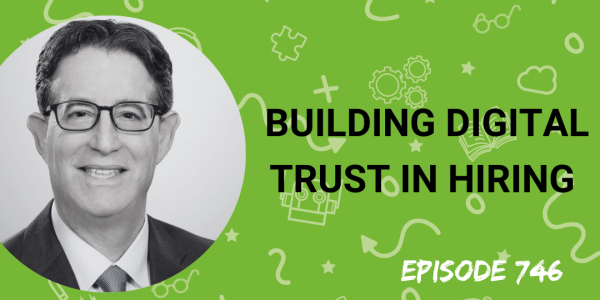
My guest this week is Gal Borenstein, CEO of The Borenstein Group. In our conversation, he talks us through his framework for building genuine digital trust in an increasingly automated world.
In the interview, we discuss:
• The rapid digitalization and automation of business communication
• The jolt into a new era for employer branding
• The digital trust framework
• How to use AI to help build trust rather than erode it
• The importance of emotional intelligence
• A vision for the future
Follow this podcast on Apple Podcasts.
Follow this podcast on Spotify.
00:00
Matt Alder
Recruiting used to mean handshakes and office visits. Now it’s automated emails, AI screening, and video calls. Trust has always been a critical element in hiring. So how do employers ensure that they’re building the trust they need in a world of ever increasing automation and digital communication? Keep listening to find out.
00:24
Matt Alder
Support for this podcast comes from smart recruiters. Are you looking to supercharge your hiring? Meet Winston Smart Recruiter’s AI powered companion. I’ve had a demo of Winston. The capabilities are extremely powerful and it’s been crafted to elevate hiring to a whole new level. This AI sidekick goes beyond the usual assistant handling all the time consuming admin work so you can focus on connecting with top talent and making better hiring decisions. From screening candidates to scheduling interviews, Winston manages it all with AI precision, keeping the hiring process fast, smart and effective. Head over to smartrecruiters.com and see how Winston can deliver superhuman results.
01:30
Matt Alder
Welcome to episode 756 of Recruiting Future with me, Matt Alder. Recruiting Future helps TA teams drive measurable impact by developing their strategic capability in foresight, influence, talent and technology. This episode is all about influence. The recruiting experience is undergoing a fundamental transformation. With AI and automation set to play an ever increasing role, it’s essential to recognize the consequences of lost human connection. Trust is an absolutely critical element here, and employers need to ensure they aren’t losing the emotional intelligence and genuine connections that build trust with candidates. So how do you create authentic connections when AI does the screening and robots send the emails? My guest this week is Gal Borenstein, CEO of the Borenstein Group. In our conversation, he talks us through his framework for building genuine digital trust in an increasingly automated world. Hi Gal, and welcome to the podcast.
02:44
Gal Borenstein
Thank you for having me today.
02:46
Matt Alder
An absolute pleasure to have you on the show. Please could you introduce yourself and tell.
02:52
Matt Alder
Everyone what you do?
02:53
Gal Borenstein
I’ve been running a branding, marketing and public relations agency for the past 30 years, working with B2B technology companies. And in that process, I got to work with hundreds of companies in the C suite and really explore what works and what doesn’t. And. And especially with corporate leadership in companies that have so much on their plate that it’s impossible to hone in one issue and say fix it. But lo and behold, as I was thinking in the past two years about what is the real issue, I came to the conclusion that it’s all about building Trust and specifically post Covid is building digital trust. And if you can build digital brand trust, you really have an opportunity to fix it.
03:46
Gal Borenstein
Hence my new book Don’t Believe the Hype which is all about helping corporate leaders understand what do they need to do to build digital trust. And that’s really the short version of it.
03:58
Matt Alder
Fantastic.
03:59
Matt Alder
I think it’s particularly relevant in the HR and TA sector because recruiting is becoming more and more AI fied and I think there is a trust issue between employers and candidates. Give us your sort of perception in terms of what you think is going on there in terms of how digital experiences are altering the employers credibility and the trust that. The trust that employees and candidates have.
04:25
Gal Borenstein
Absolutely. I think the core issue really that changed from let’s call the good old days, which I mean two and a half years ago today is that we move from a relationship building that was analog. For example, an interviewee will come to an office and have a face to face conversation. You would assess their personality that will be assessing you. And then there’s either spark or chemistry or not in the new generation, which is digital and has AI in it. Indeed. And Google and any other large recruitment organizations basically automated the process where you don’t really have to talk to the individual more than you want to. And as a result they’re able to get more resumes but not more trusted in qualified people. Which is very painful when you’re on the chief human resources or chief people office in your organization.
05:30
Gal Borenstein
So transitioning from analog where we had handshakes when we had the ability to have a conversation and a second conversation change to faceless most of the time communications that are very robotic. And when you have that robotic communication, what do you lose? You lose the emotion. You lose the emotional intelligence that comes with the ability to change your answer and not fill out the form only. So the big deal really is the loss of authenticity in the communication process. And the single most important thing that has been happening is really the loss of the narrative. In the old days again two and a half years ago you could basically have your narrative as a company. So let’s say that you are an employer that is trying to recruit talent.
06:26
Gal Borenstein
You will have a positioning statement and a mission statement and talking about how much fun your culture is to attract people that are like minded. But that has changed dramatically because the narrative of the company because you have social media like Twitter X, Instagram, Facebook and most importantly review sites such as Glassdoor and indeed where people can put their thoughts pretty much unchecked. In terms of whether it’s true or not, can put up reviews that really change the whole dynamic. So before you actually had a chance to meet with them and know what they’re about, they’re judging you because their narrative is owned by what they see on the Internet.
07:20
Gal Borenstein
And when you can’t connect the dots and thinking that whatever you project or narrate, if you will, to the marketplace in terms of marketing, an employer branding, that’s not what’s happening on the other side. On the other side, you have a chat in a discussion room like Reddit, for example, where somebody’s asking, well, how good is this company? And you have a hundred people commenting negative reviews, positive reviews, mixed reviews. But the whole narrative now has been created where you have no control of it. And before you actually reach out to this person or you reach out to the person, the resume looks great and they’re not responding because somebody said this company doesn’t know what it’s doing. The CEO is horrible. They don’t really give you the benefits that they say they do. It could be anything.
08:12
Gal Borenstein
So employer branding is going through a very big transition and at the end of it is how do you basically recreate the digital trust that existed when you had that one way communication where you control the narrative? If you were in a corporate leadership position, yeah, absolutely.
08:32
Matt Alder
And I think that as we move further into the AI world, there are really good reasons why employers would want to use that in recruiting more. In a lot of ways it improves the process, but as you say, it does limit the amount of human to human interaction that we used to have.
08:51
Matt Alder
What’s the kind of the answer to this?
08:52
Matt Alder
What do people need to think about when they’re building these digital experiences? Looking at how their recruitment process works, what are some sort of key things to think about? What do people need to do?
09:02
Gal Borenstein
I think the overall answer is to change the game and take a minute, corporate minute. If you’re a leader in HR and talent recruitment business, to really kind of say and ask the question is what do people say about us when we’re not in the room? Which is really definition of branding that Jeff Bezos actually spelled out. Branding is not about what you say, it’s about what people say about you when you’re not in the room? Which means you need to look and listen to the signals that you’re getting from social media channel. We call that a trust signal. If that trust Signal was a 10, for example, and it’s now at a 6 or a 5 because we lost control of the narrative, you have an opportunity to fix it. So most professionals and most leaders are consumed with creating engaging content.
10:05
Gal Borenstein
And yet at the same time, no one seemed to be looking at what is the trust factor in an index or metric that says we’re getting, for example, good reviews and we’ll improve them by 50%, by 20% next month. Because that drips right into the funnel of recruits and employees in terms of how much they trust what their leadership is telling them. So the biggest thing really is to start by saying, we know what we don’t know. We know that we’re a professional organization and it’s a great culture where people are talking to each other. But if you don’t basically have the opportunity to do a trust audit, review employee feedback systems, hiring communications that are authentic, that cover shiny, happy people type stories that make people more engaged. Glassdoor reviews to identify inconsistencies between promise and realty training.
11:14
Gal Borenstein
Hiring manager to build trust in every interaction, making the candidate forms have opinions about the tone, clarity and transparency during the interview process. So not only you’re gaining your brand back by asking an recruit or promotion for an employee, you get the feedback from them as part of the process, which is bringing back that cognitive psychology where we want to get something for what we’re giving and if it disconnects and then the next conversation is just email or just a posting or something that is really cold and calculating. People of this generation, especially the Gen Zers and the Millennials, are really focused on what are you going to do for me, not what I’m going to do for you. Whether it’s entitled or not, that is the reality.
12:13
Gal Borenstein
So if you’re looking for a hotshot recruit in the technology sector, which is really where we support employer branding, it really is, did we do the right job in knowing what their Persona is? And how are you able to convince a person like that we are that cool company that you should come and work for. But if you don’t look at all those elements within your organization and how you communicate to the outside world, and then you don’t look at how people are communicating about your company and put it together, the likelihood is that you’ll lose to that extent. I created something that is called the Guardian Digital Trust Framework and it is designed to help leadership in multiple positions and companies.
13:05
Gal Borenstein
But in this case, for employer branding and HR and talent acquisition to really go through several items that allow you to build that framework, there’s no right or wrong answer. There’s no benchmark that you need to meet but you got to start by asking those questions. So the first one really is authenticity and transparency. It’s about encouraging leaders to share genuine messages in aligning with the public brand promises with internal culture. Again, if you basically, for example, talk about how high quality your company is, but on the outside, or really bad reviews about your quality, you better get that right and change your proposition or find something that is provably acceptable when someone is looking at you from the outside. The second is user experience, which all has to do with how do we create a frictionless employee experience.
14:07
Gal Borenstein
The way to do it is now with the digital tools that we have. We can streamline HR tools, onboarding and communication systems that reduce confusion and improve satisfaction. And if you essentially asking people for feedback, by default of doing that, you become the emotionally mature person in the room because you’re asking for feedback, they don’t have to give you the feedback by the fact of asking. That creates more trust and another big thing. And I know we don’t have as much time ever to talk about everything. It really is about leadership, visibility and consistency on how you communicate across the social media channels.
14:55
Matt Alder
That kind of all makes perfect sense. And in terms of the AI aspect to this, how can people make sure that they’re putting AI in ethically and not losing the sort of the human connection altogether?
15:09
Gal Borenstein
I think the idea that is prevalent in many boardrooms that I sit in is people to feel that AI is going to cause displacement. You might lose your job because AI replaced you. People are afraid that AI could be also inaccurate and cause the information throughout the system to make up things that don’t relate to your culture. And then the third is that you’re suddenly competing against a brain that works 24, 7 and can pull 100 website out there and collect data in a way that typically took an entire department just for that purpose. So with that in mind, AI is really quite the opposite of all the things that I just described.
16:00
Gal Borenstein
Smart companies and agile leadership teams really focus on how did they embrace AI, Knowing that AI is only a data tool, it can be fed information, but at the end of the day it can give you logic, it can give you spit out framework of how to do things in a certain area. But you are as the leader in charge of creating the questions and the culture and the messaging and most importantly the emotional intelligence that robots can give us and likely will never be able to give us that because they’re not connected to you as a person. The bottom line is if you don’t dictate the policy and your values into the system that you’re communicating with through AI. AI basically will act like the robot that you think it is if you think about it as an enabler and a force multiplier.
17:07
Gal Borenstein
You can force multiply bad things, which is what happens when you look at AI as just the technology. Or you can use AI to actually shape the perfect Persona to actually develop solutions for your recruitment and employer branding and customer satisfaction and employee satisfaction.
17:29
Matt Alder
As a final question for you, where do you see the future in all of this?
17:33
Matt Alder
What do you think trust looks like in the future of organizations?
17:37
Gal Borenstein
I think that if you look at the world right now, any kind of external event that kind of could shake a company, whether it’s a stock market, government shutdown right here in the US or even having a riff, a reduction in force because the company needs to make more money. So they cut the people that they could consider not as essential as the people that say it. It’s all about communication. And then we look at companies that have crisis communication moments. These are opportunities that you should grab to actually build that trust. And companies are being successful already and doing everything right have the opportunity to steal in a nice way employees from that other company that is not communicating well inside or out in terms of kind of the global index, if we had one.
18:38
Gal Borenstein
Trust is eroding right now and that’s really the reason for my book don’t believe the Hype. Just putting a checklist in place does not mean that you actually maintain your trust. And in the current environment we see early adapters, software companies from the Gen Z and Millennial generation that really focus on listening. But the rest of the corporate world appear to still say we did our survey in house and everybody’s happy and everybody’s getting what they need. And in reality, trust equals zero and nobody is willing to talk about it or be the brave leader in the room to say, but what do they think about us if were not in the room? As I said in the beginning, that’s where employer branding is no longer just one way street. It’s about interacting between the outside to the inside and back and forth.
19:41
Matt Alder
Gal, thank you very much for talking to me.
19:44
Gal Borenstein
It’s been a pleasure being on your show.
19:47
Matt Alder
My thanks to Gal. You can follow this podcast on Apple Podcasts, on Spotify or wherever you listen to your podcasts. You can search all the past episodes at recruitingfuture.com on that site. You can also subscribe to our weekly newsletter, Recruiting Future Feast and get the inside track on everything that’s coming up on the show. Thanks very much for listening. I’ll be back next time, and I hope you’ll join me.