Application volumes are continuing to rise, but finding quality hires remains a challenge. The usual suspects that tend to get the blame are candidates using AI, economic uncertainty, and a continuing decline in job board effectiveness. However, research suggests a more fundamental issue that many organizations overlook.
The words in job descriptions matter more than most teams realize. Non-inclusive language is actually a key factor that stops many qualified candidates from applying. At the same time, regulations around pay transparency and anti-discrimination are proliferating across the US and EU, creating complex compliance requirements for job ads that vary by market. Many employers are also outsourcing their job ad creation to generic LLMs that have more potential to amplify bias than they do to eliminate it.
So, how should employers utilize technology to ensure inclusivity, compliance, and a high-quality response from their advertising?
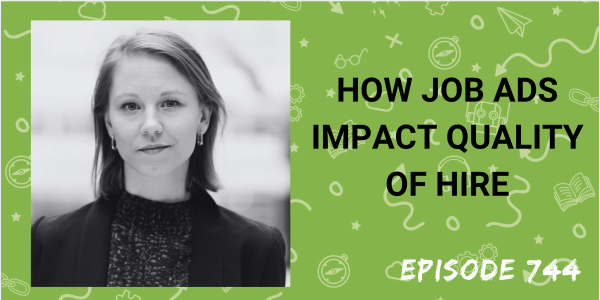
My guest this week is Pil Byriel, CEO and co-founder of Lyser. In our conversation, Pil shares research on how language shapes candidate behavior, why LLM reinforces bias, and the growing complexity of job ad compliance around the world
In the interview, we discuss:
• The impact of language on applications from qualified candidate
• The human-led research behind inclusive communication
• Why generic AI LLMs amplify stereotypes and bias
• Compliance challenges across global markets
• What actually drives job ad performance
• Why structure, clarity, and transparency matter
• Building data-driven recruitment communication
Follow this podcast on Apple Podcasts.
Follow this podcast on Spotify.
00:00
Matt Alder
Are your job ads actually driving away the candidates that you’re looking for? And is AI making the situation worse? Words really do matter. Keep listening to find out why.
00:14
Matt Alder
Support for this podcast comes from LYSER, a job ad intelligence platform that helps talent acquisition teams easily create high quality on brand and compliant job ads. With LYSER, teams can optimize job ads or create new ones from scratch, ensuring clarity, brand alignment and compliance with pay, transparency and local regulations worldwide. The first step of hiring is often the most overlooked, but it might be the point where the biggest drop off happens if many qualified candidates don’t even apply. TA teams are struggling with too few qualified applicants and too many unqualified ones. LYSER fixes that by making every job ad clear, engaging and compliant right from the start. To find out more, go to lyser.com and Lyser is spelled LYSER.
01:30
Matt Alder
Hi there. Welcome to episode 744 of Recruiting Future with me, Matt Alder. Recruiting Future helps talent acquisition teams drive measurable impact by developing their strategic capability in foresight, influence, talent and Technology. This episode is about technology and talent. Application volumes are continuing to rise, but finding quality hires remains a challenge. The usual suspects that tend to get the blame are candidates using AI, economic uncertainty and a continuing decline in job board effectiveness. However, research points to a more fundamental issue that most employers are overlooking. The words in job descriptions matter more than most companies realise. Non inclusive language is actually a key factor that stops many qualified candidates from applying. At the same time, regulations around pay transparency and anti discrimination are proliferating, creating complex compliance requirements for job ads that vary by geographical market.
02:46
Matt Alder
Many employers are also outsourcing their job ad creation to generic LLMs that have more potential to amplify bias than they do to eliminate it. So how should employers be using technology to ensure inclusivity, compliance and a quality response from their advertising? My guest this week is Pil Byriel, CEO and co founder of Lisa. In our conversation, Pil shares research on how language shapes candidate behavior, why LLMs reinforce bias, and the growing complexity of job ad compliance around the world.
03:24
Matt Alder
Hi Pill and welcome to the podcast.
03:27
Pil Byriel
Hi Matt. So happy I can join in on this.
03:30
Matt Alder
It’s an absolute pleasure to be talking to you. Please could you introduce yourself and tell everyone what you do?
03:36
Pil Byriel
Of course. So first of all, thank you for the invitation as well, but I’m Pil Byriel. I’m the CEO and co founder a company called Lyser. We help large organizations raise the quality, but not only the quality, but also the consistency and Compliance of job adverts across languages, across markets and across their brands all over the world. My background is actually in linguistics and behavioral research from the get go. Many years ago at this point and before Lyser, I co founded another company called Develop Diverse with the focus on inclusive language and bias and certain stereotypes to make sure we can avoid that in recruitment communication altogether and come with bias free alternatives. And through that work is really where we came to Lyser because we built a massive data set showing that words and which words have a direct impact on candid behavior.
04:34
Pil Byriel
But for us it’s also about. We could also see that other things that inclusive language had a big impact on. That one thing is consistency across our job ads all over the world really affects the perception that a candidate has of the company and affects the employer brand altogether. But there’s also more things, it’s the structure, how the job ad is put together. We take all of that research and all of that foundation that we build with Develop Diverse and focus it on, put it out to larger companies focusing on compliance as well. And maybe that’s a little bit of a boring word just when you throw it out there. But today we are increasingly facing more legislation, increasingly complex regulation on the matter of job ads altogether, especially if you’re recruiting internationally in multiple markets.
05:30
Pil Byriel
So to actually make sure that no human should spend time on reviewing job adverts and securing compliance, we make sure that if there are any legislation for an example on paid pay transparency, do we need to include salary band or starting salary and job adverts? We’ll ensure it’s there every time. We’ll ensure that in Portugal we offer remote work and we don’t because that’s legislation there multiple states in the US you have to have pay as well. Sometimes there’s even legislation on how the salary band, how much it can vary from starting salary to the top salary band here. So all of that is built into our engine basically. And that’s what we support on in a fast changing landscape as well because this is definitely evolving as well.
06:18
Matt Alder
Talk us through your kind of methodology, your data, your research, how do you identify what’s inclusive, what’s not inclusive and how important are humans in this type of process?
06:31
Pil Byriel
So humans are, if I can start with that is the core of this for both reasons, both because with biased language. So where we started in the research was of course with biased and stereotypic communication to make sure we can avoid it because we know it has a huge impact on applicants. We actually found that it discourages 68% of qualified female, 54% of all qualified candidates altogether, and also 51% of all male qualified male candidates. So it really has a huge impact. Let alone there’s a huge, of course, number here that we don’t uncover because we’ve just looked at binary gender in this particular research, but we started way before. There’s a lot of research already on this topic, both done in the us, done in Europe as well, that have looked at, of course, you know, what are the biases?
07:22
Pil Byriel
What are the stereotypes that we tend to have and hold about certain groups? How do we simplify them into stereotypes? And how does that in return affect both candidates, but also just people who we hold this stereotype about? Not because it’s true, these biases, not because. Let’s just take an example. We have this stereotypic sort of expectation that all Germans are always on time. If we just take a positive connotation, one, I think you all can imagine more negative stereotypes on that. But it’s still a very simplified belief that we hold about a certain group of people that we tend to judge from, but that tends to actually be internalized by a group of people. So let’s just take a more negative one with certain groups of people being always late.
08:14
Pil Byriel
Then when we have, let’s just imagine that we have somebody from these demographic groups applying to us, it can also be about gender, ethnicity, it can be about, of course, social class, neurodiversity, age even, and physical disability. When we have someone apply to us, we’ll sort them out. If we believe that. Oh, but you know, we know that everyone in Germany is always on time. We need somebody who’s. That’s a bad example with. Let’s just imagine we have other groups of people where we believe that they’re late. We will then sort them out because we need somebody who’s always on time, even if we never met that person. But we simply judge them based on this stereotype.
08:57
Pil Byriel
So we’ve looked at that, you know, actually having controlled studies out in the real world where we are both applying this, the stereotypic information and communication on that, to see how does it affect candidates in the real world. And what we can just see is that when we are applying very stereotypical wording and phrases into our job ads, into our employer branding communication, it is especially negative towards underrepresented groups. So when we use words like strong, ambitious, we see less women, older groups, but also ethnic minority groups that it will actually apply here, but not because they’re not strong or Ambitious, but because they’ve internalized the stereotype that we have in society that we’ve all grown up with throughout our lives. And in return, they’ll look at our job adverts and they will never even apply because they don’t have that.
09:53
Pil Byriel
They have that stomach feeling that says, that’s probably not me they’re talking about here. And so we really have based that on all that. We mapped out all the stereotypes and biases that are in the world basically in a context about different groups, map that out, use technology on top to actually figure out, okay, what are the wordings? When we have a concept that is young, for an example, how do you describe that? What are actually the words we use to describe young people, older generation, older people, men, women? And we could do that by names as well. There are some word embedding techniques where we can actually figure out these. Can think about it as a word cloud, basically simplified way to imagine it, but you know, a word cloud to say, okay, this the word that we use about certain groups.
10:42
Pil Byriel
And then there’s this connotation. I don’t know if you ever did the Harvard Implicit association test, Matt.
10:47
Matt Alder
Yes, I have, actually. Yeah, yeah, yeah.
10:50
Pil Byriel
So think about it a little bit. You know, that’s to uncover your own biases. Right. But on what we basically did was to take a little bit like the Harvard Implicit association test and apply that on top of these concepts about the words that are used to describe young, older men, women, different ethnicities, underrepresented, represented and so forth to see, okay, is it a positive or negative connotation at the end of the day? So we ended up with a huge data set here and then we have humans sitting and annotating that into our system. And then we’re going out in the real world with partners. We also had university partners over the years. But to actually test this with a control group of people to see, you know, does it act.
11:31
Pil Byriel
One thing is theory, but does it have a real negative effect on real candidates out there? And turns out it does. As I mentioned before, 68% less qualified candidates choose to apply when we use this type of wording. Right. So who has huge consequences on that note?
11:50
Matt Alder
No, absolutely. And it’s interesting because we’re going through a period where lots of employers are now using Genai to help them with their job descriptions and their job adverts. How are just the kind of the foundation large language models, how are they performing in terms of inclusive language and bias? What’s going on there?
12:12
Pil Byriel
That’s also what we see often. I talk to so many, both talent leaders and teams that are working on recruitment in different ways and they all turn to, usually they have copilot and think, okay, but you know, maybe we understand that ChatGPT can be, be, be biased and you know, may not be performing the best, but we believe copilot can do that because it may be trained on our own data set. But, but it’s, I’ll get a little bit more into that. But it’s basically the same model, right? It’s the same foundational model that is used, whatever large language model we’re going to. There are different models, but the way it’s trained is a little bit of a black box. But we can assume it’s trained on the big data set that is available, the public data set that’s available out there.
13:06
Pil Byriel
And that is just biased because as before, human is really central. If we want to design an inclusive hiring process and hiring process in general, what we do, we have human as the center. We don’t have AI at the center, we have human at the center because humans are the biased LLM’s large language own bias because humans are biased. So we create the biases in the first place and large language models just find the patterns statistically and we’ll reinforce them. There was just a new study from a German university that also amplified this finding, but we’ll just amplify it and reinforce the patterns to an even larger degree than before. So if we have a biased data set in the beginning, then we can never have some unbiased results.
13:54
Pil Byriel
And that’s why the humans that we have sitting on our end are trained experts, linguistic psycholinguistic experts that have been trained on the framework that we have built up from all the research, all the studies that we’ve done over the years have annotated data to make sure we have a database that is, understand the concept of bias, understands what is exclusive, what is inclusive to which group, and make sure that we always understand that in the given context. And to get back to your question, because the large language models doesn’t have that, it can never produce an output that is optimized for performance because it doesn’t have candidate quality or candidate data from atf. Right? It can never produce inclusive results because it doesn’t understand bias in the concepts and it doesn’t under.
14:52
Pil Byriel
It will not be able to produce compliant results because it doesn’t understand where you’re hanging and where what are the laws within the given area and it’s not plugged into your ATS system or applicant tracking system to make sure that it can actually control what comes out there. So at the end of the day you have, if you’re using large language models, whatever model you’re using, and rely on Copilot, ChatGPT, Gemini Cloud or any of them, you will compromise on the most important aspects in my opinion on writing a job advert. If it’s not high performing, if it’s not inclusive and if it’s not actually compliant and follow the structure that you needed to follow and understand your brand, then it’s just a creative piece of content without context and it won’t in the long run.
15:45
Pil Byriel
I believe that the teams out there will see that even if it looks fun now and it’s fun to play around with, they will understand that in the long run.
15:56
Matt Alder
The interesting point there is that there are obviously organizations who are using, you know, their own, you know, kind of walled garden approach to AI and you know, while they can control their data, not going into the system publicly, as you point out, they’ve got no control about how those systems were originally, were originally trained. And I think that’s a really, that’s a kind of really key point. And I guess that some people would think that, well, can I not just write prompts that tell the LLM not to be biased or to use inclusive language? And I guess that’s not, that’s not the whole solution either.
16:31
Pil Byriel
It’s interesting. We actually did, we’ve done a lot of tests over the years because we with the focus on job ads as well in our organization, it would be a lot easier for us and me personally if we could just make larger language models, produce high performing job ads that are on brand consistent and you know, always inclusive. That’d be great. That would be a lot cheaper for me instead of having a bunch of people annotating data, developing product and so forth. But what we see continuously is just that it, the moment we hint a job advert, there are so many cliches coming in there, it just becomes a full on full of metaphors, full of cliches, jargon and amplifies a certain stereotype again.
17:15
Pil Byriel
So if you look at a sales role or even a project manager role which should be more, a little bit more neutral in terms of stereotypes, it’s just, it has a lot of masculine coded language, a lot of which is now, you know, prohibited with the EU Pay Transparency Directive as well. But also in other countries there are specific laws on, you know, you cannot implicitly have gendered wording in any way. So if we just look away from the inclusive language being nice, so there is actual legislation on this and if we leave it up to Genai or any of the other large language models, you know, we will, we are relying on hope as a strategy. We just hope we will produce something that’s nice. And it’s really difficult for the eye to capture those by stereotypes.
18:05
Pil Byriel
So even to see that it’s not compliant because we are busy. Recruitment is so busy these days, we’re not exactly getting more resources into our organization. So we are busy. We are relying on technology to do a lot of our work, which we should, because there’s a lot of work that can be done by technology. But we cannot allow them stays, first of all, because we can be fined if we’re not compliant. But it’s just if we’re really investing in our employer brand in our recruitment and job ads, we cannot allow the fragmented creativity that sometimes comes with ChatGPT and other large language models and also Copilot, even if it’s trained on our own job ads.
18:47
Matt Alder
And I really get the impression that over the last sort of two or three years we’ve seen a kind of a real increase around the world of, you know, legislation about what needs to be said in a job advertisement or what doesn’t need to be said or what can’t be said in a job advert. And you know, to me this seems like this is an increasingly complex area, particularly for, you know, global teams who are trying to recruit across multiple, multiple countries. It really is getting more complex. Complex, isn’t it?
19:15
Pil Byriel
It really is. And this is also where the landscape has changed dramatically internationally, actually. So whether you are in the us, in Canada, if you’re in Europe, this is increasingly complex. So if you have a centralized recruitment team or TA team, you should be discussing this more. So one thing with Europe for an example, we have the EU pay transparency coming into force. We have by June next year, in 7th of June, in 2026 countries in the EU have to have national legislation on this topic that addresses that we cannot have implicitly gender titles nor job ads specifically, and that we have to inform candidates about their salary prior to the first interview.
20:05
Pil Byriel
It doesn’t say it has to be in the job of advert, but a lot of countries will then have to go out and interpret this and how they want to do it. And we already, Ireland, we see in Lithuania, multiple countries that are, are starting to get ready for this to make sure that it comes in the job advert. And my experience is that the leaders out there and the teams, they aren’t ready for that and how they will actually, you know, do we then have a full time person sitting looking through that all together, what do we do if that is the case. So a lot of companies are, a lot of leaders are sitting, you know, and just waiting for the national legislation to, to be passed a as we speak.
20:47
Pil Byriel
But we see clear tendency in Europe to make legislation specifically around titles around the continent, job adverts and around salary transparency specifically.
21:00
Matt Alder
Yeah.
21:00
Matt Alder
And I think you know, in the US as well salary transparency seems to be, you know, seems to be something else that’s becoming increasingly important, you know, at the kind of state level certainly.
21:09
Pil Byriel
But in the US there’s more 15 states already today including California, New York, Colorado, Washington, Minnesota where it’s mandatory to have a salary in there. Right. And with California leading the game with fines on that if you’re non compliant on this. Right. So it’s about, you know, how do we ensure. I was just you know, yesterday I have a large international organization as well sharing an audit with them and you know, figure finding today that already that they have currently multiple non compliant job adverts. I’m not going to mention the name obviously. Right. But then they weren’t aware of because we don’t have that transparency. We don’t understand. It’s really difficult. I won’t say that we don’t because there might be someone out there that have the full transparency into the organization.
21:52
Pil Byriel
But my understanding and what I see out there when I talk to organizations is it’s really hard to control that quality of what comes out there for job adverts either because we have whether it’s hiring managers that are allowed as well to post job adverts internationally and forgetting to use some templates or TA teams. Right. That where it’s really difficult to have that quality assurance because. And that is really what we’re working with because it can be really expensive. If you have a 200k dollar fine in the US because you did something wrong in California, then it’s quickly getting out there, right?
22:31
Matt Alder
Yeah, absolutely. From your research, what else have you found out about job ad performance that would be useful for people to learn?
22:40
Pil Byriel
So recently we did a report on this actually. So we looked at thousands of job adverts with candidate data. So this is not based on My thinking or liking or any external data here, it’s actually because over the years we started back in 17 with develop diverse. So over the years we really have looked at and done impact reports for a lot of large international companies. So we know what is the correlation with the job advert and qualified candidates and the likelihood of you applying. So the data shows a clear pattern. The more structured and transparent a job is, the more candidates, more qualified candidates will actually get in there. And it’s of course important to have the differentiation between qualified candidate and non qualified candidate.
23:30
Pil Byriel
And it’s also when we go, if we go back to sort of the both the large language models a bit but here having the very structured and when I say structured is also about with what’s in there as well is the clear clarity on that. So the highest performing job ads they live up to five parameters. So the structure has a few things in there. But at the end of the day it’s the clarity that is in there. How clear are we about the job? How good are we describing the task that you will be doing when you’re in the job? How good are we explaining how the qualifications you actually will need to be taken into consideration? And secondly, we have the part that also goes to the structure. We have the usp.
24:17
Pil Byriel
So an engagement with usp, I mean unique selling point the engagement, the selling point that we have in the job, not overselling obviously, but how good are we actually at selling it in this, in how we’re building it and then the brand consistency, how consistent are we across? So that’s what I mean with structure these three. Because the moment even if we have a really well written job advert, if it’s totally different than a similar job ad in the same market, then candidates will notice, it will be noticed that we seem like different senders, that there’s an inconsistent storytelling about who we are as a company and what we offer our candidates altogether. And that actually has a big impact. So that, and then of course the transparency how we when also talking about selling points.
25:07
Pil Byriel
How good are we at being transparent, authentic in the way that we present ourselves and talks about ourselves. But of course salary also does have a positive impact as and we see more qualified candidates when we include salary in there as well. Because then we are taking out all the candidates where it’s either, you know, below their expectations over understand that it might be too big of a jump from their previous or the current salary as well. So we actually are with these parameters in mind in A job advert, we have the most qualified candidates, but we also sort out non qualified candidates. And that’s a big topic of many, I’m sure you hear that too, Matt.
25:47
Pil Byriel
You know, topic at many that people just want to, you know, sort out the non qualified candidates because the AI is applying and you know, have a lot of excuses. But if you ask me the real reason or a part of the reason, let’s say that, because of course there are AI agents applying automatically as well for jobs. But at the end of the day it also, a lot of it comes down to the fact that we are becoming more generic, more biased in our job adverts. And when we are doing that, we’re also, you know, when we’re more generic, we’re really including everyone, that everyone can see themselves in the job advert because that is what large language models can do.
26:26
Matt Alder
We are very fast to blame AI agents, the economy, you know, everything for our job boards, everything for, you know, huge amounts of, you know, not non qualified response. But actually you’re right, the biggest tool is the way that the adverts are written. And I think that people really need to think about that and take more responsibility for that because that could really solve, you know, not the whole problem, but certainly some of the issue. And I suppose, you know, by way of summary, just give us a sense of what advice you would give to employers, you know, what kind of processes should they be following, what tools should they be using, how can they kind of redesign the way that they, you know, produce job adverts.
27:15
Pil Byriel
So I think there are two things. The first one is, you know, if you would like to have more qualified candidates and listen unqualified, if that’s actually a topic that comes up internally, my advice there would be to stop focusing on the symptoms, which is too many unqualified candidates. And then we are investing heavily in screening and assessment, which is what I see some companies do. Not all obviously, but then we try to get AI into automatic screening. We try to really save time there instead of actually looking at the cost of it, instead of looking at our foundation. Because at the end of the day we use our job adverts. If you’re doing head hunting, if you’re doing whatever you do, you rely on your job ads. That’s what candidates read when they decide whether they want to be with you or not.
27:58
Pil Byriel
And if we don’t have that right, and I don’t see a lot of organizations invest in that part because none of us wants to write the job ad. Right? That’s why we get the large language models and tnai to do it for us. But we need to realize that we need to invest in it. We need to either ourselves know what good looks like in order to write them or we need to look to solutions that know what good looks like, that knows how we actually will attract the best performing candidates and the most qualified talent out there. And two, we need to ensure compliance because this is a non sort of.
28:35
Pil Byriel
Even if you use ChatGPT for your job ads and don’t care about the quality of it, you will have to care about compliance and whether you live up to the legislation in the markets where you are hiring. If only hiring in one country, of course it might be a bit easier. But if you are hiring internationally, you will have to get yourself involved with that and sooner rather than later. Because this is coming faster than I think it will come as a surprise to many leaders that I talk to. So rather look it up now than later and understand the field or of course connect with somebody who understands the market and have it mapped out internationally already.
29:16
Matt Alder
Absolutely. And as a final question, what do you hope the future looks like for recruitment marketing? Where is all this taking us? What would you like to see the future look like?
29:28
Pil Byriel
I really want the future to look like focus on a little more focus on data driven and performance based communication. Right. So I think right now because of the large language models, obtain a little bit into place. Communication style has also changed. Right. Whether it’s on LinkedIn, I think we can all spot it. At least when I get a candidate I can spot in two seconds, whether it’s written by ChatGPT or a real human. But the candidates can do the same. Right? And everyone can do this. I would love that we focus on understanding what works for us and doing more of that. And then instead of using ChatGPT or any of these tech solutions, it looks all right and it looks creative. It has nice language and very colorful and very, you know, a lot of adverts, a lot of metaphors.
30:17
Pil Byriel
But understanding that may not the most creative job ad is not necessarily the best job ad.
30:25
Matt Alder
Could not agree with you more.
30:27
Matt Alder
Pil.
30:27
Matt Alder
Thank you very much for talking to me.
30:29
Pil Byriel
Thank you so much, Matt.
30:32
Matt Alder
My thanks to Pil. You can follow this podcast on Apple Podcasts on Spotify or wherever you listen to your podcasts. You can search all the past episodes@recruitingfuture.com on that site. You can also subscribe to our weekly newsletter, Recruiting Future Feast. And get the inside track on everything that’s coming up on the show. Thanks very much for listening. I’ll be back next time, and I hope you’ll join me.