
The last three years have seen unprecedented disruption to the world of work. The rise of remote and hybrid working indicates a workplace revolution, but how much have things actually changed?
Presentism is still a big issue, with some employers using economically tough times as an excuse to get people back to the office. Meanwhile, many hybrid and remote employees struggle with legacy working methods not designed for the world we are now living in
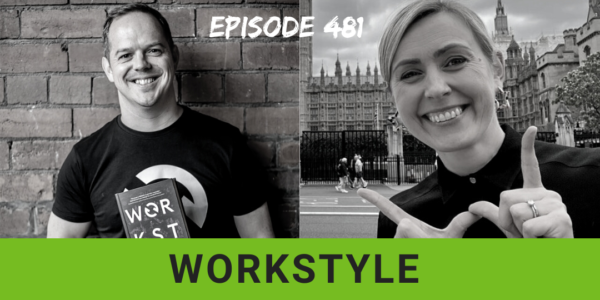
My guests this week are Lizzie Penny and Alex Hirst, co-founders of Hoxby and authors of the best selling book Workstyle. Lizzie and Alex are campaigners for a more modern autonomous working style. They are using their own experiences of running a remote first business to start a movement to make work better for everyone.
In the interview, we discuss:
• What is wrong with work
• Ageing populations, independence and technology
• Breaking free from a 200 year old operating system
• Autonomy, productivity and accountability
• Digital first, not physical first.
• Trust over presentism
• The vital importance of asynchronous working
• How the Workstyle revolution works at Hoxby
• Inclusive for structurally excluded workers
• How to make a seismic change
• Meeting in person to build deeper connections.
• Remote leadership
• Old rules, new challenges
• The relationship between autonomy, well-being and productivity
Listen to this podcast in Apple Podcasts.
Transcript:
Matt Alder (Intro) (18s):
Hi there, this is Matt Alder. Welcome to Episode 481 of the Recruiting Future podcast. The last three years have seen unprecedented disruption to the world of work. The rise of remote and hybrid working indicates a workplace revolution, but how much have things actually changed? Presentism is still a big issue, with some employers using economically tough times as an excuse to get people back to the office. Meanwhile, many hybrid and remote employees struggle with legacy working methods not designed for the world we are now living in.
Matt Alder (Intro) (59s):
My guests this week are Lizzie Penny and Alex Hirst, co-founders of Hoxby and authors of the best selling book Workstyle. Lizzie and Alex are campaigners for a more modern autonomous working style. They are using their own experiences of running a remote first business to start a movement to make work better for everyone.
Matt Alder (1m 22s):
Hi Lizzie. Hi Alex and welcome to the podcast.
Lizzie Penny and Alex Hirst (1m 25s):
Yes. Thank you for having us.
Matt Alder (1m 27s):
Well, it’s an absolute pleasure to have you on the show. Please, could you just introduce yourselves and tell us a bit about what you do?
Alex Hirst (1m 35s):
Yeah, hi. So I’m Alex Hirst and I am co-founder of Hoxby with Lizzie, who’s with me today. And we started Hoxby in 2015. It’s a professional and creative services company and we did it to prove that our idea that we had in the pub for Workstyle, which is a word we made up to give everybody the freedom to define for themselves when and where they work, could work in practice. And eight years later we are here with a book by the same name.
Lizzie Penny (2m 6s):
And so, yes, we’ve just written a book, it’s called Workstyle: A Revolution for Wellbeing, Productivity, and Society. And that really came from, we started working this way eight years ago. And everyone thought we were strange cuz we were working very differently from everyone else. But suddenly during the pandemic, everyone wanted to understand how we worked. And so we tried to open source everything about Hoxby and our approach to Workstyle and the book came from there really.
Matt Alder (2m 34s):
Fantastic stuff. Now I’m gonna ask you a lot about your approach to work and obviously a lot about the book as well. But I think to start with this question, we’ve been through this pandemic. Work has been turned on its head. We’ve seen the rise of remote work, of hybrid work, you know, and arguably lots of things have changed about, you know, more things have changed about work in the last three years than they have in the previous 30 perhaps. What’s still wrong with work? What’s still wrong with the way that we are currently working?
Lizzie Penny (3m 3s):
There’s a lot that’s still wrong with work, Matt. I think for us when we started working in a Workstyle way eight years ago, the pandemic wasn’t even on the horizon at that point. And we felt there were three main catalysts that meant we should be working in a radically different way. The first one was the ageing population. 21% of the Worldwide population will be over 60 by 2050. Organizations need to reshape shape the way that they work in order to keep people in work longer, or there simply won’t be enough people to do the jobs that need doing. Independence. There are 4 million self-employed people in the UK. It’s the fastest growing part of the labor market and people are entering the workforce now with a more independent approach and expectations of work.
Lizzie Penny (3m 50s):
And then technology has really changed. So the portability of hardware, the prevalence of accessible software to bring people together, and also the prevalence of wifi, which is now means that really you can work from anywhere. Work from beach or as I like to work from hairdresser. And so those were really the three catalysts for us to make us really question why we are still working in a model of work that was invented 200 years ago. You know, essentially we are still working in an eight hours labor, eight hours recreation, eight hours rest model that Sir Roberto
Lizzie Penny (4m 33s):
When you think about what’s changed since then, so much has changed. And all of the existing kind of areas of progress in working are really just flexing around the edges. So flexible, working, hybrid working. This is really still a one size fits all approach. It’s still dictated by companies rather than giving people the autonomy and the freedom to choose when and where they work, which is what Workstyle is all about.
Matt Alder (5m 1s):
And I think the interesting thing there is with the, you know, still, the massive debate about hybrid work or remote work and how long should people be in the office. The thing that really drives that debate is the fact that people are trying not to make work change and still make people work in that sort of nine-to five-model, isn’t there?
Alex Hirst (5m 22s):
Yeah, I think we forget that we are conditioned to it. We’ve been doing it for, as Lizzie says, over 200 years. The basic premise that we are working nine-to-five, Monday to Friday is something that we find really hard to let go of. And it comes with trappings that are actually no longer relevant in the digital age that we live in. So, for example, being together, working at the same time synchronously was particularly beneficial when we were working in factories, but technology enables us to work at any time from anywhere. And so we need to abandon that idea that we need to be synchronous and start embracing asynchronous working behaviors.
Alex Hirst (6m 7s):
This was one of the things that we learned pretty early on when we started Hoxby was forget everything you know about work. These are the new rules and it’s asynchronous, not synchronous. It’s also digital-first, not physical first. So we’re not going to factories anymore and we don’t need to go to offices because we can work from anywhere as long as we’ve got the digital interface to enable us to collaborate. So rather than thinking about work as somewhere we go, we think about it as something we do and we interface digitally, not physically. And then the last thing is that the collaboration and the culture that we need needs to be built on trust rather than presence.
Alex Hirst (6m 53s):
So when you think about flexible hybrid remote, they’re all talking about presence, where are you? How can I see you? How can I trust that you’re working if I can’t see you? Actually, we need to just dispense with that completely and focus on we trust one another. What are the basis, what are the principles of trust? And we talk about that being based on output and delivery and being trusted to deliver what you say you’re going to, rather than being trusted to be sitting at your desk for eight hours.
Matt Alder (7m 24s):
Tell us about how that works in your own business. What does that look practically? Who do you employ? Where are they? Do they ever get together? How do you build a culture? How’s it worked practically for you?
Lizzie Penny (7m 37s):
That’s a really good question and one that we’re often asked. And over time, we’ve said that Hoxby is a big experiment. As Alex said, we set it up in order to test whether this model could work and in practice. And we’re excited that now we have some really big clients that we work with, Unilever, Merck, AIA, but also some important impact-led businesses like Divine Chocolate and B Lab. And so it does work. So we should just say that to begin with. We have 500 Hoxby, they’re all freelance. So they don’t exclusively work for us. We’re part of their portfolio. and they work from 39 countries.
Lizzie Penny (8m 18s):
So we’ve got people all over the world. They all have a reason for wanting to work this way. So in the book, we talk about excluded groups, those people who can’t work traditionally in a nine-to-five model. And our organization is very diverse as a result. And we are a Slack-based community. So we don’t have an office. Slack is our office, their digital tool. And that allows us to be asynchronous as Alex says. So if you work on a project, then you’ll have someone who’s managing the project, someone who’s leading the relationship with the client, and then a team of people who are doing individual parts of the work.
Lizzie Penny (8m 58s):
So what we’ll do is we’ll work with clients, we’ll take a brief, and then we’ll break it down into its constituent outputs that need to be delivered to get to that overall output. And then we will curate a team in order to deliver against that. And the underlying principle of all of this is that everyone at Hoxby can work when and where they choose. So they have the freedom to do that. But we talked before about autonomy, but the thing that’s really important is that autonomy has to go hand in glove with accountability. Autonomy is amazing. Research has already been widespread to show the autonomy improves productivity. It means people have better job satisfaction engagement, that they take greater pride in their work.
Lizzie Penny (9m 44s):
But the thing to get the balance right, we found in terms of culture is the balance of autonomy with accountability for playing your part. And for us, that’s about us being a social enterprise and a purpose-led organization. And so everybody knows that they need to play their part in proving that together we can create a happier, more fulfilled society through a world of work without bias. So, I think for us culturally being united behind a singular vision is really important. And also us having clearly defined ways of working because what’s interesting is Alex talked about presenteeism, but when you’re in an office, I think there’s the assumption that because you’re at your desk, you know how to do things, you know how to get things done, you know who to speak to.
Lizzie Penny (10m 30s):
Whereas, actually, when you take that away, there’s a requirement to lay out the way that things get done round here. And it’s very much a framework. People have freedom within it, but roughly what tools we use for what, how we collaborate asynchronously, that sort of thing are really important.
Matt Alder (10m 52s):
You mentioned inclusion there and people who could only work for you if they did that remotely in sort of locations and places that work for them and their and their lives. Diversity, equity, and inclusion is such a massive topic in our industry at the moment. And you know, something that the employers are, some employers are thinking very, very hard about in terms of how they make their worthful forces more inclusive. So can a company be truly inclusive if it asks people to come to an office?
Lizzie Penny (11m 24s):
We think it can’t. We think that that is fundamental to redefining work such that it’s a level playing field for everyone. And in the book, we distinguish between excluded groups and discriminated groups. There are many, many people who suffer discrimination at work, but we are looking at structural changes that we believe need to be made. And so we specifically look at seven groups who are excluded. So older workers, carers, those with chronic illness, physical disabilities, mental health challenges, parents, and people who are neurodivergent.
Lizzie Penny (12m 4s):
And for those groups, they will be structurally excluded by being required to go to a place of work five days a week, nine-to-five. It just doesn’t fit. And between Alex and I, we cover a number of those groups. So we can really empathize with this. For me, the catalyst for wanting to start Hoxby and come up with the idea of Workstyle was becoming apparent for the first time, which I’m embarrassed to say was really the first time that my eyes were opened to the pervasive inequalities at work. But since then I’ve moved across the country. So I no longer live in London. I also was diagnosed with breast cancer two years ago and then a close family member was diagnosed with breast cancer.
Lizzie Penny (12m 49s):
So I’ve experienced illness, I’ve experienced being a carer. And so I think we really acutely and passionately understand the importance of being able to work on your terms. So, I’ll give you an example. When I was going through chemotherapy, I didn’t feel like doing much work, but I also passionately didn’t want to be defined by my cancer. I didn’t want it to consume my whole life. And being able to continue to work in something I’m passionate about, and to feel like I had a purpose in life, and to have some distraction, if I’m honest, was brilliant and really healthy. And I continued to work on my terms during that time. I didn’t work very much, but it was a really important part of my mental well-being in what was a difficult time.
Hard No Podcast (13m 39s):
Hi there. I’m Heather Drago. And I’m Sarah Saunders. We host the podcast. That’s a Hard No about saying no and setting boundaries. So you can become that true and empowered you that this world needs. Saying no isn’t just okay. It’s the key to living an authentic, fulfilling life. I’m a licensed professional clinical counselor. So while this podcast is in no way a replacement for one-on-one therapy, I suppose I know what I’m talking about. I’d say so. We talk about learning to say no and set healthy boundaries, and how it impacts mental health, physical health, relationships, parenthood, and more.
Hard No Podcast (14m 21s):
Subscribe wherever you get your podcasts and visit our website hardnopodcast.com. We’re here to help you find your more no and say it unapologetically. That’s a Hard No.
Matt Alder (14m 39s):
So the way you describe your business, some people would sort of call that a remote-first organization. So you know, it’s an organization that’s been built digitally and remote first. Lots of people listing, work for I suppose what we call more traditional organizations, even organizations that are hybrid and flexible to a certain degree fundamentally it’s a massive shift for them to be set up as a remote-first business like your organization. What would your advice be to those type of employers in terms of how they can, you know, they may have already sort of embraced hybrid working, they might be looking at things like four-day weeks.
Matt Alder (15m 22s):
But how can they really make that seismic change to really sort of fully embrace this way of working and this way of thinking?
Alex Hirst (15m 32s):
I think it’s worth thinking about from an, from an organizational point of view. Starting with a a blank sheet of paper and appraising, how do we collaborate online and in person? What are the actually the differences? So much of the way that work gets done is digital. And we’ve been actually, we’ve been doing that for years. We’ve been doing it via endless emails for a long time. But now we’ve got platforms like Slack and teams and Google Workspace that make that much more intuitive and those conversations happen in the delivery of work can happen through those systems rather than necessarily having to happen in person.
Alex Hirst (16m 12s):
And in fact, if they do happen through those systems, it can be more inclusive. To Lizzie’s point, we can include people who otherwise can’t get to an office for example, and they can be part of the conversation and contribute their perspective. So thinking about collaboration as digital-first is the starting point. You can do that whether you have an office or not. And actually, that’s not a radical departure from what a lot of companies were doing pre-pandemic and they certainly are doing now. But perhaps the harder challenge is to question the role of physical space. We’ve got an office, what do we do with it. From our experience, we do come together. Hoxby, do come together.
Alex Hirst (16m 53s):
I think this is one part of the question you asked before. We do come together for the purpose of building deeper connection with one another. And for us, this is absolutely the purpose of in-person spaces. So, we do it, we have an event, we come together and Hoxby get to know each other more deeply at a personal level. That builds a sense of cohesion and culture and improves collaboration thereafter. But we don’t do work during that time. We’re not sitting together having meetings or sitting at computers next to each other, not talking. We’re building connection. And that’s the purpose of physical space now.
Alex Hirst (17m 32s):
So for organizations thinking about what to do with their offices, it’s a question really of, are you using it to build deeper connection between people? And if not, how could you do that on the basis that people should be free to work when and where they choose? There’s a mindset shift that has to come with this as well, which is about enabling individuality. So Workstyle is fantastic for changing mindsets around grouping people and making assumptions that, for example, people can work Monday to Friday nine-to-five, well not everyone can. And actually, when you start to realize that everyone has an individual Workstyle, everyone has an individual contribution to bring.
Alex Hirst (18m 12s):
And that kind of changes the cultural tone as well towards seeking to understand each individual contribution and the benefit of working with each person. And that can be great for breaking down barriers of discrimination and stereotyping, starting to see people as individuals, which is helpful culturally. And then there’s the leadership of all of that. And this is one of the areas that we really love consulting in, which is this idea of remote leadership. How do you lead teams when you can’t see them? And that is an emerging set of skills that leaders of today need to have, but that we’ve been honing over eight years, thankfully.
Alex Hirst (18m 53s):
We think we’re doing alright at it. But these are new traits and they’re new skills. And if we’re gonna move out of this 200-year paradigm that we all understand and into something that’s fit for the digital age that we live in, then those are the new skills that we’re gonna need to learn. And it’s the new mindset that companies are gonna need to adopt to move us forward and to take advantage of the opportunity that we’ve got today.
Matt Alder (19m 20s):
I mean that makes absolute sense. I think one of the biggest problems that I’ve seen with companies sort of struggling to find their way or their balance in this sort of new world of work is just trying to apply the old rules to the new channels and the new things. So it’s like dragging people into meetings or leadership is all about being present in a physical way. And you know, I think we are, we are seeing that that doesn’t work. One of the things that’s really struck me whenever I’ve spoken to remote first businesses, which is a, you know, just silly label anyway, but now I’ve kind of said it out loud.
Matt Alder (20m 2s):
But the thing that struck me from organizations similar to yours is the biggest shift is that shift asynchronous working. And you know, I’ve worked asynchronously for about 10 years now, so you know, I kind of get it. But do you think that that is one of the things or one of the big things that holds companies back that they can’t or don’t want to or don’t know how to embrace asynchronous working?
Lizzie Penny (20m 28s):
I think absolutely it is. And you know, Alex taught earlier about these kind of three important lessons for us when we started working in a work cell way of needing to be digital-first, which I think companies are quite good at, but also needing to work asynchronously and be trust-based. And I think those two last elements are much more challenging because the organizations already realize the importance of technology and are somewhere on that journey to making it integral to how they work. Whereas actually, asynchronous working is a complete mindset shift. And we have people at Hoxby who are in their early twenties up to people in their seventies. And the thing that we find really interesting is that it’s the people in their early twenties that are brilliant at asynchronous working because the rest of us have to unlearn previous behaviors.
Lizzie Penny (21m 20s):
And that’s a real barrier for people. And the same with trust, you know, learning to work in a trust-based output way. It’s about cultural change. And I think often with organizational design, it starts with structural change and organizations will consider the structure. And then only at the end will they think, how do we make sure that we implement this with the right cultural investment? When actually moving to a Workstyle way of working is about investing in culture. Culture underpins asynchronous and trust-based working and you can’t do it well if you don’t have the right culture to support it.
Alex Hirst (21m 58s):
One of the things that came out of the pandemic that I found really difficult to handle was I’d hear people saying, “Yeah, remote working is been all right, but I spend all day on Zoom calls.” And it’s basically, this is the point you are making around, you know, we find it hard to get out of a meeting culture and a belief that we have to sit down together and talk about everything. And that is just the behavior, the principle behavior that we have to come out of in order to start working asynchronously. Forget having calls and meetings. Don’t fill your diary with that.
Alex Hirst (22m 38s):
Fill it with doing stuff and communicate asynchronously.
Matt Alder (22m 40s):
Final question. Tell us more about the book. You’ve sort of spoken about a few things that are in there. But what’s in there? Who’s aimed at? How can people find it? Tell us all about it.
Lizzie Penny (22m 50s):
I mean the book is aimed at anyone who is interested in having a conversation about a different more Inclusive future of work. Not everyone will love it. It’s there as a conversation starter and a thought-provoking book. And what we have done is we brought unashamedly our own personalities to the book. Anyone who works at Hoxby or follows our Workstyle freestyle blog will know that Alex and I don’t take ourselves too seriously though we are passionate believers in change and a fairer future of work. So the book encompasses Workstyle stories, so people from those excluded groups for whom this has been a life-changing way to work.
Lizzie Penny (23m 34s):
It also includes geek boxes, which is a myriad of contributors who have given small extracts of insight into essentially the case for change. And that’s what the book lays out. The book lays out the importance of moving to this worth working and why it’s better for our well-being, our productivity, and our society. And it also includes our original research because we’ve been running our own longitudinal study for the last few years looking at the relationship between autonomy, well-being, and productivity. And we believe for the first time we have found that well-being is a moderating factor for that relationship.
Lizzie Penny (24m 13s):
So it lays out a bit of that as well.
Alex Hirst (24m 18s):
It’s timed to come out now specifically post-pandemic. That was kind of the catalyst for writing the book, but it’s also a catalyst for us now as humans, particularly humans who have the power to influence the way we work. To take advantage of this catalytic moment, this moment in history where people’s minds are open in a way that they haven’t been before to working differently and we cannot afford to get into 50 years down the line. And for people to be looking back at this moment and thinking, will they really miss that opportunity that was in front of them to reset behaviors and reset the way we work to be fit for the digital age?
Alex Hirst (25m 3s):
It’s on us. Whether we like it or not, we are the people who will influence the future of work from this moment forward. This is our opportunity to do it. And so the book is designed to stimulate thinking towards the future of work that we all want rather than us kind of probably feeling the comfort of moving back to what we know.
Matt Alder (25m 24s):
Alex and Lizzy, thank you very much for talking to me.
Lizzie Penny (25m 29s):
Thank you for having us.
Alex Hirst (25m 30s):
Pleasure. Thanks for having us.
Matt Alder (25m 33s):
My thanks to Lizzy and Alex. You can subscribe to this podcast in Apple Podcasts on Spotify or via your podcasting app of choice. Please also follow the show on Instagram. You can find us by searching for Recruiting Future, and TikTok where you can find us by searching for Recruiting Future Pod. You can search all the past episodes at recruitingfuture.com. On that site you can also subscribe to our monthly newsletter, Recruiting Future Feast, and get the inside track about everything that’s coming up on the show.
Matt Alder (26m 14s):
Thanks very much for listening. I’ll be back next time and I hope you’ll join me.