Changing established ways of thinking is difficult. Changing established ways of thinking about recruiting within large organizations can seem impossible.
However, with economies fluctuating, technology improving and people’s communication preferences developing, driving effective change is a key part of the job for every in house recruiting leader.
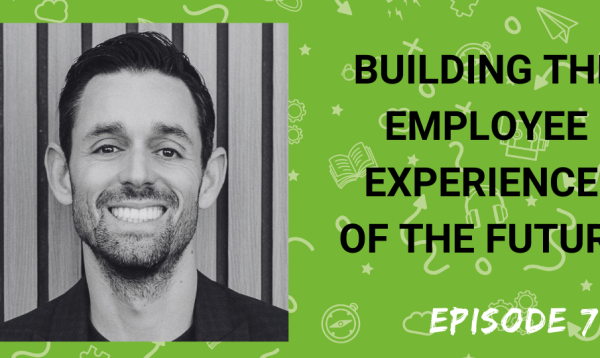
My guest this week is Samantha Ramsay, Head of Resourcing and Employer Brand for House of Fraser. Over the last two years Samantha has been systematically challenging assumptions, moving mindsets and embracing new technology to order to drive change within her organization.
In the interview we discuss:
• The difference between recruiting and resourcing
• How fundamental change creates massive impact
• Questioning standard practice in recruiting
• Why House of Fraser prioritise behaviours and traits over past experience
• Success with bespoke online assessment and video interviewing
Samantha also shares her view on the relationship between resourcing and marketing and how resourcing should now be positioned in a very different way
The podcast is kindly supported by Lever, where ATS meets CRM
Subscribe to this podcast in iTunes

Transcript:
Matt Alder [00:00:00]:
Support for this podcast comes from Lever. Providing a modern take on the applicant tracking system. Lever combines ATS and CRM functionality into a single, powerful platform to help you source, nurture, and manage your candidates all in one place. What’s more, Lever’s deceptively simple interface means that hiring managers and applicants love it too. To find out how Lever can help you both accelerate and humanize hiring, visit www.lever.co recruit. That’s www.lever.co recruit. And Lever is spelt L E V E R Lever. Where ATS meets CRM.
Matt Alder [00:01:07]:
Hi everyone, this is Matt Alder. Welcome to episode 65 of the Recruiting Future podcast. Changing established ways of thinking is difficult. Changing established ways of thinking about recruitment within large companies can seem impossible. However, with economies fluctuating, technology improving, and people’s communication preferences developing, driving effective change is a key part of the job for every in house recruiting leader. My guest this week is Samantha Ramsay, head of resourcing and employer brand at House of Fraser. Over the last two years, Samantha has been systematically challenging assumptions, moving mindsets and embracing new technologies in order to drive changes. I would suggest that this is a must listen interview for anyone working in in house recruiting.
Matt Alder [00:02:03]:
Hi Sam, and welcome to the podcast.
Samantha Ramsay [00:02:06]:
Thanks.
Matt Alder [00:02:07]:
So could you introduce yourself and tell us a bit about who you are and what you do?
Samantha Ramsay [00:02:12]:
Yeah, I’m Samantha Ramsay. I’m the head of resourcing and employer brand at House of Fraser.
Matt Alder [00:02:17]:
So I know that you’ve been undergoing kind of a big change program in terms of how you do recruitment at House of Fraser. Could you tell us a bit about the sort of challenges that you were facing that prompted this?
Samantha Ramsay [00:02:31]:
Yeah, absolutely. So I came into the business a couple of years ago and we are a traditional retailer and as such, I think there are sorts of traditional practices within resourcing and the way that we were set up and structured, but also the mindset about what resourcing is. And actually when I came in, when I sat down with the board after sort of, you know, a few weeks of getting to know everyone and when I sat down with them individually and they said, you know, what is it that you plan to do? What do you think of it? So far, the best way I could describe it was the function that we had at that time was a recruitment function and what we needed is a resourcing function. And they couldn’t quite understand what the difference was. For me There’s a fundamental difference. And what we had was a great team, you know, a great function, but it was one that was a lot more reactive. And I think lots of people would probably find that quite familiar. It’s very reactive, very admin heavy, lots of reliance on Excel, not great systems, a bigger reliance on agency than we would like, and some negative feedback from the business about time to hire and quality. So these are kind of the standards things that most people kind of hear in resourcing. And we weren’t necessarily doing anything drastic about it to make a change. And so what we then looked at is changing everything that we did. And I’m quite a big advocate for transforming and looking at things in a completely different way. Because I think that if you’re wanting to make a difference, making a fundamental change enables you to do that. If you’re constantly just doing little things that are a little bit different, you’re not going to make a massive impact. And what was required was a massive impact. So we looked at everything and that was everything from the organizational structure within, resourcing, the people. And that’s not to say we didn’t have good people. We did have good people, they probably just went in the right roles. We looked at systems, processes, the strategy, there wasn’t one and I think it’s really important to have one. And spent probably about three, four months looking at that and coming up with what we felt was the right strategy for resourcing at House of Fraser. And that’s the journey that we have been embarking on over the last two years.
Matt Alder [00:05:17]:
So tell us a bit more about the strategy. What is your strategy? How do you see this panning out? What is it that you’re actually doing?
Samantha Ramsay [00:05:28]:
Yeah, so it’s interesting because recruitment is really simple. Our job is to find people jobs and to fill them and that’s it. And we need to fill them with really good people in the most cost effective way and quickly. That really is what resourcing on its own is. However, I think where we need to look at things a little bit differently is that because recruitment is very process led. People apply for a job, they go through the recruitment process, they get offered, they get, it’s the same thing, you know, it doesn’t change, it won’t change in 20 years time to what it was 20 years ago. But I think because of that we tend to think of resourcing as a process and actually it’s not, it’s much bigger than that. The, the process element is just the steps that a candidate needs to take to get something approved or signed off or offered or so on and so forth. That’s not. That’s what the recruitment bit is, resourcing about how you communicate with people, how you understand your brand and your business, how you enthuse others to work for your organization, the experience that they have. And it’s a much wider topic than just filling jobs. So we’ve spent a lot of time looking at that and we still are. And so the strategy is based around that, but it’s not. It isn’t rocket science. Right. It’s onboarding, offer attraction, you know, the standard sourcing selection, the strategy. The bit that’s different, though, is I think, two things. One is understanding the ethos and the goal. What we want to. What we want to feel like, what we want, how we want others to feel in those processes. And the second piece is understanding that that potentially requires a totally different way of looking at things, which is what we’ve been doing and really tackling, you know, asking really silly questions, you’d think. Really silly questions. Do we need to interview? What is an interview? What is a CV? Why do we need CVs and questioning things that are just standard recruitment practices and actually just looking at them in a different way and going, actually, do we need this anymore? Actually, is this what people do anymore? And that has instigated a huge amount of change. I’m very lucky that the business and the board have been very supportive. I think that’s incredibly important for any change that you go through is the backing and the support of others. And whereas they might not have always understood 100% what I was trying to achieve, because it’s not something they had experienced before, they believed in me and my team and that the premise in which we were of the journey that we were embarking on was for the good of the business and our people.
Matt Alder [00:08:42]:
So what were the answers to some of those stupid questions? What is an interview? Do you still need CVs? I mean, what changes happened as a result of, you know, that kind of investigation?
Samantha Ramsay [00:08:55]:
Yeah, so a really big one. A good example of that is for our store sales advisors. So what we were doing is recruiting based on people’s CVs through screening. And quite frankly, I don’t really care whether someone’s worked in another retailer before. That doesn’t make you a good sales advisor. What makes you a good sales advisor, a good sales advisor for Hausa Fraser are certain behaviors and traits, those of which we cannot see on a cv. So I’m genuinely not remotely interested in what someone’s previous experience is because it’s about their intrinsic values and their motivations, what’s important to them and why they enjoy doing what they do. And that was the biggest part of our business being, you know, Good. I don’t know, 80, 85% of the hiring in my team is to volume recruitment. And so changing the mindset in the business to say that we won’t be selecting people based on their previous experience anymore and we won’t be reviewing anyone’s CV anymore was a challenge because it was a real comfort zone. So it’s not that people don’t understand it, they can understand the concept of why you wouldn’t. I think it makes logical sense, but there’s a real comfort factor. And it was about finding stores and people who got it and wanted to give it a go to test it, to show that it worked. And very quickly, as anything does, and is why we have the power of social media, is that when you hear that someone else is doing something that’s pretty cool, everybody wants to do it. And that’s what happened. And we tested it with a few stores. The results were phenomenal. They were really pleased about it and everyone wanted to do it. We still have a challenge where CVS now still go to store for the final part of the process. So that’s the next. That’s the next chapter in our journey is to get that away from them when they finally go to store, but we no longer select them through the first two thirds of the recruitment process based on their cv.
Matt Alder [00:11:07]:
Just to dig a little bit deeper in that before I’ve got another burning question I want to ask you, but before we kind of move on. So how are you doing it if you’re not using CVs until that final third? How does the recruitment process work to that point?
Samantha Ramsay [00:11:23]:
Well, essentially we are using Blackmagic and guess we just pick one out of every 10 applicants. Although that probably would be better than reviewing people’s CVs. What we are doing is using. So we’re using an online assessment. So there’s two things, an online assessment and a video interview. The online assessment is we spent a lot of time with the chemistry group and we like them very much because they spend a lot of time understanding people’s intrinsic behaviours and values. And we had occupational psychologists come in and understand what great looks like for our sales advisors and wrote an assessment that’s online specific to us. So that’s worked. I mean, that’s worked incredibly. We look at culture Fits and behaviours. The stores immediately saw an improvement for the candidates that we saw because that went live first and the people that they saw at assessment centre, the feedback was coming back that the quality was so much better than they are, than they have previously seen. Then we added in video interviewing and for us the video interviewing was about seeing people’s personality and how they communicate and how they engage with people. Again, it’s less about whether someone’s worked at a sales job before and how they would necessarily respond to a certain situation. In the video interview it’s about their communication and their engagement, their engagement style. So we do that and then they go through to an assessment centre which we’d rolled out. So we didn’t have assessment centres in stores. Believe it or not, up until about a year and a half ago, it was all one to one interviews, which is crazy in the volume. No wonder no one had any time and to move to an assessment center model. And then what we used is we used the information we had gathered with chemistry with the online assessment, built that out further, added in peripheral behaviors that weren’t the sort of 4 or 5 cutoff kind of killer ones at the beginning, added that in and worked with them to build a really exciting and fun assessment centre that people enjoy doing, have, you know, they don’t have a horrible, daunting experience. We don’t need to put people under loads and loads of pressure and make them feel rubbish, have a bit of fun, see what they’re really like in real life and how they interact with others. And that’s how we now hire, which has been brilliant.
Matt Alder [00:13:51]:
So onto my burning question, which we’ve had a number of conversations about recruitment being marketing. So going back to the sort of the talent attraction piece of all of this, you know, what’s your thinking on that? The relationship between talent attraction and marketing and where the industry is and where it might be going.
Samantha Ramsay [00:14:12]:
I’ve really, as you know, I have really strong views on this and I think it’s a really exciting stage in our industry and resourcing because actually it’s because of the way that the world has moved on so much, but it feels like resourcing kind of hasn’t. We still post our adverts and I suppose we’ve kind of moved on from posting an advert in a paper, but literally just because we do the papers online now. I mean really, that’s not how people engage, that’s not how people engage with anything. And if I, I think that if you, if you think about how you engage as an individual about anything in life. It’s a lot more around other people’s views, which media, you search for it a lot. You don’t necessarily get fed a lot of information. Like it doesn’ always just come straight. You find stuff, it’s written in a style that suits you. It’s, there’s, you know, it’s a lot more creative, it’s a lot more interesting and engaging. And so even if you just took it as a simple point of content, now is more interesting and engaging. And ask the question, are your job adverts more interesting and engaging or are they the same as they were five years ago? The answer is probably no. And it’s not just job ads, it’s everything. And because it’s everything, what we need to do is move away as recruiters from looking at things as a process. We post an ad, we wait for applicants, we go on LinkedIn, we screen them, they go through the interview process, they get offered, because that’s not how the great, that’s not how great people are looking anymore. And they don’t really want to apply to adverts either. They want to know about, oh my God, this company sounds awesome. And I’ve been seeing it for ages and ages in my kind of vision, you know, I kind of hear about them, I see it, I want to know more. And it’s, how do you do that and how do you get recruiters to operate in the same mentality as marketing people? Because that’s what they do brilliantly for products, for anything that you buy. Resourcing, I think, needs to go exactly the same way.
Matt Alder [00:16:32]:
And are you seeing that happening or is it a journey the industry needs to go on? And if it is a journey the industry needs to go on, where should we be starting? What should organizations be doing and recruiters be doing first to get themselves up to date for the sort of marketing centric world we now live in?
Samantha Ramsay [00:16:56]:
Am I seeing it now? Not really. I think that there are obviously some companies that are doing it, some organizations, but I don’t think as a general term, and I suppose it’s a little bit concerning, bearing in mind there’s still a lot of resourcing functions that aren’t even operating with an ats, you know, or good systems or up to even just kind of what they would feel is up to date. And you read lots of resourcing surveys with, you know, what do people feel about their brand and their career site and their systems and their ability to recruit and their reliance on agencies we’re still not much further on, really. And so there is a little bit of a concern of thinking, if we haven’t yet got people, the majority of resourcing functions up to date, moving them another stage on looking at CRM and marketing and changing the behaviors and the mindset of resourcing is a big jump. So it’s not an impossible one. What I think the journey that we need to go, and I really have to stop saying the word journey, what we have to go on is, is educating people that, that it’s. This is not the future, this is the now. And I think if people see things in a futuristic way, it’s a lot harder to understand and to move into because it feels like, oh, gosh, we’re doing something that others aren’t doing. We’re doing something that hasn’t been tested before and we don’t know whether it’s going to be a thing or not. It’s, in a way, it’s a bit like going out and saying, by the way, there’s this fandangled thing called the Internet. It’s already around. We just need to position resourcing in a very different way. And so for me, it’s about working with professionals that do it every day. So speaking with marketeers, speaking with people in digital teams, how they think, what they do, looking at marketing training, you know, there aren’t any, as far as I’ve seen and I’ve tried to look, training programs that I want to send my team on so that they can understand what marketers do and how they think and the tools that they use. We then apply recruitment over the top of that. It’s not about making recruitment marketing. It’s looking at marketing and adding recruitment processes into it. That’s how. That’s what I would say.
Matt Alder [00:19:23]:
No, that’s cool. That’s a, That’s a fantastic perspective on it, I think, because, you know, there is so much going on in digital marketing at the moment. And, you know, personally, I get very frustrated that recruiters won’t investigate it or embrace it or look at it. And all of the candidates and the talent that they’re, that they’re working with are used to, you know, being communicated into. Being communicated with in that way in other parts of their. Other parts of their life. So if, if recruitment, marketing, marketing in recruitment is the presence, I’m interested in what you might have your eye on in the future because you’ve mentioned video interviewing and CRM and some of the technologies that have kind of emerged over the Sort of the last two or three years. I’m guessing in your job you must see a lot of stuff that people, you know, people talk to you about, you know, what’s, you know, what’s interesting. Where do you think this is going? I mean, on my. We were recording this in, in July and I was walking through the park on the way here and I kept bumping into people. Pokemon Go. Because it’s just come out this, just come out this week. So, you know, the world is changing and technology is changing. What are you seeing in recruitment that’s interesting that you might be interested in the future?
Samantha Ramsay [00:20:42]:
One of the things that we are looking at at the moment, and I don’t know, is it, is it new? So referrals is a big thing for us and. But I think referrals in a slightly different way. And there’s some really great technology providers that do the referral program, but it’s via social media in the sense of. So what’s big for me is to. And what I think recruitment should be in the future is it’s not really a function on its own. Recruitment is kind of like, it’s a dark art that just recruiters do and we do it and Nobody else touches CVs and we, we’re the ones that do, you know, sourcing and so. And actually, I don’t think if you, if you, if you agree that marketing and social conversation, conversations and branding and that’s much bigger than an individual is the right way to go, you can’t then just leave that all down to one recruitment team. It should be the part of everybody and it should be the part of everybody within your organization. So our goal within House of Fraser is to. Is to get everyone to become a brand ambassador, you know, and everyone likes to talk about great stuff that they have done or seen or eaten or, I don’t know, watched. And you’ve just talked about the Pokemon thing. So literally it’s because it’s a whole. Everyone’s like, oh my God, have you seen this? Have you seen that? People will always talk about stuff they’re interested in. They’ll also talk about stuff that they absolutely hate, as we know. So it’s about getting employees bought into the brand and realizing actually they are also a recruiter. So I want to turn my team into like 5,000 recruiters. That’s how we generate a change and a difference in the way that people see resourcing and our organization and our environment. But it’s then to allow them to be able to do that through technology. And this coming back to the referral piece is that if people are communicating and talking about a brand that they love, they need to be able to have the tools to enable them to do that, for one. And if they’re doing it and others are externally are interested in it, they need to be able to apply. And those people need to get rewarded to say thanks. You know, hey, we wouldn’t have found this awesome person if it wasn’t for you. And it wasn’t for you necessarily. Saying, here’s a job I think you’d be good at might be new, posting a tweet to say, look how cool this was in the office today. Someone’s clicked on it, thought, gosh, House Fraser, sounds awesome, comes through and applies for a job. But they wouldn’t have done that if you hadn’t retweeted a tweet or, I don’t know, sent something out on Facebook or whatever it might be. So functionality that enables you to do that. And we’re looking at a system which we’re about to, which we’re about to sign, which will go live in the autumn, which enables our, our business to do that. And they get points. So, for example, I hate referral programs where you get money for doing something. I hate referral programs that, you know, have loads of parameters like you can’t. You can’t get money if you don’t know them. You can’t get money if it’s your own team. You can’t get money if you’re a certain level. I think I genuinely don’t care if you have done something that’s mean that we’ve hired someone awesome. I want to say thanks. And so it’s, how do I do that and how do I make you feel awesome about doing that, too? So ours is about an altruistic way. It’s about giving people experiences to say thank you and things that they will remember and they will attach to the brand. Does that make sense? So that’s what, personally, that’s what I’m really focused on. There are loads of cool technologies out there at the moment. They seem to be coming up every single day. I get at least 10 emails in my inbox about some random piece of technology, which will be awesome, but I can’t have everything. I think my team would go mentally if I signed up yet another system.
Matt Alder [00:24:51]:
Sam, thank you very much for talking to me.
Samantha Ramsay [00:24:53]:
Thanks very much.
Matt Alder [00:24:55]:
My thanks to Samantha Ramsay. You can subscribe to this podcast on itunes or via your podcasting app of choice. Just search for recruiting future. You can also find all the past episodes@www.rfpodcast.com. on that site, you can subscribe to the mailing list and find out more about working with me. Thanks very much for listening. I’ll be back next week and I hope you’ll join me.