
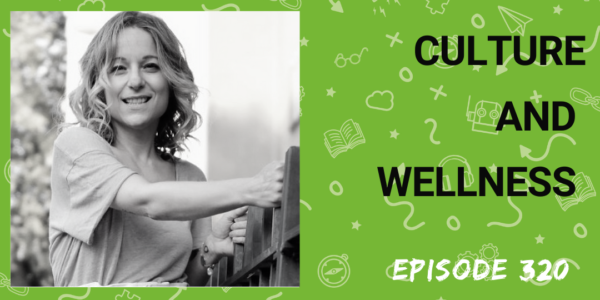
With work stress levels at all-time highs and remote working set to continue at scale for the foreseeable future, one of the essentials things that 2020 has given us focus on is the necessity to build and scale cultures for both productivity and wellbeing.
My guest this week is Ruth Penfold, People Practice Lead at Launchpad, a start-up accelerator focused on clean energy. Ruth has helped codify culture in several high growth companies and has a personal mission to improve wellness and wellbeing at work.
In the interview, we discuss:
▪ Bringing your whole self to work
▪ Building, codifying and scaling culture
▪ Honesty
▪ How cultures evolve
▪ Co-creating the culture story with employees
▪ Wellbeing and productivity
▪ How leaders need to show up for themselves
Subscribe to this podcast in Apple Podcasts
Transcript:
Matt Alder [00:00:00]:
Support for this podcast is provided by Phenom, the global leader in Talent Experience management. A single platform solution powered by AI, Phenom personalizes and automates the talent journey for candidates, recruiters, employees and management. Phenom is hosting a free virtual event IAMHR from December 8 to December 10 to help HR leaders conquer unprecedented challenges, maximize efficiency and plan for the road ahead. You can Register today@phenom.com imhr and Phenom is spelled P H E N O M so phenom.comIMHR and unlock access to over 55 hours of on demand content, binge worthy sessions and HRCI and SHRM credits.
Matt Alder [00:01:14]:
Hi everyone, this is Matt Alder. Welcome to episode 320 of the Recruiting Future podcast. With work stress levels at all time highs and remote working set to continue at scale for the foreseeable future. One of the essential things that 2020 has given us focus on is the necessity to build and scale cultures for both productivity and well being. My guest this week is Ruth Penfold, People practice lead at Launchpad, a startup accelerator focused on clean energy. Ruth has helped codify culture in a number of high growth companies and has a personal mission to improve wellness and well being at work. Hi Ruth and welcome back to the podcast.
Ruth Penfold [00:02:05]:
Hello. I’m very happy to be back.
Matt Alder [00:02:08]:
It’s a pleasure to have you back on the show. Could you please just introduce yourself and tell everyone what you do?
Ruth Penfold [00:02:14]:
Yeah, absolutely. So my name is Ruth Penfold. I actually do a few things. The biggest thing, the thing I spend most of my time doing is I head up the people practice for an organization called Launchpad who are part of BP and we are BP’s new business accelerator. So we invest in and scale new organizations in the energy space. So very much kind of emerging technologies and all sorts of things around energy transformation, which is a lot of fun. So my role and my team’s role is to help those organizations to thrive. So make sure that they are getting everything right from a people standpoint, supporting the whether it’s hiring in the leadership team, whether it’s then supporting the development of that team and really looking at how you kind of prep humans for rapid scale. Right. Which is a bit of an interesting one. And then the other smaller things that I do I did until Covid hit teach yoga weekly but on a weekly basis. But at the moment I just noodle around doing yoga stuff on the Internet. But I also have my own podcast now about joyful living called Pancakes and Peacocks. And I also write a blog.
Matt Alder [00:03:36]:
Fantastic stuff. That must keep you very busy.
Ruth Penfold [00:03:39]:
It does.
Matt Alder [00:03:41]:
We were just saying before I hit the record button that the. The last time you’re on the podcast, we actually recorded Face to Face sitting in an office in London. And it’s interesting how much is. How much has changed since. Since then. To give some context to that and to give some context to the conversation, could you talk everyone through your backstory a little bit and how you’ve got to do what you do now?
Ruth Penfold [00:04:02]:
Yeah, absolutely. So. Well. Well, when. When we met, I was working for Shazam, And I spent about five years working for Shazam until we sold Shazam To Apple, which was a lot of fun, a very interesting thing to do. But I was a headhunter, so I was kind of recruitment for 13 years. And then actually, Matt, at a moment of. Well, it took me about three years after I turned 30 to kind of change from working in agency recruitment. But what I’d done at the age of 30 was completely change everything in my life. So I left behind a not healthy, sort of codependent relationship at the age of. And suddenly set myself free. So what then occurred was kind of, well, a bit of a self exploration, really, like, who I am, what do I actually like. I’ve been living for this person and in this relationship, what do I actually want to do? What lights me up? And so I actually started while still working in recruitment, working doing stuff in the art world where I was. I got really obsessed with art and sort of. And made a big network of artist friends. So if anybody sees me on a video call or sees any of my yoga videos, they’ll probably see all the art in the background. But around that time, it was when somebody approached me for the role at Shazam. And I hadn’t quite. I hadn’t deliberately done that thing of, oh, hey, I’m gonna go do recruitment in house. But when I found myself at Shazam, I guess the cravings that I’d been having and the. The things that had been pulling me into the creative spaces I found really replicated in organizations like Shazam, because they’re technology organizations and they’re full of incredibly creative people who are building new technologies and troubleshooting. And although some of those people were a little different, perhaps to my artist friends, there was actually a really beautiful common thread there. So I guess I found a new tribe, and I found an organization where I was able to, as I started to discover who I really was, bring my whole self to the conversations that I was having. And that’s a journey that obviously continues. But after my five years at Shazam, lots of people love Shazam. So lots of people, just by association wanted me to come and do exactly what I’d done at Shazam at different places. But I didn’t want to live Groundhog Day, so I wanted to go and do something different. So one of those companies that actually headhunted me a couple of years before, it was sort of the Perfect Storm. Their VP of people was going on maternity leave. They’d gotten to know me, so they kind of knew what I was all about. So I then went into a much broader role heading up the people function on Fido, a machine learning business. And I spent about 18 months with OnFeedo and it was a permanent role. But I kind of did a grown up grad scheme there, Matt, where I learned a lot in a short space of time. And I was also part of the executive team there. And then Launchpad appeared and I saw that role and I thought, hang on a minute. This is like the perfect coming together of all of the different things that I’ve been learning about myself, about the world, about the human experience. And this is a really rare opportunity to see whether we can really create organizations where people can truly thrive in. And so I jumped and that’s where I am right now.
Matt Alder [00:07:52]:
So now you’re effectively part of a very big global organization, but you’re working in a startup accelerator and you’re really focusing on helping people bring their whole self to work and joyful humanity and, you know, the real kind of human aspect of everything. How does that all fit together?
Ruth Penfold [00:08:11]:
Yeah, I know you’re kind of thinking, what? Really? Yes. So I actually, and I say this to them too, I had quite. There was a fair amount of sort of trepidation coming into an organization that was owned by bp. You know, I didn’t quite know whether my, my whole self was going to be welcome there. But you know, I have to say, honestly, Matt, I have never felt more in alignment with an organization that I am working with. And I will explain that. I don’t say that to say that BP have always done the right things and have always done the right things for our planet. But I’ve also. I’m a human being that’s not always done the right things and not always done the right things for myself. But where we, where we share our values is, you know, we’ve operated with integrity. We operate from A place of love. If we get things wrong, we work really hard to get them right. So I’ve been really pleasantly surprised and actually in awe of bp. Now we are off to the side of bp, but I do interact with BP quite a lot and that is a blessing and a curse. And I tell them that too because I mean, my role and our goal as an organization is to bring the phenomenal advantage to these organizations of being connected to bp, but do it in a way that doesn’t overwhelm them. So, so that means that you very much are in between those two things and trying to balance the needs of both, which makes for a really interesting job and it’s certainly a very interesting place to be. But, but yeah, in terms of the organization this year, Matt, I think for many we’ve, we’ve had an opportunity to really see businesses at their worst and BP is going through a huge transformation in order to meet the objectives that it set around becoming net zero by 2050, which is a huge ambition for an oil and gas company. Everyone’s like, it’s not near enough. I’m like, I know, but it’s a really big transformation. Right. It’s like changing the way that we do around energy. But what I’ve seen I’ve been kind of really, really, really impressed by. And that is a great foundation to grow new businesses from. And we also have a very special role because BP is also looking to the parts of its organization like us to show and display kind of new and innovative ways of working, different ways of looking at challenges. Yeah, so we, we actually, there’s quite a lot of eyes on us when it, when it comes to kind of.
Matt Alder [00:11:03]:
Bp and let’s sort of talk about the startups that you work with because obviously the interesting thing about startups and high growth startups is lots gets written about culture and toxic culture and founders setting culture and, and companies not able to scale. How do you ensure that these, these companies sort of set themselves up for, of how they create their culture as they grow?
Ruth Penfold [00:11:28]:
Yeah, that’s a great question. And what I will say is we’re only like, I mean Launchpad is 18 months old, so we’re like a year in and we’ve just, we’ve got four, five companies now officially in our portfolio. We’re working on a sixth. So we’re very much at the early stages. So what I would say is whilst certainly we’re beginning to, you know, put things in place to move in that direction, I can’t sit here saying, oh, we’re there. Oh my goodness. And what we did was this thing. But what I can speak to, I guess is what I’ve seen before because these organizations are so, so new. Right. I think it is such an interesting journey for a founder. When you’ve got a true founder who has, you know, blood, sweat and tears into an organization, grown it from nothing, knows everything about it. And that was definitely my experience with Onfeedo. You know, you had a collection of brilliant humans who were just phenomenal but had to go on that journey of scaling with the business as much as they possibly could. But in fact, since my leaving, all of the founders have now stepped away from the day to day running of the organization. But on Feeder also just took 100 million investment, right? So the business is really, you know, like when I, we doubled in size in the 18 months that I was there. So it’s growing, growing, growing. And I was, I was amazed by particularly Hussain and Eamon in On Fido because they really were, you know, the hockey stick growth curve that they were going on and putting themselves through to, you know, go out and get funding or just make sure that the business was running in an operationally effective way is huge. But it’s also an incredibly emotional journey, right, Because I haven’t, I haven’t actually caught up with them both this year, but. So guys, I love you and I’m just making assumptions here, but it’s a really, really big step to step away from your organization because if you’re choosing to do that then, you know, this is essentially like having, it’s like a child, right? It’s like it’s your everything, it’s everything in your world. So I have a huge amount of respect for when people do ultimately decide to do that. But in the early stages, yeah, the people join to be with the founder. The founder is the magic, right? There is something about them, there is something about their unwavering determination for the thing that they think they can solve. And it’s that incredibly intoxicating energy that means that you get the first people on the bus, right? So what the startup then goes through is a really interesting journey because those first early adopters, the first people on the bus, are incredibly close to the founder and know everything about the organization too probably, and everything that’s happening. So they really have a journey to go on as the business scales and as the founder becomes busier and then as the founder starts to hire in or founders, people around them that kind of meet the needs of the things that they’re not so Great at then those people that were perhaps the early people on the bus have to kind of get used to less access to the founder. So. And. And then it grows from there. Right. And. And some people hate that. And some people are very much early stage businesses and don’t want to. Don’t want to be there as it scales. And we definitely saw that on Fido. But what on Fido did a phenomenal job of was codifying their culture really early on, in a very honest way. And I think there is a balance to be had when you’re codifying culture between creating something that is sufficiently grounded in reality, but also aspirational. So you can’t in your culture be saying things that just don’t ring true to the people that are in your organization, but equally, you know, you’re flying by the seat of your pants, most likely. So if you’re to be completely honest when you codify your culture, I don’t know how many people would join. So there’s a balance to be had that is authentic and real to an organization. And then making sure that that culture. Something else on Fido did really well was, I think, the person that I was covering maternity leave for, Ellie, I think she was like employee number 10 or something like that. They actually hired a people person really early on. And Ellie wasn’t a people person at the time. She became one and went on that journey with them. But somebody that is kind of becoming the person in charge of the human experience in your organization early on. And if you’re codifying your culture, making sure that that really permeates all of your people processes. So, you know, the way that you hire, the way that you manage performance, the way that you show up as leaders, the way that you give feedback within the organization, all of those things should be, you know, as a reinforcement of the culture that you’re building and the culture that you’ve defined collectively.
Matt Alder [00:17:02]:
I think there are some interesting lessons there for larger established companies as well. I mean, I think what you’re saying about codifying your culture, making sure that your hiring process and the way you give feedback and all that sort of stuff really reflects that is important for lots of businesses, because I think there are lots of big established businesses who still don’t get that right.
Ruth Penfold [00:17:22]:
Yeah, I totally agree. I totally agree. And I think the part that people get wrong often is, you know, your culture is what it is, right? Your people are your people. And actually the journey that you need to go on to codify it does mean looking at your organization in Total honesty, you know. And actually that was where, when I was codifying the culture at Shazam, we started by. We started from that place because kind of I arrived and none of that stuff existed. And initially my remit was just talent acquisition. But it’s kind of like, okay, I’m bringing these people in, but what am I bringing them into? I need to create the story of Shazam. And who are we and what do we stand for? And initially I actually worked with an external party to, you know, figure to start to run kind of sessions with employees and figure out what the value proposition of the organization actually was. And it turned up a lot of the stuff that actually wasn’t great. So, you know, communications wasn’t being done very well and people weren’t. Were losing engagement based on that. So I say that, to say that this is a really important exercise so that you can actually see as an organization what you need to work on. And it shouldn’t be a fixed thing either. So just, you know, the culture of your organization in. Well, when I joined Shazam, what was that? 2013, 2014, you know, it evolves over time and you have to allow, particularly founders have to allow the story of their organization to unfold with. Around the people that are within it and allow the people within it to co create the story of what that is. Because if people feel like they’ve been part of creating something, then they’ll be so much more invested in the preservation of what they’ve created.
Matt Alder [00:19:28]:
I think a really interesting word that you use there is honesty. Because when it comes to employer branding, we often talk about authenticity. And I think honesty is a, is kind of a more, A more brutal but a more accurate word because there’s this thing about what is the culture really like in employer branding. A lot of companies are trying to spin, spin the best parts of that to attract people to the business. But if there isn’t that honesty running through it, then people don’t stay and it kind of becomes pointless. So I think, I think honesty is a really good word there.
Ruth Penfold [00:20:01]:
I agree. And you know what? Actually even I see, you know, you can actually see this. You know, this isn’t, this isn’t a skill we learn as an adult. Babies, children, like, it’s like an innate human skill. We can tell if somebody is being real or not. So, you know, if an organization or particularly a leadership team is showing up and is not being honest. And I say that with the caveat of obviously as leaders, you can’t be completely transparent with your organization at all times. But when it comes to this stuff, if you try to kind of, you know, make things seem sweeter than they are, you will lose the respect of your employees big time.
Matt Alder [00:20:48]:
So this year has been a year like no other when it comes to the way that we experience work. So lots of people working at home, you know, that can be incredibly positive in terms of getting to spend time with your kids and all that kind of stuff, or it can be incredibly negative in terms of actually sort of effectively living at work and not being able to get away and kind of everything in between. And I suppose, you know, based on the sort of the work that you do, what would your advice be to leaders out there in terms of how they can just make sure that their teams have the best possible experience of work that sort of really maximizes their wellbeing and also drives productivity for the company?
Ruth Penfold [00:21:37]:
Yeah, absolutely. Somebody gave me a great quote on this earlier this year, which was that we’re in the same storm, we’re just in very different boats. And I think, I think leaders need to focus on the fact that people are in very different boats, right? So one size is not going to fit all when it comes to how people are, you know, surviving and hopefully thriving in the, in the environment we find ourselves in. So the way that we’ve approached that, the way that I’ve approached that from a kind of launchpad standpoint is really to help people build their own toolkit for whatever that means. So actually before that, before that, the first thing that we did was acknowledge that everybody has different pressures in their life right now. So we gave everybody the permission to work in a way that worked for them. It has been a particularly brutal year for parents who, you know, I’ve spoken to a lot of people who, you know, yes, it’s lovely to have more time with your children, but what that also means is you actually have no time for yourself at all. So even your kind of hour commute or 30 minute commute was lost at one point. I know that a lot of children are still at school, but some aren’t and some are younger. So it has been particularly challenging for parents. So on the toolkit, though, on the kind of well being toolkit, what we’ve done is really host a series of workshops with the view of creating inspiration. So when it comes to one’s own well being, really, it’s not the responsibility of an employer to make, you know, to fix everything in a person’s life, but what we can do instead is help people on the way to Creating the toolkit that works for them and that will be something that is unique to that individual and their scenario. But it may include, you know, for us, we’ve done talks on sort of rest, stress and how tension appears in the body, meditation, nutrition, the psychology of food and your relationship with food and what that looks like, how to build structure in your day. There’s been all kinds of different things. Stretching, how to stretch the body when you’re sitting for a long time and make sure. So I mean, we’re not one of those companies that suddenly bought a load of fitness classes because there’s plenty of that online. It’s more. How do you connect into your body and start to listen to what it actually needs and what it’s telling you? So, yeah, so and then knowing coming into the second lockdown, we’ve kind of really doubled down on that for our team. Our team is predominantly in the London area in the uk, whilst we, our, our portfolio companies are very much global. But what we’ve done is we actually host a daily wellbeing moment for the team where we have someone who helps people really kind of get into their body at the beginning of the day. And that’s been really popular actually across the portfolio. That’s been something that people have found quite useful. But then also. So that’s what you do for others. But really the biggest thing for a leader is what you’re doing for yourself. Because how you show up for yourself and in your world is the thing, the quality that you live in is the quality that you will take to your workforce and your organization whether you like it or not. So really this stuff has to start at home and that has to, you know, not just these kinds of well being things, but also deeper knowledge of self. Who are you? What are your triggers? Who are, you know, who are you in the world? How do you show up with others? How do you make sure that what you’re giving to your team and your people is that is the very best version of you. Now I say the very best version, that doesn’t need to be a perfect version. That doesn’t mean that you shouldn’t be showing up as a human being who, if you’re finding things difficult, should be honest about that too. But yeah, I mean, I see it also so often the focus, and this is particularly bad in founders, Matt, the focus is on, it is on their workforce and their population and not on themselves. And the thing they never make time for is their own well being and who they are in it. So a big Part of the work that we did from the get go at Launchpad was around making sure that our leadership community had at the very least coaches. But we’re actually now taking that further with kind of leadership roundtables and discussions and, and things that really will help them to have a safe space and a support group amongst themselves.
Matt Alder [00:26:54]:
Absolutely. And I think the interesting thing for me there is it’s kind of all about taking time. I did an interview a couple of weeks ago about employee burnout and I literally earlier this morning I was comparing my diary from this December to last December and the difference is remarkable because with this, with everyone sort of working electronically and you know, video calls for everything and all this sort of stuff, it’s just relentless. It’s literally people are squeezing so trying to squeeze so much into, into a day. And I look at my diary last year and I was on a flight to somewhere and you know, there were more spaces to travel between meetings. And as you say, that’s all really important. Time to, to kind of be with yourself and be with you, be with your thoughts. And I think that’s pro. Probably the biggest learning I’m going to take from this year in terms of the way that we work has changed and what’s really important.
Ruth Penfold [00:27:51]:
Yeah, totally. And time is just so precious and so important. I actually, I like to kind of. I’m not somebody that believes in New Year’s resolutions. I respect that they work for some people, but I kind of live in a way of. I have a goal of total integrity, Matt. So it’s kind of a steady state really, but with a bit of wonkiness on the side, you know, for good measure. No one is perfect. But I started this year with a theme, my theme for this year, and I often do, was being overdoing. And I’m somebody that, you know, I have done a lot of work on myself and why I chose the very negative things that I chose in my life and where that came from. And I’ve gone on very much a healing journey these past 10 years and that and that continues. But it’s incredible even from that place, the amount of doing that wasn’t allowing the space for being and feeling. And this year I actually live alone and I’ve spent this year really, you know, I reckon 95% alone based in my flat. I happily have a great relationship with myself and very self entertaining. But there were definitely darker moments in the beginning where it’s like, oh, okay, it’s really just me. But the bigger part of it was for Me, I’ve not been able to run away from my feelings and I’ve really been able to study myself more and look at when something tricky happens in my world and what I do. Maybe I want to eat or something. Maybe I wanna, you know, whatever it is, whatever. The thing is, I’ve really been able to monitor my behaviors because I’ve basically been living Groundhog Day for real. Monitor my behaviors and be with my feelings more and not run away. And so for me this year, I would say my relationship with myself has, I’ve really doubled down on that and what that means and my ability to be overdoing. And I actually set that goal at the beginning of the end thinking I probably wouldn’t be able to do it because I did so much stuff right. I say all that to say though, my calendar is back to back video calls every day for about 10, 12 hours. So I do, I do carve out an hour in the middle. But you know, I have, I do. But I’ve also, as someone who lives alone, Matt, that’s actually been quite good for my well being because what it means is I’ve got people all day long and when the day finishes, I’m like, I am done with people. I have done people for today, I am fine.
Matt Alder [00:30:44]:
So final question. Where can people find you and where can they find things like your podcast?
Ruth Penfold [00:30:48]:
Yeah, absolutely. Well, I’m at Ruth Penfold everywhere. I am very much someone who. There is no divide between Penfold as she is at work and as she is at home. So you can find me on Instagram or Twitter, on LinkedIn. Ruth Penfold is me. And yeah, my podcast is Pancakes and Peacocks and that’s@ pancakesandpecocks.com but if you found me somewhere else, you’ll find it.
Matt Alder [00:31:17]:
Ruth, thank you very much for talking to me.
Ruth Penfold [00:31:19]:
Thank you, Matt, A total pleasure. And thank you so much for having me back on your brilliant podcast.
Matt Alder [00:31:25]:
My thanks to Ruth Penfold. You can subscribe to this podcast in Apple Podcasts, on Spotify or via your podcasting app of choice. Please also follow the show on Instagram. You can find us by searching for recruiting Future. You can search through all the past episodes@recruitingfuture.com on that site. You can also subscribe to the mailing list to get the inside track about everything that’s coming up on the show. Thanks very much for listening. I’ll be back next time and I hope you’ll join me.