
A global pandemic, economic dislocation and Black Lives Matter: three signs of how life is undergoing rapid change in 2020, and all of them are having a significant impact on what people are looking for in an employer.
One of the key aspects of navigating these changes successfully is helping people to feel part of their organisations. But not everyone feels like they belong. For example, the nonprofit Center for Talent Innovation has found that White men have the highest median belonging scores of any gender or racial group, but Black and Asian women score the lowest.
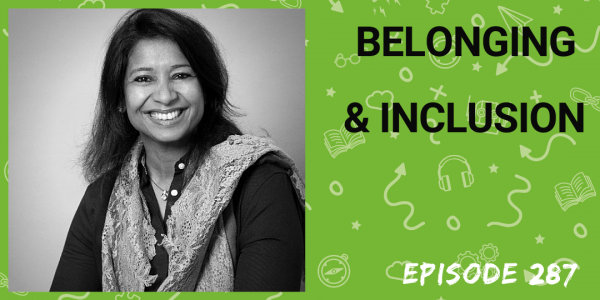
My guest this week is Ritu Mohanka, Head of Strategy & Business Development EMEA at Glint. Glint has just released results from 900,000 of its customers’ employees, showing the sense of ‘belonging’ in a company is more closely linked to employee happiness than ever before. In our conversation, we talk about the challenges around belonging and identify practical ways employers can create a proper platform for genuine inclusivity.
In the interview, we discuss:
• Ritu’s story and her recent inclusion on the 2020 EMpower 100 Ethnic Minority Executives list
• The effect the pandemic is having on employee’s sense of belonging.
• The relationship between belonging, performance and productivity • Why culture is more important than ever
• Inclusivity and being heard
• Creating a safe space for uncomfortable conversations
• Active listening and being heard
• Empowering managers with high quality and timely data
• What does the future look like in terms of belonging and inclusion
Checking in with your employees during challenging times
Subscribe this podcast in Apple Podcasts
Transcript:
Matt Alder [00:00:00]:
Support for this podcast comes from E6. E6 advances corporate executive recruiting by providing its 90 plus members with proprietary research, tools, training and the networking they need for a competitive advantage. Members include the likes of BT Group, Philips, booking.com, mondelez, American Express, and Walmart. You can find out more@e6.org and e6 is spelt e s I x e6 new book leadership strategies, Tactics and Tools for Hiring Organizations releases on Amazon in December. The book not only shows how great companies recruit great leaders, it reveals the history and best practices of this vital and sometimes secretive function. To get your copy, send your questions on corporate executive recruiting to Simon6.org and say Matt Alder sent you the best questions. Will receive a free copy.
Matt Alder [00:01:25]:
Hi everyone, this is Matt Alder. Welcome to episode 287 of the Recruiting Future podcast. A Global Pandemic, Economic Dislocation and Black Lives Matter. Three signs of how life is undergoing rapid change in 2020, and all of them are having a significant impact on what people are looking for from from an employer. One of the key aspects of navigating these changes successfully is helping people to feel part of their organizations. But not everyone feels like they belong. For example, the nonprofit center for Talent Innovation has found that white men have the highest median belonging scores of any gender or racial group, but black and Asian women score the lowest. My guest this week is Ritu Mohanka, head of strategy and Business development at Glint. Glint has just released results from 900,000 of their customers. Employees showing the sense of belonging in a company is more closely linked to employee happiness than ever before. In our conversation, we talk about the challenges around belonging and identify practical ways employers can create a proper platform for genuine inclusivity. Hi Ritu, and welcome to the podcast.
Ritu Mohanka [00:02:50]:
Hi Matt, thank you very much for inviting me onto the podcast.
Matt Alder [00:02:53]:
An absolute pleasure to have you on the show. Could you just introduce yourself and tell us what you do?
Ritu Mohanka [00:02:58]:
Absolutely. I’ll give you a little bit of my My personal journey. My name is Ritu Mohanka and I’m originally from India in Kolkata. I was born and bred there and over the last 20 years I’ve worked and studied in cities all over Europe, including Paris, Munich and Vienna. I, of course, now live in London. I’ve been in many senior leadership positions over the years, including companies such as Conexa, which was acquired by IBM, where I delivered enterprise technology solutions across a Wide range of companies and sectors and industries. I joined Glint in mid 2018 and head up business development in EMEA. And of course I always like to say my personal journey is, you know, I have two boys, 11 and 9, and that’s the hardest job I do in my life.
Matt Alder [00:03:50]:
And I know you were recently awarded a place on the 2020 Empower 100 Ethnic Minority Executives list. Tell us more about that.
Ritu Mohanka [00:04:00]:
Sure, Matt. I was delighted to make it onto the Empower executive role model 2020 list alongside some amazing people. In fact, it’s actually the second time I’ve been included on it. And it’s a list that acknowledges professional achievements of executives in the workplace BAME community. And it’s something I’m personally very proud of being recognized for. But it’s mainly about making efforts to break down barriers for minorities. And I believe my work at Glint is also contributing to that mission. As an Indian woman raised in a really hyper traditional setting, I’ve also experienced many barriers over the course of my working career, particularly in my early years building a professional pathway. So this Empower list really helps me even further. I’m deeply committed to removing those barriers for other young Indian and BAME people. Let’s hope that the global pushback about racism we are currently witnessing will help cement real changes in the workplace and indeed more broadly across our lives.
Matt Alder [00:05:05]:
For people who might not be aware of Glint and what Glint does, could you just give us a very quick overview?
Ritu Mohanka [00:05:11]:
Absolutely. So Glint is a people success leader and a platform that leverages real time people data to help global organizations increase employee engagement, develop their people and improve results. And it’s much broader than employee engagement. We encompass the whole aspect of employee experience, really understanding moments that matter for employees across their entire employee life cycle, from onboarding to exit. And there are some leading brands like United Airlines, Sky Intuit that leverage Glynn’s unique combination of what we call like to say, intuitive design, the sophisticated analytics and actionable intelligence to really help employees become happier and more successful at work.
Matt Alder [00:05:55]:
Obviously, 2020 hasn’t panned out the way that anyone was expecting and there are huge challenges for employers terms of engagement. I know that Glint have recently done some research into into this and the effect that the pandemic’s having. Could you sort of tell us a little bit more about that?
Ritu Mohanka [00:06:12]:
Absolutely. So you know, belonging has always been one of the top drivers employee happiness and retention. And this is borne out of by recent research in Harvard Business Review as well, which reveals that if workers feel a sense of belonging, then companies reap substantial bottom line benefits. A high sense of belonging in fact was linked to various key metrics within this piece of research. For example, a very noteworthy 56% increase in job performance, a 50% drop in turnover risk and a 75% reduction in employee sick days, for example. If you take this put this into Context, for a 10,000 person company, this could equate to an annual savings of more than $52 million. As you said, Matt. However, since the work experience has been disrupted massively for everyone by COVID 19, we have seen some real changes in the strength of this various relationships that hint a very new sort of dynamics. So from all the data that we recently gathered over the last three months, it’s about 1.4 million employee surveys across worldwide. Across our customers, we’ve seen that the relationship between belonging and happiness has increased in strength by 12% over the last three months. And likewise, 73% of these organizations saw an uptick in their belonging scores since the last survey prior to COVID 19 pandemic. And 31% of these companies who saw an increase saw more than five or more points, which is an absolutely massive meaningful change. And this increase suggests it is even more important now than before for employees to feel a clear sense of belonging. And just a little bit more on that results in tandem when we’re looking at rankings of topic frequency. So when people give open comments to questions. Culture displayed career opportunities as the most common topic of comments on the belonging question, which we’ve never seen before.
Matt Alder [00:08:13]:
That’s really interesting and you know, it just kind of really illustrates the dramatic shift and change that everyone’s going through right now. There was some other recent research for the center for Talent Innovation which found that not everyone feels like they belong. And it highlighted differences across genders and racial groups. What’s your take on that?
Ritu Mohanka [00:08:35]:
Yeah, that’s a really interesting one. You know, Matt, developing a sense of belonging is a real challenge, but it is more than worthwhile. As we just explored, it’s far easier for management to create new jobs or promote individuals than it is to overhaul a culture which many corporations spend years trying to cultivate. Also, the recent global unrest about racism culminating in the ongoing Black Lives Matter protests, including those in the uk. And as a result, organizations face challenge of effectively supporting their employees during this charged moment, as well as figuring out how can they take action to address some of these systemic problems identified by the BAME community at Glint specifically. We know, we absolutely know, and so much research done on this is that we know that people cannot do their best work or bring their best selves to work if they don’t feel that they are seen, heard and valued. There’s just no point of employees being open with each other if they aren’t heard by management. And we believe that it is vital that organizations learn from the voices of their people, help their teams have truly authentic and authentic is key open conversations that we all learn from that and can take tangible steps towards creating a more equitable workplace and indeed society. Just as you said, it really suggests that if you want to create this everyone, there’s such a growing sense of importance. And when people ask this question about do I really feel like I belong here? And as we said earlier from Glint, we’ve accumulating a lot of data that confirms that the importance of belonging in a sense of community to positive business outcomes as well as to employee happiness. And of course, the data supports this because it’s Glint’s mission to make people happier and more successful at work. And we therefore believe that people’s success should be a core value for organizations.
Matt Alder [00:10:40]:
Leading on from that. I mean, I hope and I and I know that lots of employers are now embarking on some sort of fairly uncomfortable but very necessary conversations about race and diversity. What practical suggestions do you have that could, that could help them with that?
Ritu Mohanka [00:10:57]:
Yeah, yeah. You know, we’ve been socialized to believe that it’s not, it’s best not to talk about topics such as religion, such as politics, race and many other topics that relate to vastly different worldwide views. Views. But the growing body of research around psychological safety, engagement and inclusion has really shifted the dialogue from whether we should talk about these conversations at work to how can we proactively begin to arm ourselves with the competencies to have these conversations at work? You know, managers really need to be proactive. They need to create a safe space for conversations that might feel really uncomfortable but are absolutely needed, as these will promote active listening. This is where you can start getting shared understanding and connection. And just to give you an example, one of our customers, sky, for instance, they use special online forums to help on this front. Sky employees elected by their peers across every single team they meet throughout the year with the broadcasters apologies most senior leaders to capture genuine frontline perspectives on stereotyping and assumptions about staff. And we suggest that arming managers with prompts and guides to help navigate these conversations is hugely important. And LinkedIn learning has some brilliant resources to help you here. I really like the story. One LinkedIn learning resource shares a story of an employee who comes to work one day really upset about another killing of an unarmed black man. Sadly, he left the organization soon after and to the dismay of the company’s leaders, because he was a really rising star. The lack of support or understanding from his white manager, she just probably didn’t know how to respond when he told he was upset may have contributed to his leaving, and it’s likely that the manager just didn’t know what to say. Cases like this, which regrettably are a lot more common than we’d like to think, highlights the need for us all not to only talk about these issues, but we also need to have the requisite skills to do so effectively. We can’t have diversity and inclusion without dynamic leaders who know how to understand the human beings who work for them. And diversity and inclusion shouldn’t be the work of should be the work of everyone at a company, not just those who have it in their job titles.
Matt Alder [00:13:25]:
Tell us a little bit more about the actions that we should be taking and what are those skills that we.
Ritu Mohanka [00:13:32]:
Need to develop Develop first and foremost, foster a better understanding of yourself and others. Seek to understand what are the issues and experiences of the BAME community. By that I really mean to see both sides of the coin. That is why do you believe what you believe and why do others believe something different? And then once you’ve done that, then acknowledge your own feelings and reactions and the role you have played and need to play in the future. We talked about this leaders and managers earlier as well. But leaders and managers at all levels have a responsibility to visibly acknowledge what’s happening so the team members can be seen and the experience can be shared. Really, it’s only by leaders stepping up in this way that employees and managers feel comfortable about embarking on potentially, which is quite polarizing. Conversations and discussions also creating a physical now of course, virtual safe space for conversations that might be uncomfortable to take place and give managers the necessary training and conversational prompts to manage these discussions successfully and to find common ground as well as to explore where your perspectives diverge and how can we bridge those differences and there are so many resources available. Often the problem is not knowing where to start is common reason for people to not take action. One question you might want to pose or suggest managers to ask their own teams is what do you need from the team? Your manager right now? What’s the one definite step forward we can all take? These less threatening type of conversations could then perhaps lead to capability to have more difficult ones and so to continue the healing process. Another aspect of this is the importance of empowering managers. Glints absolutely massive on this is how can we really increase the importance of empowering managers with the good data at the right time that can usually help inform these conversations. When you have data, you can have better conversations. And a survey, sometimes at an appropriate moment on your diversity and inclusion journey, can be a really good input for ensuring that you’re collecting feedback at scale. So at the entire organizational level to see, then we can start seeing where can action be taken? Where should we take action on?
Matt Alder [00:15:55]:
Tell us a little bit more about that. Tell us a little bit more about the role that engagement surveys like the ones that Glint offer play in all of this.
Ritu Mohanka [00:16:05]:
Yeah, you know, the world of engagement has evolved so much. You know, the industry has shifted so much from these large, complex global surveys to much more the world of agility. And we’re a real believer that when you think about is it a right time to do a survey, whether it’s engagement or diversity and inclusion, you often have to ask yourself some of these basic questions as an organization. Things like do your leaders regularly have conversations about the importance of D and I at the company? Do you regularly gather feedback about employee experience and include questions and inclusions? Or do you really have the culture of feedback collecting data? Do you provide avenues for people to talk about D and I in the workplace already? Have you addressed race and ethnicity specific issues in the workplace before? And do you have the resources if you’re going to go and ask some people employees for feedback, do you actually have the resources in place to take action on the feedback you receive? If the answer is no to most of these questions, then we absolutely don’t recommend rushing out to survey to establish meaningful change. First, set the tone by getting leaders to talk about these issues. Only by leaders stepping up in this way can employees and managers start to feel comfortable about voicing their concerns. I really share the belief that people need to be able to speak up when relevant and should be a part of a workplace where the entire team trust and respect each other and can be candid. We also recommend your primary focus as an organization is on creating opportunities for conversations to happen. Survey is only a means to that. That being said, but if you have major concerns about people feeling comfortable about having those conversations, a survey may be perhaps a good approach for getting confidential feedback about this. Plus, if you have answered yes to most of those questions I just asked and are talking openly about these issues, a survey can be a good supplement to ensure you can collect feedback at scale and to see where action might need to be taken to improve and for example, some organizations. If you already have a scheduled survey coming up, particularly in these challenging and rapidly changing times, we recommend a monthly cadence. Revisit the content to ensure that each question still feels relevant and you’re also covering some important aspects of inclusion and belonging. If you don’t have a short survey or a pulse schedule in the next month, consider adding one to check in with your, you know, check in with your people to ensure that you cover some of these topics particularly related to navigating times of crisis and distress, such as now, and absolutely including something around inclusion and belonging as well.
Matt Alder [00:18:50]:
Final question, we’re obviously going through a period of very intense change at the moment. Looking to the to the future. Where do you think organizations will be in terms of sort of tackling belonging and inclusion issues in 12 to 24 months time?
Ritu Mohanka [00:19:09]:
Yeah, that’s interesting question, Matt. Clearly tackling racism and building equality for all is not something you can do overnight. There’s no magic wand that you can wave, no matter how much goodwill you have. The Black Lives Matter movement has laid bare just how far we collectively have to go, for which we should all be grateful, though it’s really sad that it was needed. But I’m hopeful that organizations really can make solid progress now in terms of their diversity, inclusion and belonging journeys. So I fundamentally believe there will be progress, though doubtless it will not be enough and there will be more work to do. Also, Matt, if there’s one thing that everyone listening to this podcast should perhaps reflect on is how much exposure we all have to these racial issues and what can we learn from the historic and current experiences from those with a very different point of view? Having more information, getting familiar with this history will help us all, and I very much include myself here to bridge those differences with our colleagues and team members. And you know, a great place to start with this journey learning Journey is, you know, with an excellent podcast by Kwici Graves, the sales manager at LinkedIn. Matt, I don’t know if you’ve come across this. It offers really clear steps to help you get involved and support your team. And perhaps, Matt, we might want to sort of include this in your show notes, of course. Likewise, LinkedIn learning, I think I mentioned this earlier as well, has really released many free courses to help you become a stronger ally and have inclusive conversations. And finally, there are lots of resource resources in our resource center on the Glint website, which contains a huge amount of useful and relevant resources.
Matt Alder [00:20:54]:
Ritu, thank you very much for talking.
Ritu Mohanka [00:20:56]:
To me thank you once again for inviting me onto the podcast, Matt. I thoroughly enjoyed it and if anyone’s interested in continuing the dialogue, please I invite you to connect with me on LinkedIn, where I regularly comment and share useful content about these and other vital HR topics.
Matt Alder [00:21:11]:
My thanks to Ritu Mohanka. You can subscribe to this podcast in Apple Podcasts, on Spotify or via your podcasting app of choice. Please also follow us on Instagram. You can find the show by searching for Recruiting Future. You can search through all the past episodes and at www.recruitingfuture.com on that site. You can also subscribe to the mailing list to get the inside track about everything that’s coming up on the podcast. Thanks very much for listening. I’ll be back next time and I hope you’ll join me.