
Employee turnover continues to undermine talent acquisition efforts, with many organizations investing heavily in hiring only to watch new talent walk out the door feeling unappreciated. Even organizations with the most robust hiring processes continue to struggle with retention, costing millions in lost productivity and repeated recruitment efforts.
So how can companies ensure their hard-won talent becomes long-term, engaged contributors in competitive talent landscapes?
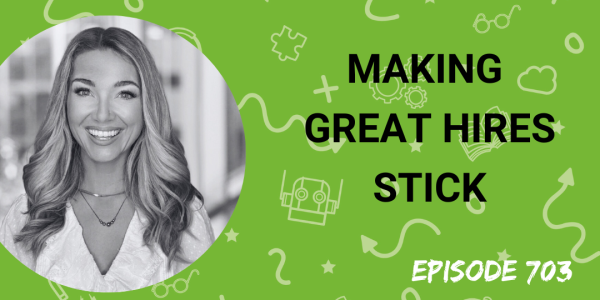
My guest this week is Brie Harvey, Head of Market Research and Community for Achievers. Achievers is helping organizations implement recognition strategies that transform employee experience and dramatically improve retention rates.
Brie offers valuable perspectives on data-driven insights connecting recognition to business outcomes and how taking the right approach to appreciation can protect recruitment investments and drive performance across the entire employee lifecycle.
In the interview, we discuss:
• TA’s lack of control over ultimate hiring outcomes
• Praise versus recognition
• When hygiene factors are missing, recognition will always fail to have an impact.
• Low-cost, high-impact strategies
• Impact of recognition on key business metrics
• Building the business case for HR Tech
• Identifying the performance outcomes that move technology investment from nice to have to must-have
• AI-driven personalization
• What does the future look like?
Follow this podcast on Apple Podcasts.
Follow this podcast on Spotify.
00:00
Matt Alder
Are your perfect candidates leaving as fast as you can hire them? What if the missing link in your talent strategy isn’t just finding better talent, but how you treat people after they start? Keep listening to discover how leading organizations use rekognition to strategically transform their employee experience into a powerful performance and retention engine. Support for this podcast comes from Greenhouse. Greenhouse is the only hiring software you’ll ever need from Outreach to offer. Greenhouse helps companies get measurably better at hiring with smarter, more efficient solutions powered by built in AI. With Greenhouse AI, you can generate stronger candidate pools faster and source high quality talent with more precision. Streamline the interview process with automation tools and make faster, more confident hiring decisions with AI powered reporting.
01:01
Matt Alder
Greenhouse has helped over 7,500 customers across diverse industry verticals from early stage to enterprise become great at hiring, including companies like Airbnb, HubSpot, Lyft, SeatGeek, HelloFresh and DoorDash. If you’re ready to put the power of AI into the hands of your hiring team, you can Visit code visit greenhouse.com to learn more. Hi there, this is Matt Alder. Welcome to episode 703 of Recruiting Future, the podcast that helps talent acquisition teams drive measurable impact by developing strategic capability in foresight, influence talent and technology. This episode focuses on talent and influence. Employee turnover continues to undermine talent acquisition efforts, with many organizations investing heavily in hiring only to watch new talent walk out the door feeling underappreciated. Even the organizations with the most robust recruiting processes continue to struggle with retention, costing millions in lost productivity and repeated recruiting efforts.
02:30
Matt Alder
So how can employers ensure that hard won talent becomes long term engaged contributors in a competitive talent landscape? My guest this week is Brie Harvey, Head of Market Research and Community for Achievers. Achievers is helping organizations implement recognition strategies that transform employee experience and dramatically improve retention rates. Bri offers valuable perspectives on data driven insights connecting recognition to business outcomes and how taking the right approach to recognition can protect recruiting investments and drive performance across the entire employee lifecycle.
03:08
Matt Alder
Hi Brie and welcome to the podcast.
03:11
Brie Harvey
Thank you so much for having me.
03:13
Matt Alder
My absolute pleasure. Please could you introduce yourself and tell us what you do?
03:19
Brie Harvey
Yeah, I’m Brie Harvey. Some people like to say I’m a personality hire, but I also have a day job as head of Market Research and community for Achievers where I work with the research arm of our business, the Achievers Workforce Institute, which conducts primary research around Workforce trends. And really we’re looking at the data of how organizations can cultivate cultures that lead to both high performance and high employee well being and retention. I get to do a lot of community engagement, webinars, field events, customer focus groups, facilitating roundtables and such.
04:03
Brie Harvey
So I get to learn from a lot of the world’s top HR leaders and talk to the employees of our customers to ensure that we’re injecting a qualitative element to our research so we can think critically about how to translate the research into tangible strategies and tactics that can be employed in the real world that lead to an improved employee experience. I recently learned that it’s cliche to call yourself a storyteller. Did you know this? I just got the memo. What I do, I like. What I do entails gathering and sharing stories about what success and failure actually looks like in practice. So I find that endlessly fascinating.
04:56
Matt Alder
Absolutely.
04:57
Matt Alder
And not cliched at all.
04:58
Matt Alder
Tell us a bit about your background.
05:00
Matt Alder
What, what you were doing before.
05:02
Brie Harvey
I actually started my career in talent acquisition and I did that for as I white knuckled through as many years of that as I could, it taught me so much, not just about the business, but about the implications of culture, in particular bad and good culture on retention. You know, you work so hard to get one person, the right person in seat and it can feel, yeah, like a lack of control, you know, when you place them and they don’t stick. But in terms of my career at Achievers, I started in a really fascinating role. I’m not sure if you’re familiar with enablement. It’s kind of adjacent to learning and development. And I was basically in charge of global enablement across the organization.
06:01
Brie Harvey
So how can the different customer facing parts of our business do their jobs more effectively either through training or improved processes and procedures? And I was in that role for almost five years before I basically created my dream job, which didn’t exist before. It took me 11 months to get the right organizational alignment and budget. But I started in my current role at the end of 2019, right before the world imploded.
06:40
Matt Alder
Fantastic stuff. And tell us, what has your background in talent acquisition taught you about the relationship between hiring and employee recognition?
06:51
Brie Harvey
Yeah, it’s so interesting because I transitioned from the recruitment space to HR technology when I joined Achievers almost 10 years ago. So it feels like a lifetime ago. When I talk about it feels like I’m sharing someone else’s story. But early in my career when I worked for a staffing agency, I was Doing a lot of internal work, recruiting and training of recruiters. And so between sourcing and pre screening candidates, moving people through the selection process and doing this like intensive three work, three week onboarding program I did, it was a colossal amount of work for me, for each person. And I really wanted them to succeed.
07:37
Brie Harvey
Not just because I had, you know, tight relationships with them personally, but I had an actual component of my variable pay tied to the performance of new hires for the first 90 days and how quickly I could get them to quota. However, our retention rate for new hires was abysmal even for staffing agency, which I’m sure you know, can have. You know, staffing agencies are sort of infamous for having high turnover. But it was infuriating to me because I’d ask my people why they’re leaving. And I kept hearing the same thing. Like, no matter how hard I work, you know, I feel invisible, unappreciated. Like I hear when I’m doing something wrong, but not when I’m doing something good. And it.
08:27
Brie Harvey
Hearing this over and over filled me with so much rage because I was like, how hard is it to notice and call out good work? You know, it took me months of my life to get this person on board. I trained them, I got them hyped up to work here and you know, I release them into their local territories and no one can take two seconds out of their life to tell them what they’re doing well. So I’m very familiar with the type of pain and frustration that can come with being in a role like talent acquisition and not having direct influence over people, practices and culture.
09:06
Brie Harvey
It’s like you can have the, you can be the best recruiter in the world, but if you place them in an environment where they’re in survival mode and not having their emotional needs met, it can feel kind of like Sisyphean work. So I have a lot of respect and empathy for your audience and the talent acquisition folk in the world.
09:28
Matt Alder
Fantastic.
09:29
Matt Alder
And do you feel that employers fully understand the difference between, you know, what we might call hygiene factors when it comes to kind of benefits and recognition, all that kind of stuff, things that actually motivate people?
09:43
Brie Harvey
Yeah, I love that. Going Back to Psychology 101 on Maslow’s hierarchy of needs. You know, one thing I found really confusing but fascinating when I first started at Achievers almost a decade ago, when I was going through the onboarding and kind of learning about how our customers use their recognition platforms to improve things like employee retention and performance I had this moment where I got so excited and I was like, oh my God, you have no idea. I came from the staffing world and I have so, like so many of my old clients could save their businesses if they had a program like this because they struggle with high disengagement and turnover because of toxic cultures. We should reach out to them. But the brilliant person doing my training was like, no, those don’t sound like our ideal clients.
10:39
Brie Harvey
The customers who are the most likely to experience cultural transformation and be the beneficiaries of some of the more transformative benefits of rekognition already have the nail the basics dialed in. And at first it was kind of hard to accept. Like, wait, what you mean you’re telling me that the companies who hypothetically have the most to gain because they have the highest turnover and the most disgruntled employees, like, we actively avoid those accounts and. But thinking back to Maslow’s hierarchy of needs and basic concepts of psychology 101, it makes sense if we as people have unmet basic survival needs because, say, you know, we don’t make enough money to feed our family or home them, or maybe we don’t feel respected or safe at work.
11:37
Brie Harvey
I’m going to be a lot more focused on that and it’s going to be a lot harder for me to get energized by a wellness challenge or a gesture of gratitude or growth opportunity until those basic survival needs are satisfied. And so I think one of the things the pandemic reinforced is that the things that drive peak performance and innovation are different than the factors that lead to high disengagement and turnover. Hygiene factors such as working conditions, salary, those baseline needs, those, if they’re unmet, can cause high levels of disengagement, but they’re just the cost of entry to get into the stadium. It’s those motivational factors that tap into the those higher level emotional needs on Maslow’s pyramid, such as purposeful work or recognition. Those are your performance superchargers.
12:45
Brie Harvey
So my trainer was wise alluding to that because it’s very much reflected in our research. And you know, if you think about like if you’re having a house party and your goal is to keep people at your party and keep them engaged, but there’s a leak in your roof getting everyone’s feet all wet, like by all means, keep the music on, serve snacks, like continue with the mood lighting, but fix the roof.
13:19
Matt Alder
No, I think that’s so true and I think everyone listening will probably Be able to think of a time when that happened to them. I can think of lots of times when I work for companies and, you know, those kind of basic things weren’t quite in place and they do some kind of, know, recognition or incentive and it used to feel more insulting than motivational.
13:36
Brie Harvey
It’s like a band aid solution. It’s like, don’t put a band aid on my gaping wound.
13:41
Matt Alder
Exactly, exactly. Just give me some thoughts around the sort of, you know, what’s low cost, high impact in this area that can make a real difference to employee experience.
13:51
Brie Harvey
Yeah, I think in terms of low cost, high impact ways to improve the employee experience. I think one of the simplest things you could possibly do is to ensure that everyone in your business, but especially people, leaders, understand the difference between praise and recognition. Praise is like a vague pat on the back that doesn’t leave people with an understanding of what they did that was good. And no one wants more praise, not even Gen Z. Recognition, on the other hand, should contain detailed information about what a person did and why that behavior matters to the bigger picture. How did that act impact the people or things that matter to the organization? As long as you are involving everyone in the business and training them to understand that critical variance, it could be an incredibly powerful way to scale a culture of gratitude.
15:07
Brie Harvey
And kind of along with that, the other big area that I think sometimes employers miss is ensuring that recognition is democratized and multidirectional. Meaning it should flow not just from the top down, but from side to side and all directions. With a special emphasis on peer to peer recognition. Because even before the rise of hybrid and remote work, leaders had exceedingly low visibility into the actual work being done. And the people in your business that have the highest line of sight into the two foot level of where work gets done are the best equipped to call it out.
15:54
Brie Harvey
And what ends up happening is once people realize how intoxicating it feels to make someone’s day, what ends up happening is leaders get so much more visibility into the actual work being done, which presents all these opportunities for them to positively reinforce the exact behaviors they want to see more of and help provide that clarity. That link back to how, you know, someone’s daily contribution is impacting the broader organization’s mission, values and goals.
16:33
Matt Alder
Yeah, and that kind of leads on to my next question really, which is what are the strategic outcomes that employers.
16:38
Matt Alder
Should be getting from this kind of.
16:40
Matt Alder
Investment and why might they not be seeing them?
16:44
Brie Harvey
Yeah, it’s fascinating because over the last few decades, it’s not an exaggeration to say that there has been a mountain of evidence that’s accumulated from consulting houses like Gallups to academia that clearly demonstrates that recognition directly and irrefutably drives things like employee engagement and by extension, performance retention, pretty much any metric an organization would care to expend time or resources to measure in the first place. A well executed recognition program can and should help foster a positive organizational culture where employees feel valued and connected. However, there’s a phenomenon called theory practice gap that describes the disconnect that commonly occurs when theoretical models are applied in the real world and the results don’t match up. Achievers is intimately familiar with this as it relates to online recognition programs and tracking ROI.
18:05
Brie Harvey
Because over the last 22 years we’ve designed and launched hundreds of recognition programs for some of the world’s largest, most complex organizations. And we know firsthand that there are certain conditions that have to be in place for an organization to be in a position to get maximum roi. And we have developed a pretty comprehensive playbook of best practices and strategies that we know reliably predict when we’re going to have the happiest, most fanatical customers with the strongest roi. And conversely, when things fall flat, which unfortunately sometimes happens, we can pretty much always trace it back to missed opportunities from that playbook of best practices.
19:06
Brie Harvey
And like, there are so many things, but if I were to like boil it down to like one core, I would say like sometimes businesses come to us looking for a recognition program, but what we find is really what they need is cross functional, particularly top down alignment and buy in. Like it doesn’t matter if you have the best wellness program or recognition program or mentorship program in the world. If you don’t have that executive alignment and participation and that alignment with the organizational goals, then your investments in any kind of people program are going to be muted.
20:01
Matt Alder
Talk to us a bit about the role that technology plays in this because obviously it’s, you know, transforming the way that this kind of all works. But tell us a bit more about tech.
20:11
Brie Harvey
Yeah, I think that one thing that I guess has always been clear, but it’s been especially clear since the pandemic, is how you use a tool or technology is so much more important than what you use. Sometimes organizations will approach us because they think that our technology is going to solve their pain. But really once we do discovery and see what’s actually happening under the hood, we realize the issue is more cultural and a symptom of senior leaders not being on board. Like HR technology alone isn’t enough. The analogy that I’ve used is leveraging technology to transform culture or drive strategic outcomes is similar to constructing a building. It certainly doesn’t happen overnight. It requires a tremendous amount of upfront activation, energy and planning and alignment with key stakeholders.
21:21
Brie Harvey
But once you have the right raw materials and the right people in place, the right alignment, the blueprint for change management is pretty well established. But if there’s a lack of executive buy in and participation for any enterprise wide initiative, it makes it difficult to challenge and shift the collective mindset of a group of people. And you know, regardless of theoretical efficacy of a tool, the risk of a new solution becoming just another HR program is heightened.
22:02
Matt Alder
Yeah, again, that makes perfect sense. And so leading on from that, just in terms of looking at the, you know, the investment to get any kind of HR technology in the first place, what do you kind of say to people in terms of, you know, best practices for measuring roi? HR really sort of persuading the CFO to fund the acquisition of technology to take things forward?
22:27
Brie Harvey
Yeah, I think that the last, I don’t know, 20 months, especially the conditions of the market have left a lot of organizations and austerity mode forcing HR to do more with less. And this is becoming increasingly important for HR practitioners to be thinking about how to capture ROI of their people. Investments in metrics that matter to stakeholders outside of hr. We find it helpful to think about there being two broad types of success metrics. The first being broad performance outcomes. Anything that’s easy to link back to the dollars and cents of the business engagement, performance, cost savings, revenue generation, quality control. And then there are indicators which often reside at the HR level of reporting, whether it’s usage metrics, employee listing inputs. And the thing about the North Star metrics is you can imagine HR behind the helm.
23:45
Brie Harvey
You can imagine HR at the helm of a sailboat, working with the business leaders to kind of set the course, the direction and the final destination. Those are those broad businesses indicators which, you know, offer very helpful information. Are we headed in the right direction? Are people engaged? Are we performing? But those North Star metrics don’t help diagnose which sales need to be loosened or tightened. It’s those secondary program level indicators such as adoption metrics or what you’re hearing in your employee survey data that provides the actionable information that help us decipher what needs to be done to get the ship back on course. So both are helpful, but for different reasons.
24:39
Brie Harvey
And I think in years past, HR has been able to get away with kind of leaning a little bit more on the HR level of reporting when proving out the impact of their people investments. But we’re going to continue to see budgets being tightened. I’ll give one example. So for example, when a recognition program is relatively new, we’re thinking about success in terms of adoption. Like we’re trying to identify where there are gaps and appreciation levels within teams, within departments, within locations, so it’s clear where the focus is needed. But once a recognition program has reached what we call maturation, meaning everyone in the business is enthusiastically sending and receiving recognition and adoption is strong, then we start to look for ways to capture how recognition is impacting things.
25:51
Brie Harvey
We can link back to the dollars and cents of the business, whether it be cost savings or revenue generating activities. And anytime we can go beyond usage metrics or employee feedback and we can look for ways to link that program usage to the things that matter to stakeholders outside side of hr. We de risk our investment being labeled as a nice to have by decision makers, assuming you find a positive correlation. One of our most circulated case studies comes from a large North American based telecom company we work with and we basically isolated a segment of their customer service representatives and we ran a campaign which promoted real time recognition and micro bonuses for two things, upselling customers on an insurance package and for receiving high service ratings on phone calls which was measured by net promoter score or NPS.
27:06
Brie Harvey
And after 60 days they saw a 90% jump insurance upsells and an 18 point increase to customer satisfaction scores. While interestingly, the control group that wasn’t involved in the campaign experienced a two point decrease over the same period. I will say that not all companies have the resources and the infrastructure to be able to quantify ROI in terms of performance outcomes, but those that do tend to be much more likely to maintain strong cross functional and executive support over time.
27:48
Matt Alder
And as a final question for you, what does the future look like for employee recognition and the employee experience?
27:56
Brie Harvey
I love this question. Let me tap into my crystal ball. No, I think that we’re going to continue to see a shift away from one size fits all, one size fits most solutions, and an increased emphasis on personalized recognition and rewards. I think we’ll also continue to see recognition become even more ingrained in the flow of work for employees through more turnkey integrations. So the access for the end user is more frictionless and seamless. And we’re going to keep hearing about use cases and tales of caution around the use of AI. AI has already had a major impact on the development of our product suite the last handful of years, but especially the last too, particularly in the area of reporting and predictive analytics.
29:03
Brie Harvey
Just 10 years ago, our customer analytics team would have to manually map out program usage data like recognitions received and map it to things like intent to leave or performance or engagement using spreadsheets and complicated math. Whereas now we’re able to leverage AI to provide those types of highly valuable, actionable insights at scale and at a pace that we couldn’t before. So yeah, I think we’ll see AI increasingly be used to track performance and streamline the delivery of specific personalized recognition in real time. Like say, for example, automatically prompting a manager to take action to recognize when an employee has completed a significant deliverable and actually pulling in data from performance management or what was said in the context of Zoom meetings to generate specific suggestions for meaningful and personalized recognition.
30:13
Matt Alder
Brie, thank you very much for talking to me.
30:16
Brie Harvey
Thank you so much for having me, Matt.
30:19
Matt Alder
My thanks to Brie. You can follow this podcast on Apple Podcasts on Spotify or wherever you get your podcasts. You can search all the past episodes@recruitingfuture.com on that site. You can also subscribe to our weekly newsletter, Recruiting Future Feast, and get the inside track on everything that’s coming up on the show. Thanks very much for listening. I’ll be back next time and I hope you’ll join me.