There’s a significant disconnect playing out in organizations right now. Leaders understand AI is probably the most transformative technology of their lifetimes. They’re making bold announcements and setting ambitious targets. Yet they’re not providing the structures, ownership, or vision needed to drive real change. The result? Small pilots, incremental efficiency gains, and nowhere near the transformation everyone keeps talking about.
The issue isn’t the technology. Organizations simply aren’t wired for transformative change, particularly when it cuts across departments and functions. Nobody owns it, and there’s no clear model for what the future should look like. The implications for talent, skills, and how we think about work are enormous.
What does it actually take to rewire an organization for the AI era?
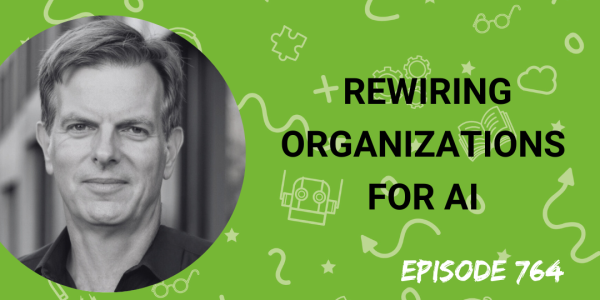
My guest this week is Stephen Wunker, co-author of “AI and the Octopus Organization.” In our conversation, he shares what’s really happening, what’s holding companies back, and what this means for talent professionals.
In the interview, we discuss:
• The gap between what CEOs are saying and what is actually happening
• What is holding AI transformation back
• Distributed innovation
• What is an “Octopus Organization”?
• The role of human judgement and the need for more critical thinking
• Examples of companies that are succeeding
• Talent and culture
• What will happen to the adoption rate? Where will we be in two years’ time?
Follow this podcast on Apple Podcasts.
Follow this podcast on Spotify.
Transcript:
00:00
Matt Alder
CEO’s get that AI is transformational leadership teams are pushing for action, but on the ground most companies are stuck doing incremental pilots or ignoring AI altogether. So what’s actually holding them back? Keep listening to find out.
00:20
Matt Alder
Support for this podcast comes from Maki. Maki enables businesses to build intelligent, science backed hiring strategies that predict on the job performance and adapt as roles and markets change. Companies today face a surge of undifferentiated AI, inflated CVs and often rely on manual screening or inconsistent processes. This leads to missed talent, weaker performance and a poor candidate experience. MACE combines science based assessments, behavioral signals and autonomous AI agents into one integrated engine. It evaluates every candidate, predicts who will succeed, and continuously improves hiring outcomes. Teams hire faster, more fairly and at a lower cost while delivering stronger on the job performance and a better experience for candidates and customers. To find out more you can go to mackypeople.com and Maki is spelt M A G K I and that’s mackypeople.com.
01:46
Matt Alder
Hi there. Welcome to episode 764 of Recruiting Future with me, Matt Alder. There is a significant disconnect playing out in organizations right now. Leaders understand AI is probably the most transformative technology of their lifetimes. They’re making bold announcements and setting ambitious targets, but they’re not providing the structures, ownership or vision needed to drive real change. The result is small pilots, incremental efficiency gains, and nowhere near the transformation everyone keeps talking about. The issue isn’t the technology. Organizations simply aren’t wired for transformational change, particularly when it cuts across departments and functions. Nobody owns it and there’s no clear model for what the future should look like. The implications for talent skills and how we think about work are enormous. What does it take to actually rewire an organization for the AI era?
02:53
Matt Alder
My guest this week is Steve Wunker, co author of AI and the Octopus Organization. In our conversation he shares what’s really happening, what’s holding companies back, and what this means for talent professionals. Hi Steve and welcome to the podcast.
03:10
Steve Wunker
Thanks so much for having me. Appreciate being here Matt.
03:13
Matt Alder
An absolute pleasure to have you on the show.
03:16
Matt Alder
Please could you introduce yourself and tell everyone what you do? Sure.
03:20
Steve Wunker
Well, my name’s Steve Wunker and I have written a recent book called AI and the Octopus Organization. It’s my fifth book on innovation oriented topics. I lead an innovation oriented consulting firm called New Markets Advisors and I have Been focused on disruptive innovation for about 25 years, both as a practitioner doing things like creating one for smartphones, as well as a consultant to, I think, the last count, 32 of the Fortune 500.
03:49
Matt Alder
Fantastic. Very keen to talk about your book.
03:53
Matt Alder
And themes and everything that’s. Everything that’s there.
03:56
Matt Alder
But before we do, though, I just want to ask a kind of more.
03:58
Matt Alder
General question about what you’re seeing happening with AI in organizations at the moment.
04:06
Matt Alder
So there’s a huge amount of hype.
04:08
Matt Alder
About AI is transforming organizations. CEOs are kind of making announcements about.
04:12
Matt Alder
It all of the time. What’s actually happening on the ground?
04:16
Matt Alder
Is there a gap between what leaders.
04:18
Matt Alder
Are saying and what’s actually happening in their organizations?
04:22
Steve Wunker
Is there ever a gap? There is a tremendous disconnect I’m seeing here, Matt. Yeah, I think Boards C Suite, they get that AI is probably the most transformative technology of their lifetimes and something significant has to be done. And then on the ground, people are using AI, but they’re using it in very incremental ways. They’re activating Microsoft Copil, they’re doing little pilots, they’re sometimes building their own tools. But you’re not seeing a concerted approach to enterprise adoption of AI in ways that actually rewire the enterprise. They’re making things maybe a little bit more efficient, but it’s sort of like substituting a typewriter for a word processor. I mean, that’s nice and you should do that. But that is not where the great efficiency, unlock and transformative potential of AI comes from.
05:21
Steve Wunker
That is seen in pockets, but is certainly not something that we’re seeing generally.
05:26
Matt Alder
Why is that, do you think?
05:28
Matt Alder
What’s.
05:28
Matt Alder
What’s holding companies back?
05:30
Steve Wunker
Well, look, organizations aren’t wired to do this. They’re wired to do incremental change really well. But transformative change, particularly when it applies across departments or functions, is something that they’re not really set up to do. And then the ownership of that is unclear. Often the CIO is not the one to come in and change how business processes or workflows happen in an organization. He’s not the one to desilo or devolve authority. So there’s nobody really driving it. And there’s also been a lack of a clear mental model of what the future state organization should look like. That’s one thing we try to address with our book. But to date, and us, I’m surprised that we’re the first book to cover this in detail. But to date, there hasn’t really been that Model of where are we going.
06:26
Matt Alder
Towards makes perfect sense. And in your book, you introduce the concept of an octopus organization. Explain what that means. Why did you choose the, that type of metaphor for what we’re seeing now, what we need to see happen?
06:41
Steve Wunker
So I co wrote the book with Jonathan Brill and Jonathan is the futurist in residence at Amazon. He’s been talking for about four years now about how the octopus has a very different model of cognition to humans or actually to almost any other animal. And we’re talking about a few different frameworks, but we realize the octopus is actually wonderful analogy of how an AI infused organization should work. And so we really focused on that. So look, the octopus has this biology that is weird by human standards. It has nine brains, it has one central brain, and then a brain for each of its arms. And these brains can operate independently. So one arm can be focused on opening up a clam and another one is exploring a cave. And the big brain is thinking about how do I get away from that shark?
07:39
Steve Wunker
And then they can also coordinate. So if the shark gets a little too close, then the octopus moves from this model of massively parallel processing to very concerted action. So it’s a totally different way of thinking than humans have, but it is a great model for the distributed intelligence of an AI infused organization and then the sorts of capabilities that enables.
08:02
Matt Alder
Octopuses are very interesting creatures as well, for reasons that you outlined there. What does it look like in practice though? What does that mean? I suppose in terms of decision making or the way that jobs evolve through the kind of different levels of the workforce. So frontline, middle management, senior leaders, what needs to happen, how do they work together as those different brains?
08:27
Steve Wunker
So the key words to keep in mind, the key themes are to default and desilo. So what I mean by that is that the arm, if you will, of the organization can sense and act on its own quickly without having to involve the central brain, the chain of hierarchy that it has to report up to. That is what we’ve been trying to do for decades now. But AI finally enables that to happen because it brings the contextual awareness down to even the front line of the organization. It creates decision frameworks, it provides guardrails on what people can do, and it provides visibility to the senior leadership of what’s happening at the front line. So you can devolve by using AI and then you can desilo by making information much more fluid around an organization.
09:31
Steve Wunker
AI brings structure to unstructured data and it has the Ability to bring the right data to the right people at the right time. So by doing that, you no longer have to work through these very distinct chains of command. What you can do is have cross functional teams that take on a lot more responsibility. So let me give you an example. Procter and Gamble has been around for over 150 years, actually nearly 200 years. So it is by no means a Silicon Valley startup. And yet it has been able to create what it calls cybernetic teammates for cross functional teams and what they’re also calling an outcomes oriented organization.
10:18
Steve Wunker
So rather than the very siloed traditional structure that P and G used to have with packaging and marketing and operations, et cetera, they have teams that are cross functional in nature that really coordinate on very specific initiatives, whether that’s the reliability of supply of laundry detergent or some new innovation initiative around some new sort of chemical. So by doing that, they use AI to create the fluidity of information between the different functions and then to also bring in expertise that they may not be able to access. There’s not enough packaging people to be on every single team, for instance, and yet packaging matters in consumer goods. And so they can access that expertise virtually. The cybernetic teammate using AI, I suppose.
11:14
Matt Alder
Just to dig into that, what is it that AI is actually doing in terms of the information? How is it facilitating that structure?
11:27
Steve Wunker
So AI is a wonderful repository of expertise. If you need to have a very specific question, it can also bring up issues you may not have considered, which previously you could not do. A database is not going to have things you did not consider. But AI can do that. It can give you visibility to initiatives of what might be happening in the maybe next six months to two years. That again, a database isn’t necessarily going to give you, but it can search out what is going to be pertinent. How is that situation going to change that in ways that might affect your product launch or the initiative that you’re working on. And then it also gives other teams visibility into what you’re doing so that they get a full picture about how the situation is changing.
12:20
Steve Wunker
All these things prior to AI were very hard to do. And yet with that capability now you have the sort of the, for the first time, the ability to execute on that devolution and desiloing that we’ve been talking about since the 1980s but have found very difficult to execute.
12:45
Matt Alder
And what’s the balance between humans and AI do you think? Or what’s emerging at the moment in.
12:53
Matt Alder
Is AI reducing the need for human Judgment.
12:56
Matt Alder
Is human judgment even more important? How is this sort of affecting the roles and the jobs that people have right now?
13:03
Steve Wunker
Yeah, it’s a great question. Because there is a fallacy out there that jobs will be either human or AI, and AI will replace humans. And in practice, it really doesn’t work like that. If you think of a dance, this is not Saturday Night Fever where you’ve got John Travolta doing his dance and Olivia Newton John. There’s Grease. Olivia Newton John. I don’t know. The woman in Saturday Night Fever giving her a dance. I don’t know. I should rewatch that movie. Maybe this is a tango. Yeah, yeah, this is a tango where you have to have both partners working together to actually get the best outcomes. And there have been study after study in workplaces about this. So what we have to do is not just mutely accept the recommendations of AI but engage with it.
13:58
Steve Wunker
Because AI may not have the full context about what’s going on. So humans can provide that contest or they can ask people in ways that AI might struggle to. And yet humans are not going to know everything that AI does. And they also have biases that AI may not have. So together there’s great potential. But we can’t be like school kids who are relying on ChatGPT to do our homework. We have to actually increase our critical thinking, not eliminate it. It’s only by increasing the critical thinking that you engage in that tango.
14:36
Matt Alder
And the protein gambler example was really interesting. Do you any other examples of companies who are reorganizing, restructuring, doing things differently because of what technology can now do for them?
14:50
Steve Wunker
Oh, you bet. So as much as I wish that there were thousands of them, there are certainly several.
14:57
Matt Alder
Yeah.
14:58
Steve Wunker
So look at HelloFresh, the world’s largest meal kid delivery company. They had a boom in growth during the pandemic, and then post pandemic things sort of trailed off and they needed to refresh their proposition and ensure that they were really relevant. So HelloFresh has this tremendous repository of data about what people order and like. So they’ll know that you substitute chicken for pork and I like things a little bit spicy. They had all that, but they weren’t using it. They were instead giving their consumers what they call the binder of choices to choose the next month’s meals from. So they used AI to refresh their value proposition to consumers.
15:45
Steve Wunker
So using the information that on how they had ordered and how they had rated meals, they were able to suggest meals that were hyper tailored to what people actually Wanted, but it didn’t stop there. That meant that then the kitchens had thousands of different dishes that they had to prepare. It wasn’t just a few dozen. So operations totally had to change and that changed jobs. So a production supervisor in the kitchen, for instance, was no longer creating their production schedule for the week because for with thousands of meals, it just impossible to do that. AI took that over and the production supervisor instead would be the shepherd of the model. Much like in a high frequency trading firm, the very well compensated people there are the shepherds of the model. They’re understanding, is this recommendation making sense?
16:40
Steve Wunker
How does it fit in with other things? What does the AI not know that I need to tell it? And then the production supervisors were shepherding the change as well with the frontline workers. So everybody became a change manager. And then that affected all throughout the whole organization. That affected sourcing, for instance, because you needed to source a lot more ingredients. So BrilloFresh did the right thing. They started with thinking about what does the customer actually want? Not how can we be more efficient or what’s more convenient for us. They started with the customer, they refresh their value proposition and then they work that all the way back to the organizational implications of that.
17:23
Matt Alder
One of the key issues here is this is such a massive shift. There’s so many organizations in terms of how they set themselves up, how they organize themselves, the skills they have, the.
17:35
Matt Alder
Talent they have, but also the culture.
17:37
Matt Alder
They have to be able to do this. What advice would you give to the talent professionals within those organizations in terms of building that culture or barriers that they’re going to face in terms of helping organizations to evolve in this way.
17:55
Steve Wunker
So I think of culture as sort of the mortar in a brick wall. It is the somewhat invisible substance that holds everything together and gives it shape. So it’s really important. But you also need the bricks, which are the hard levers of management control, how people are evaluated, how they’re compensated, who you recruit for. So you need to do both. You need to have those hard decisions and you need to think about the soft culture on the culture front. Look, culture exists for a reason. It may be an outvoted reason, but it at one time helped an organization execute on something that was a priority for it. So you need to understand in detail, not in a squishy way, but in detail, what is the culture today?
18:48
Steve Wunker
In my book, the Innovative Leader, this is my fifth book, the AI and the Octopus Organization, my last book, the Innovative Leader, has a whole survey you can do about the culture of an organization. So understand that culture and think about why it exists and what’s changed. Maybe that makes certain parts of that culture outmoded. And then you can’t rip and replace the culture. You can’t do a wholesale transformation of the culture anytime soon. Even at Microsoft, Satya Nadella took about five to 10 years to change the culture. And he’s Satya Nadella. So it is a hard thing to do. But you can focus on a handful of variables that you really do try to change, and you do that, and then you can do maybe another handful in the following year or two.
19:39
Steve Wunker
But you need to make it unsquishy and get very specific about what you’re going after.
19:45
Matt Alder
And as a final question for you, because obviously the technology is moving a lot faster than organizations are for the reasons that you just outlined there. What do you think the rate of progress looks like? What’s the future going to be like? If we had this conversation again in.
20:02
Matt Alder
Two years time, where do you think.
20:04
Matt Alder
We’D have got to?
20:05
Steve Wunker
So I started my consulting career in 1996 at Bain Co. And in 96 and 97, I saw a lot of companies sort of toying around with the Internet. Well, let’s put our brochure online. Let’s find some pretty good server headquarters. Isn’t that nice? And then in 98, 99, it was, oh, my God, the sky is falling. We have to do something massive right now. And neither of those was a good place to be. That is a very dysfunctional behavior. And unfortunately, I think exactly that pattern is repeating itself with AI. So we’ve been going through the, oh, let’s have 900 pilots and put in our chatbot, and okay, that’s great, go do that. And then a handful of organizations then are getting these edicts. And I’ve seen this from some of our clients. Can you reduce headcount in this particular function by 50%?
21:03
Steve Wunker
Which is often not a good idea. And in fact, in that particular interest, we calculated case, we calculated they could do it about 22 to 25% with AI. 50% is really extreme.
21:15
Matt Alder
Yeah.
21:15
Steve Wunker
But this, unfortunately, is what we’re seeing. It doesn’t have to be that way. You can have a much more staged plan. It can be aggressive, but still staged on how the change should happen. The technology is going to keep on changing. So this cannot be predicated on the technology. The organizations are going to move much more slowly than the technology will. So we provide a model in the book about how the organization is going to change is changing in some cases. So go ahead and start planning that. We have a whole chapter in the book about planning your transformation. So folks need to really get started and phase that out, put some milestones on it and timeframes, accountabilities and have actually very structured, detailed plan about the organizational transformation that is going to occur. It’s not a speculation.
22:10
Steve Wunker
It is a fact that organizations are going to be fundamentally transformed by AI.
22:16
Matt Alder
Absolutely. And as you say, it’s an octopus. It’s not just the organization as a whole, but individual parts of it. So, you know, particularly for people listening to this podcast, having that plan for talent acquisition 100%, we’ve seen some of.
22:30
Steve Wunker
The most effective change occur by department leaders because it’s small enough of a remit that they can actually get stuff done and not tie things up in committee forever.
22:41
Matt Alder
Absolutely. So lastly, where and when can people find your book?
22:47
Steve Wunker
So Our website is aiantheoctopus.com it is available as an exclusive on Amazon and Audible, which is owned by Amazon in all different formats. So they can find it there. And happy reading. It’s been doing quite well.
23:05
Matt Alder
Steve, thank you very much for talking to me.
23:07
Steve Wunker
Thank you.
23:08
Matt Alder
My thanks to Steve. You can follow this podcast on Apple Podcasts on Spotify or wherever you listen to your podcasts. You can search all the past episodes@recruitingfuture.com on that site. You can also subscribe to our weekly newsletter, Recruiting Future Feast, and get the inside track on everything that’s coming up on the show. Thanks very much for listening. I’ll be back next time and I hope you’ll join me.