Many organizations treat accessibility as just a compliance checkbox, checking the box to meet legal requirements and then moving on. But this mindset misses massive opportunities. When companies design truly inclusive hiring processes, they don’t just help candidates with disabilities, but also improve the experience for everyone.
Forward-thinking employers are discovering that accessibility drives innovation, expands talent pools, and creates competitive advantages, so how do you move from minimum compliance to genuine inclusivity, and how do you do that at scale?
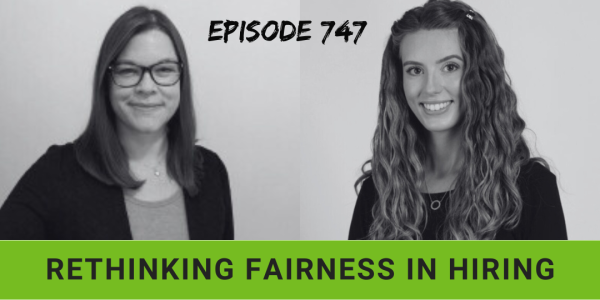
My guests this week are Business Psychologists Brittany Davies and Laura Kate Ruttle from Talogy. In our conversation, they share valuable advice on building an accessible assessment strategy, and we discuss how AI is shaping a whole new future for inclusive hiring.
In the interview, we discuss:
• The current challenges around accessibility and fairness in hiring
• The significant benefits to employers of going beyond the basic legal requirements
• Improving hiring for everyone
• Best practices for encouraging disclosure
• How AI can help
• How do you implement inclusive hiring at scale?
• Advice to TA leaders on what to prioritise
• The potential of personalized adaptive assessment
• What might the future look like?
Follow this podcast on Apple Podcasts.
Follow this podcast on Spotify.
00:00
Matt Alder
Making hiring accessible isn’t just about compliance. It’s also about competitive advantage. Organizations that are going beyond the legal minimums are accessing untapped talent pools and building better teams. To discover how, just keep listening. Support for this podcast comes from Talogy, a company that’s been helping organizations around the world for find, build and grow talent for more than 75 years. Talogy combines psychology and technology to help leaders make better data driven decisions about their people. The result? Stronger teams, better performance, and organizations ready for the talent challenges of tomorrow. To learn more, visit Talogy. That’s Talogy T A L O G Y.com. Hi there. Welcome to episode 747 of Recruiting Future with me, Matt Alder. A lot of employers treat accessibility just as a compliance checkbox. So they meet the legal requirements and then they move on. But this mindset misses massive opportunities.
01:37
Matt Alder
When companies design truly inclusive hiring processes, they don’t just help candidates with disabilities or additional needs, they also improve the experience for everyone. Forward thinking employers are discovering that accessibility drives innovation, expands talent pools and creates competitive advantages. So how do you move from minimum compliance to genuine inclusivity? And how do you do that at scale? My guests this week are business psychologists Brittany Davies and Laura Kate Ruttle from Talogy. In our conversation they share valuable advice on building an accessible assessment strategy and we discuss how AI is shaping a whole new future for inclusive hiring.
02:26
Matt Alder
Hi Laura. Hi Brittany.
02:27
Matt Alder
And welcome to the podcast.
02:29
Matt Alder
It’s a pleasure to have you on the show.
02:32
Matt Alder
Please could you just introduce yourselves and.
02:34
Matt Alder
Tell us what you do?
02:36
Brittany Davies
Absolutely. So my name is Brittany Davies. I’m a managing consultant and business psychologist working at Talogy.
02:41
Laura Kate Ruttle
And I’m Laura Kate Ruttle, also a principal consultant working at Talogy. With a business psychologist background. Brittany and I work in the same team. So Talogy very much focuses on the entire talent management life cycle. So all the way from hiring to development coaching. But our focus is really on that sort of selection process and ensuring that’s a fair and inclusive process for everyone, helping our clients to really think beyond compliance towards true inclusivity and fairness.
03:10
Matt Alder
Fantastic.
03:11
Matt Alder
And we’re going to sort of dig into that in our conversation today. So to sort of kick off with talk us through the challenges that you’re seeing in the market at the moment regarding accessibility and fairness in the hiring process.
03:25
Brittany Davies
Absolutely. So there’s a couple of different challenges that exist for candidates and for employers. I’ll highlight a couple of them now, but the ones that we experienced most frequently in our roles as consultants. So I think the first one and the biggest is this myth around standardization being the way forwards. So a lot of organisations equate consistency with fairness and they think if this process is the same for everyone, then that’s what’s fair. But actually that comes from a perception of the playing field being level and we know that often it’s not. So that same process for all kind of mindset can unintentionally disadvantage individuals who are neurodiverse or disabled or suffer long term conditions. So true fairness is about equitable opportunity to perform rather than identical treatment. Another challenge we experience is around resources.
04:17
Brittany Davies
So recruiters are increasingly under pressure and have limited time and limited headcount to make that individualised support really accessible for individuals. And some as a result see adjustments as extra work or a nice to have rather than a real core responsibility of that talent and recruitment team. Another one of the challenges I talk through is kind of blanket approaches. So what we often see in particular with organisations that go through high volumes of candidates, particularly early careers or graduate recruiters, they have thousands of applicants coming through the pipeline at once. They look for a one stop shop. You know, what’s one thing I can do that will catch all accessibility needs and unfortunately there just isn’t one.
05:02
Brittany Davies
So there’s a huge variety of different ways we need things to be accessible and that’s where we can come in and we can support, we can help educate, inform and improve processes for individuals. And then I think the final challenge is really about tackling the stigma around disclosing. Whether you are neurodiverse or suffer from a long term condition, candidates often fear bias. They think they might be written off or removed based on their needs or they’re concerned about being difficult. So we might find that individuals aren’t sharing that actually they need a little bit of support going through that process, or they just need a slightly different process and it results in them going through a recruitment program that they don’t have the support that they need. They’re not able to put their best foot forwards and they might be missing out.
05:45
Brittany Davies
And organisations are missing out on really exceptional talent. So without that disclosure, organisations can’t make those effective adjustments for those people. So having individuals share their need for adjustments is really important. And one of the main challenges organisations.
06:02
Matt Alder
Are facing these days, obviously legal compliance is a significant part of this, but what are the broader benefits that organisations are missing if they just focus on the sort of the minimum, you know, meeting those minimum legal requirements.
06:17
Laura Kate Ruttle
And this is something that we encounter a lot. So obviously we’ve got the Equality Act 2010 in the UK that really provides us that baseline, that minimum requirement that we need to meet. But I think one of the part of our role is really making sure that clients understand that actually that might not necessarily equate to true fairness, to true equity in the process. Just meeting that standard isn’t necessarily as far as we want to push it. So I think it is important to make sure that they’re clear around the benefits of striving for beyond that. I think one of those main benefits is really just in widening the talent pool. So, you know, you’re bringing individuals that might have otherwise been excluded in a less accessible process. And in doing that you’re bringing in diverse knowledge perspectives, different experiences, different approaches.
07:06
Laura Kate Ruttle
So that is hugely beneficial for all organizations in terms of decision making. So really reducing group think. Because you’re going to have individuals that actually challenge some of those assumptions because they’re coming to the challenge with a different perspective. And we know that can improve, you know, particularly processes around creativity, problem solving, innovation, which particular right now is so important for so many organisations. And obviously that leads to financial benefits as well for the organisation. I think another thing that’s really important to remember is that by designing an inclusive and fair process from the outset, you’re going to be increasing the candidate experience for everyone. So there’s the well known curb effect, dropped curves, initially there for wheelchair users, but actually we’ve probably all benefited from them at some point. Right.
08:03
Laura Kate Ruttle
Whether we’re pushing a pram, whether we have luggage that we’re pulling along, we’ve benefited from those dropped curves and it’s the same thing in the assessment process. So an example is closed captions on videos. Yes, that might have been originally for individuals that are deaf or hard of hearing, but actually it’s going to benefit someone that doesn’t have a quiet workplace to work from, or only has a quiet workplace. You know, you’ve got to be silent because you’ve got to go to a library to have the right environment or even just people like me that prefer to read things and it sinks in better if they see that. So I think just making sure that you’re aware that actually you can benefit everyone by focusing on making sure that the process is accessible for all.
08:52
Laura Kate Ruttle
And then I think the final thing that’s really important and that clients often forget is there seems to be this vicious circle in terms of when we only look for the bare minimum of compliance, we are probably less likely to be really encouraging candidates to disclose their needs to us. Therefore, as Brittany said, they fear the consequences of doing that and they don’t. The organisation then thinks there’s a low need for reasonable adjustments because no one’s asking for them, so it’s then not made a priority for them. And that is the vicious cycle of, okay, they’re not really needed, so we’re not going to prioritise them. Candidates don’t feel that they can disclose, and the only way to break that cycle is by proactively focusing on accessibility for all.
09:40
Laura Kate Ruttle
So I think that’s really important to remember is just because you’re not necessarily receiving the request for reasonable adjustments doesn’t necessarily mean that’s because your process is fair and inclusive for everyone.
09:52
Matt Alder
Yeah, no, 100%. And let’s dig into disclosure just a little bit here. I mean, what are the different ways that employees can encourage disclosure kind of throughout the recruitment process? What does good practice look like here?
10:05
Brittany Davies
So I think the first port of call before you start encouraging candidates to disclose is to make sure that your process is already inclusive, as inclusive as it can possibly because if it’s not, you’re going to fall at the hurdle and the following steps are going to be much more difficult. So work on that process, first of all. But the ways that you can encourage, firstly, you really need to start to build confidence in yourself as an employer or as a brand, and reduce that fear that exists around disclosure. So, as I said earlier, a lot of people think it might hurt their chances and organisations need to almost actively counter that message. The way that they can do that is by being incredibly transparent about the process.
10:45
Brittany Davies
So be very open about the way that you’ll handle the information that’s shared with you, who’s going to have access to it and what it’s going to be used for. Explain what each stage of that recruitment process looks like as early on in the process as you possibly can. So candidates are able to identify where might I need a little bit of additional support if I need any, whether that’s online assessment, in person assessments, interviews, whatever that may look like. Helping them figure that out early doors allows them to think about it in advance and taking the time to highlight the different ways in which inclusivity and accessibility is important to you as an organisation up front as well. So highlight the employee networks that you’re part of.
11:26
Brittany Davies
The disability Confidence schemes that you partake in, any inclusive policies that you have within the organisation, put those front and centre and say, yes, this is important to us, we do actually care, we’re not just doing lip service here. And there are a couple of practical steps that you can take. You know, that’s all a bit big picture, but making the process visible and accessible all through those different touch points is really important. So at the job application stage, at the application form stage, at the assessment stage, give them opportunities to disclose at every step of that process, because it might not be that they’re confident to disclose at the very beginning because they think it might hurt their chances.
12:06
Brittany Davies
But then later on they realise, you know what, this company is thoughtful about this and I do think it will help me perform better later on. I’m now going to disclose and use inclusive language when you’re asking people to disclose as well. So say things like, we want to help you perform at your best and we’re here to discuss any support you might need rather than, if you have a disability, tick this box, because that can be a little bit of a barrier for people. It doesn’t feel as conscious or as caring.
12:33
Matt Alder
And what about AI technology? Is that making a difference here?
12:39
Brittany Davies
Absolutely. So there’s countless ways that technology is consistently evolving and has been. So we’re creating programs and platforms with more accessibility built in now. So screen reader capability, the ability to edit text, color size, font, having keyboard navigation as standard, that all exists. But AI as well is making and will continue to make a really interesting difference here. So I’ll speak a little bit to what it can do now because it’s evolving so rapidly. But there are some great opportunities where it can enhance accessibility straight away.
13:12
Brittany Davies
So automated captioning and transcription for people with hearing impairments or who process auditory information differently, having text to speech or passage summarization tools for individuals who may be dyslexic or have ADHD and struggle with digesting complex or very lengthy information, having voice control for individuals who have mobility issues, having tone interpretation aids for individuals who may be socially anxious or have a hard time reading social cues, all those different things can exist in the form of AI already and support individuals through that process. And it’s also an opportunity for us to rethink assessment. If the role itself is going to require individuals to use tech or they might be able to use AI in their role, they should absolutely be able to use it as part of that recruitment process.
13:59
Brittany Davies
And technology can also help us perform audits on our existing process and say you know, what are the issues with our existing web content or assessment platforms that might not be as accessible as they could be?
14:10
Matt Alder
100%. I think that makes perfect sense. It’s great to hear that AI is facilitating things that were just probably impossible, even sort of three or four years ago. So what about doing this at scale? I mean, what does good look like when for employers who are trying to support these kind of adjustments at sort of large scale, particularly, I suppose, in the environment where people are looking at kind of introducing more and more layers of automation into the hiring process?
14:37
Laura Kate Ruttle
It’s such an important question, and it’s one that we are sort of navigating with our clients as we speak. So, you know, it’s well known at the moment that a lot of organizations are experiencing increase volumes to the nth degree compared to what they’ve had in the past. And understandably, they therefore want to automate the process as much as possible. And it’s quite difficult because we do have to acknowledge that there is some level of human intervention required to really get accessibility right.
15:09
Laura Kate Ruttle
And I think that’s a conversation that we have to have with our clients of we can make the process as automated as possible, but there needs to be that acknowledgement that at some stage we may need to have conversations with these individuals to ensure that we are creating a process that allows them to show their skills in the right way. So I think the first thing is exactly as Brittany’s already touched on, accessibility by design. So if you make that sort of standardized process as accessible as possible, cover off as many requirements as you possibly can in that sort of standard process, then you’re going to be reducing the need for individuals who won’t be able to sort of show their best self during that process.
15:54
Laura Kate Ruttle
So, you know, making sure it’s screen reader compatible, you can access it using a keyboard, not just a mouse, you’re sort of meeting standards, sort of the wcag compliance, having alt text for images, all of these things, using simple language, et cetera. So if you do all of that up front, and the more of those the better, then you’re going to be reducing the need for intervention at later stages, which allows the process to continue to be automated. And that way the vast majority will be able to complete the assessment process in that standard format. And I think as well, what Brittany said is really important is making sure that candidates understand that process in its entirety from the beginning so that they are able to determine whether they need adjustments or not.
16:45
Laura Kate Ruttle
I think another thing as well, that we support our clients with is really on centralizing and structuring the adjustments process itself. And that is not about having a one size fits all approach, because we’ve discussed that doesn’t work. But it is about making sure that the team or individual that really deals and handles with the adjustments in your organization does so in a really consistent and supportive way for the candidates. So they need to understand and have the guidance around what questions should I be asking these individuals and what are the options that are available to me that I can share with the candidates and also the importance of documenting those decisions as well. So making sure there’s that really clear paper trail of discussions that have been had and why certain decisions have been made so that you can come back to those.
17:38
Laura Kate Ruttle
And then I think the final thing in terms of what good really looks like is use the data. This is a big one for me. We have so much data available to us now through the different processes that we have within hiring. And it’s using that to gather insights and to really inform and make improvements off the back of what that data is telling us. So you will have data whether you’re actively collecting it or not, which you should be if you’re not. But either way there’s going to be data there to use and I think that’s just a really important one.
18:13
Matt Alder
Employers listening will all be at sort of different stages of their journey with this. I mean, what advice would you give people in terms of where they should start or what they need to prioritise?
18:27
Laura Kate Ruttle
Yeah, I think it’s so important. I think Brittany’s touched on it. It’s about really having that audit of your current process. And that is not just about understanding the sort of back end, the scores that you receive and how you use those. It’s actually about understanding how it feels for a candidate. Going through that process at every single stage and going through that process as a candidate, focusing on where are any potential barriers. So really searching for them, not just waiting for issues to be raised, but searching for those barriers that might be there. Whether it’s that you’ve got sort of text that’s overly complicated, that doesn’t need to be, that you can really refine and simplify.
19:08
Laura Kate Ruttle
Whether you’ve got time limits that aren’t needed and don’t contribute to anything, images without alt text, whether there’s not enough occasions for an individual to disclose whatever it is really going through your process and focusing on those things. And then I think probably having like quite a frank discussion internally to Say, right, is it small changes to the process that needs to be made to get it where we want to be, or actually, do we need an overhaul here? Is this process just not working and it’s not in the current day, and actually we really need to just scrap it and think again? And that can be a hard conversation to have and obviously we’re happy to support with that conversation, but I think that’s a really frank sort of discussion that needs to happen.
19:56
Laura Kate Ruttle
I think the other thing that’s so important that organisations can forget is speak to your candidates. Getting the feedback from them and understanding how it felt for them, whether they were successful or not, is absolutely invaluable. And really understanding what could have made it feel more supportive for you, what could have made it more accessible, asking the right questions because they’re the individuals that are going through the process and then again using the data. So I think looking at your dropout rates, if you suddenly have a huge spike of dropout with females, for instance, at a certain place in your process, why, you need to understand the why of that and you need to look into that data, looking at evidence of adverse impact at any different stages, whether that’s.
20:47
Laura Kate Ruttle
Yeah, for any groups, intersectional groups, just make sure that you’re using that data point and that can drive you in the right direction as to where you need to prioritize your time and start with the improvements that you want to make.
20:59
Matt Alder
We’re in a very disruptive time in terms of technology at the moment because it is just developing and evolving so fast. And one of the things that I would love to happen is employers to be able to build personalized assessment journeys for candidates and sort of do that at scale, but give everyone that sort of individual experience. Is that likely to be possible? And if so, what do you think it would look like?
21:23
Brittany Davies
Hopefully, yes. I like to think that it’s just around the corner. So adaptive testing in its traditional form has been around for a long time, where assessments get more difficult or easy, depending on how you’re answering and things like that, but they’re incredibly difficult to create. They take a very long time. There’s lots of testing that needs to be done. It’s really hard to create a good adaptive test, or was until this point. All of those stages of that design process is now getting easier. But beyond just the ability to adapt what questions you’re asking to change based on difficulty, we’re now in an environment where we can adapt them in different ways. You could be asking candidates, well, how do you. How do we get the best out of you?
22:04
Brittany Davies
Do you prefer to speak to a camera or would you prefer to use your mouse and keyboard? Would you prefer to process information visually or auditorily? What’s the best process for you? And then we can adapt, ideally, those assessment processes to get the best out of that individual. So the goal of that isn’t to create an easier route, but to create an equivalent opportunity for individuals to show their really true potential in a way that suits them the best. There are risks with that we need to manage. So making sure that we don’t have this black box of AI making decisions for us. We know there’s validation and there’s reliability and there’s psychometric rigor behind it, but creating a process that is so much more personalizable, so much more flexible.
22:45
Brittany Davies
It automatically becomes more accessible for individuals and not just those who might be neurodiverse or have disabilities, individuals who just process things a little bit differently in the here and now.
22:56
Laura Kate Ruttle
It’s just such an exciting time at the moment and I think there’s so many opportunities for us as an industry that have come about from the, you know, from AI, essentially. And it’s very much, if we’re very honest with ourselves, it’s an industry and a sort of assessment process that hasn’t really developed that much for many, many years. And I think that is where it’s very exciting to be a consultant working at this part of our careers at this time. Because I just know that we are going to see such a shift and the, you know, over the next year to five years, there is going to be just a completely different layer of the land, I think. And that’s only going to be to the benefit, I hope, of candidates and individuals.
23:47
Laura Kate Ruttle
And it’s only going to come with organizations really focusing on the fact that they don’t want to just meet the minimum standards anymore. Actually, we’ve got the technology to put, push it further and to do better than that and probably better than we ever have done in the past. I just think that is incredibly exciting that we’re kind of at this point and hopefully are going to see these real changes that take us in the right direction.
24:11
Matt Alder
Yeah, absolutely. And you know, what else do you sort of hope the future might hold? What should things look like in a few years time?
24:16
Laura Kate Ruttle
Yeah, I think it’s a really interesting one and I think it’s important to know that there are still processes in place right now that do work. Right. So it’s not necessarily about an entire scrapping of that. But it’s about taking the best bits of what we have now and only improving them and then also developing something new. So I think we’ve got the opportunity to do that now and to really focus on actually this was what we had at the time because that was what was available to us. But what have we got available to us now? And I’m really hoping as well that something that comes along with that is that mindset shift of we do have a mixture of organizations and clients that approach accessibility and fairness in different ways.
25:02
Laura Kate Ruttle
There are some where it is an absolute key focus for them, and all of their sort of goals are set around meeting certain criteria in that space. And then there are other organizations that are just focusing on we need to be compliant. Can I just give a time extension to individuals that require reasonable adjustments? Then I’m good to go. So I think just getting to that point of a mindset shift in terms of what we are all striving for, that would be a really amazing place to be that we’re all striving to allow individuals to really show themselves at their best throughout the process. I also think it’s important to get to a point that it’s really not just that candidates are willing to disclose, but that they feel comfortable in doing so.
25:52
Laura Kate Ruttle
So I think it’s how do we get to the point where it’s not just because there’s still an issue? Right. As Brittany has already said, individuals don’t disclose. That in itself is an issue. But even those that do, they do so with fear sometimes and concern about what that’s going to mean for them in the process. And I think it’ll be a really nice future to get to a point that individuals feel comfortable doing that. They know that is being done only to help them and to support them, and it’s going to have no negative consequence for them. So I think that’s another one. And then a final one is just using AI, but in the right way. So I know we’ve done a lot of research in Talogy to understand what candidates want from that hiring process.
26:39
Laura Kate Ruttle
And we know that actually they do still want the human touch. They want to feel like you’re speaking to them. They want to feel like they’re not just a number in a sea of candidates. And therefore it’s not going to be a case of let’s just automate everything because you’re then taking it too far away from that process of what we know candidates want. I think using AI in the right ways so that to improve our lives. Right. So our R and D teams to make it easier for them, to make it easier for us, to make it easier for organizations to make it easier for candidates, but in a way that we’re using it fairly. So it’s not black box scoring or anything like that we don’t understand.
27:20
Laura Kate Ruttle
It’s getting that balance right, I suppose, between AI intervention and the huge benefits that can come from that versus still having that human touch, that nice feeling experience, which is hard to do. Right. But yeah, I think that would be sort of a dream future.
27:39
Brittany Davies
I’d agree. I think if I had a crystal ball and I was looking five, 10 years in the future, an ideal would be for diversity to truly mean diversity. Right? Not what we say is diversity or that tick box exercise that it can often be, whether it’s neuro inclusivity or socioeconomic status diversity or whatever. It may be just a real appreciation for individual differences and what individuals can bring to organizations so that those organisations can then go on to be more successful. And I do really see AI and technology as the route to get there because things are just moving at such a pace that they weren’t able to before. So I’m really optimistic about where we can go.
28:19
Matt Alder
Brittany, Laura, thank you very much for talking to me.
28:22
Laura Kate Ruttle
Thank you, thank you.
28:23
Brittany Davies
Really appreciate it.
28:26
Matt Alder
My thanks to Brittany and Laura Kate. You can follow this podcast on Apple Podcasts on Spotify or wherever you listen to your podcasts. You can search all the past episodes at recruitingfuture.com on that site. You can also subscribe to our weekly newsletter, Recruiting Future Feast and get the inside track on everything that’s coming up on the show. Thanks very much for listening. I’ll be back next time and I hope you’ll join me. This is my show.