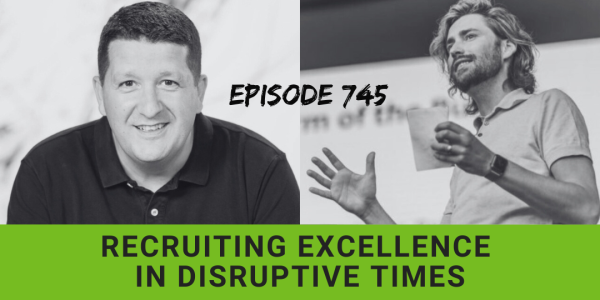
Talent acquisition is being tested like never before. Teams are continually being asked to do more with less, hiring volumes remain unpredictable, and technology is evolving faster than organizations can adapt. AI promises transformation but often delivers confusion, with some vendors labeling simple automation as intelligence, while, at the same time, genuinely disruptive AI capabilities are emerging that could reshape everything we do.
Meanwhile, the fundamentals haven’t changed. TA leaders still need to deliver the right people at the right time in a cost-effective way. But how do you build that capability when the ground keeps shifting? How do you create structure, repeatability, and continuous improvement during constant disruption?
My guests this week are Tony De Graaf and Marcel Rütten, co-founders of the Recruiting Excellence Foundation. In our conversation, they share their framework for building high-performing TA teams and explain how to pursue recruiting excellence even in fast-moving, uncertain times. Also listen out for details on how you take part in the forthcoming Global State of TA Report, and by getting your own free maturity assessment.
In the interview, we discuss:
• The Recruiting Excellence Methodology
• Defining your North Star
• Focusing on and optimising every TA touchpoint
• Key challenges
• What stops TA being more strategic?
• Why automation is critical
• Agentic AI disruption
• What does the future look like?
Get your free maturity assessment here
Follow this podcast on Apple Podcasts.
Follow this podcast on Spotify.
00:00
Matt Alder
2026 is going to be another hugely disruptive year for talent acquisition.
00:05
Matt Alder
AI is accelerating.
00:07
Matt Alder
Budgets are shrinking, priorities keep shifting. So what does recruiting excellence look like in changing times? And how do you achieve it? Keep listening to find out. Support for this podcast comes from Talogy a, a company that’s been helping organizations around the world find, build and grow talent for more than 75 years. Talogy combines psychology and technology to help leaders make better data driven decisions about their people. The result? Stronger teams, better performance, and organizations ready for the talent challenges of tomorrow. To learn more, visit talogy.com that’s talagy – t a l o g y.com.
01:18
Matt Alder
Hi there.
01:19
Matt Alder
Welcome to episode 745 of Recruiting Future with me, Matt Alder. Recruiting Future helps talent acquisition teams drive measurable impact by developing strategic capability in foresight, influence, talent and technology. This episode is about foresight, talent and technology. Talent acquisition is being tested like never before. Teams are continually being asked to do more with less. Hiring volumes remain unpredictable and technology is evolving faster than organizations can adapt. AI promises transformation, but often delivers confusion with some vendors labeling simple automation as intelligence, while at the same time genuinely disruptive AI capabilities are emerging that could reshape everything we do. However, the fundamentals haven’t changed. TA leaders still need to deliver the right people at the right time in a cost effective way. But how do you build that capability when the ground keeps shifting? How do you create structure, repeatability and continuous improvement during constant disruption?
02:38
Matt Alder
My guests this week are Tony De Graaf and Marcel Rütten, co founders of the Recruiting Excellence Foundation. In our conversation they share their framework for building high performing TA teams and explain how to pursue recruiting excellence even in fast moving, uncertain times. Also listen out for details on how you can take part in the forthcoming Global State of TA report by getting your own personalized assessment.
03:08
Matt Alder
Hi Tony. Hi Marcel.
03:10
Matt Alder
Welcome back to the podcast. Both of you please could you introduce yourselves, tell everyone what you do, but.
03:17
Matt Alder
Also tell us a little bit about your story and what you’ve done in the past. Tony, do you want to go first?
03:22
Tony De Graaf
Yes, of course. Hello, welcome for having us back. It’s been a while, so been a listener for a long time and now on the other side. So yeah, I’m Tony. Tony De Graaf. Dutch. Dutch last name. Not easy to pronounce for a lot of people, but I am the co founder of The Recruiting Excellence foundation. Together with Marcel. I’m a recruiter at heart. So that’s my profession. I’ve always been a recruiter recruitment leader for multiple fashion brands out there and for one of the largest e commerce companies in the Netherlands. And the last five years or so I worked for Smart Recruiters where I headed up the global strategy consulting practice, the hiring success practice.
04:03
Marcel Rütten
My name is Marcel. Marcel Rütten sounds Dutch as well, but is German. So therefore I’m a German guy based in Duisburg. I guess the listeners have never heard about Duisburg, but that’s no problem at all. I’m a TA specialist as well. I’ve been working in corporates for many years. So more than 15 years. And at a specific point of time I decided to be more than just a recruiter. So nowadays I’m not only one of the co found of the Recruiting Excellence foundation, but I also manage a recruiting conference which is called Schichtemschacht. So shift in the shaft for those who are not German native speakers, which is one of the largest recruiting conferences in the German speaking area. I also write a lot of books about, let’s say many TA topics. I also produce a few podcasts.
05:00
Marcel Rütten
I consult corporates to set up their TA organization and so on and so forth. So every day when I wake up, I can decide myself which part of recruiting I like the most and which topic I want to follow.
05:16
Matt Alder
And tell us about the Recruiting Excellence Foundation. So you kind of, you both come together. What is it that you’re, what is it you’re kind of working on now?
05:23
Tony De Graaf
The Recruiting Excellence foundation is. Yeah, how to say it? It’s Marcel and I who joined forces. We had a lot of conversations where we agreed a lot with each other on what should happen in Talent Acquisition, what was broken in Talent Acquisition, how that should be fixed in Talent Acquisition. And first we’re like, oh, that’s a really cool guy. He agrees with everything I say. And we just worked for a while together and I think a little over two years after that I left Smart Recruiters. I think let’s give the guy a call and let’s see what happens. And here we are. So we started to have some conversations and say, well, maybe we should bring all our thoughts together, put that on paper. So we, I actually flew to Duisburg in the middle of nowhere. Yes, Duisburg.
06:09
Tony De Graaf
And we locked ourselves in a, in an office for a couple days and put everything together. And because we had a lot of thoughts about talent acquisition. But we thought, can we come up with one approach, one structure, one framework, one solution that has everything, how we think about it in talent acquisition, how things should move forward and how to build a high performing TA team. Can we put that in one model? And we did. And that’s actually called the Recruiting Excellence methodology. That’s at the heart of everything that we do. So that I think from that moment onward when we actually had that model and it clicked that I think that’s the moment our collaboration really was born. And the Recruiting Excellence foundation around that as well and what it is. Yeah.
06:56
Tony De Graaf
So again, we help, we want to help TA teams around the world build high performing TA teams. We really think that TA is massively crucial in the business philosophy that can be achieved. Right. If the right people are not there on time. If the right people are not there. A lot of business plans are made without talent acquisition at the table. Every TA leader that’s probably listening to this has had that frustration. Why have you not told me four months ago that were gonna do this? Because we know how impactful we can be if we are, if we’re doing it right. So we want to put the tools to build high performing TA teams in the hands of every recruiter and TA leader out there. And that is, that’s our mission. I think I can say it like that.
07:38
Matt Alder
Give us a little bit of a flavor of the model here. What’s the, you know, what does it look like? What are kind of some of the key things that you talk to people about?
07:46
Tony De Graaf
Basically how I always explain it is what we’ve done is we. I’ve worked in an organization as a TA leader, one of the largest e commerce companies in the Netherlands. And I learned a model there because they were doing a digital transformation led by McKinsey. So the McKinsey digital transformation framework is what they applied. How do you actually run projects? How do you scope them? How do you keep running them? And I was mind blown by it. I really loved it. And I took some elements of that as the base for the model that we actually developed. But it wasn’t really applicable to talent acquisition specifically because it’s more business transformation work.
08:26
Tony De Graaf
And that’s where Marcel and I really had to go back and forth to see, okay, but how do we make it really apply for the people organizations, more specifically for the talent acquisition organization? So it’s a merger of that. So the framework works with terms maybe for people that done some digital transformation work will Sound familiar? We work with the North Star. So you don’t have a beginning of an end of a project. No, you have a dot on the horizon that as a TA leader you always aim for. Because building a strong TA function is not a project that you can do in three months or six months or even one year. It’s the concept of continuously improving. And if you want to continuously improve, you don’t build a project time over time, over time.
09:08
Tony De Graaf
No, you put a dot on the horizon where you keep working towards. So that’s a project that you can work on for three to five years to approach it. But you will never reach that North Star. It will keep moving because the industry moves, there are situation moves, whether the business needs from us moves. So we work with a concept called a North Star. And if you achieve that North Star, that means that you can consistently deliver the right person exactly on time in a cost effective manner. So that is the promise that as a TA leader you want to make to a CEO and everybody who works in ta. You know, that’s a very heavy promise. Right.
09:45
Tony De Graaf
If we now go into the office of the CEO, we kick down the door and we look him in the eye and say, from today we’ll have the ability to consistently deliver the right talent exactly on time in a cost effective manner. You probably you can’t, right? And that’s okay because even the best TA teams on the planet can probably do this for around 70% of the time, roughly. There is always edge cases where you can’t find the talent, it always takes longer, it’s is difficult, etc. So this is the promise that we want to make. So this is the North Star that we aim for. So that’s at the top of the model and below that we have a structured approach. Okay, how do you look at your TA function? How do you break down, break that down into all the individual elements.
10:27
Tony De Graaf
So from hey, how do your workforce planning, how do you do interviewing, how do you do screening, how do you think about your sourcing, reporting and analytics and all the small pieces? And for every individual of those small pieces, we have an approach to how do you optimize those. So what does perfect workforce planning do? If you do this perfectly, how does it help you achieve that promise that we just said with the right person exactly on time. And what does that mean for interviewing? What does that mean for reporting and analytics? What does this mean for offer management? So all those pieces. So that is basically what we do. We constantly go back and forth we take a small piece of your TA function. Where do you have pain today? What is frustrating, what doesn’t work well, whatever it is.
11:07
Tony De Graaf
So how do we help you improve that? How do we help you get closer to that promise of that consistent delivery?
11:13
Marcel Rütten
I think at the end it’s an holistic approach. I guess you know it yourself. You visit any expo, for example, and you see any vendor or a new product which comes across kind of fancy and you come back to your team and say, oh, I have seen something great, we have to try it. But at the end it’s just one piece, one measure that you will take to improve your candidate experience or to improve your TA organization. But at the end, as a TA leader, you have to consider every component which leads you to successful hiring or to excellent recruiting. It’s really about to increase your maturity level in terms of TA that you are not only focusing on the topics that your teams like or where they are good at.
11:58
Marcel Rütten
No, you have to focus at the end, at every point, every touch point, which is important to improve your candidate experience and at the end your TA organization and also to do kind of a risk assessment that you know, okay, if Tony leaves my team, for example, and he works great, he has a lot of ideas, but as far as he leaves, all the knowledge is gone. But you have to have any setup where you know exactly where you want to go in the future. And what happens if someone who is part of your organization leaves the organization? And where do we have to cover then the risks at the end?
12:36
Matt Alder
Contextualize this for us?
12:38
Matt Alder
Because I’ve kind of never known a time where TA is going through more challenges from all directions than it is at the moment. What are you finding that your clients are facing? What are the sort of the big challenges that are out there at the moment that might stop them being able to plan and look that far into the future?
12:59
Marcel Rütten
From my point of view, it’s completely different. There are corporates which have to start from scratch because they were built out of a carve out for example, and have to build a completely new TA organization. Then there are some corporates already having a high maturity level in ta, but they want really to reach the North Star at the end. So therefore we support them in reach the last 20%, not only the fancy work or the low hanging fruits that we all know. So it’s kind of different what challenges to have. The good thing is that it doesn’t matter where you start. We all have some things in place and we have to assess them on what level they are and then we have to think about what will be the next level. And we can’t skip level two and level three directly.
13:48
Marcel Rütten
Being fully automated, using every kind of AI in terms of our OR for our candidate journey. No, we have to assess first and then check what is the current state and then we will define together what the next steps and the long term goal is.
14:07
Matt Alder
You kind of mentioned the word journey a lot. Levels of maturity. I know you’ve got a maturity model that kind of sits behind this. Tell us a bit about that model and the levels that you see. TA teams, you know, are kind of at as they move through it.
14:22
Tony De Graaf
The language we speak, you know, you notice it already. Yeah, so we don’t particularly think one is better than the other. No, it’s just the levels are associated more with where you are in the journey. And again, one is not better than the other in that sense. Right. So what we do, we break down the TA function into 21 individual components. Like I mentioned before, things like how you do screening, how you do hiring decisions, how you do job posting and all these other things. And within those individual components we have a four level maturity model where we have descriptions on, okay, what is the level one when it comes to workforce planning and hiring planning, what is the level two, what is the level three and the level four.
15:03
Tony De Graaf
But at the high level, what you see is that level one, there is not always a strong process in place or it doesn’t particularly happen. So it’s more reactive. Level two is more, okay, there are processes in place, so there is some structure and some repeatability that probably applies for around the 80%. Perfection is something different. At level three, you see you are very much in control of the process. It’s very repeatable. There is a continuous improvement loop that exists and you see the first elements of automation and AI. And I’ll emphasize, I say those both words very strongly together. And where you see the level four, there is a, it’s very repeatable, it’s very structured. Again, the continuous improvement loop is there and there is a high degree of automation and AI. And why automation and AI?
15:51
Tony De Graaf
The goal is not to AI everything some things can, but that we can dive into that in a moment, I guess. But it’s automation and AI. So where can you automate, optimize and accelerate the processes by using technology in a smart way? Right. And a lot of things that we hear in these days and age that get the sticker slapped on paths where AI like Weren’t you the same technology that existed a year ago? You guys do scheduling. It’s a great tool. No disrespect, but it’s just automation. It’s not AI. Right. So it’s more around if you control the process very well, it’s very predictable. And the structure of the process, really good. Yes. Then on top of that you can see how can we accelerate this with automation and AI in tech. So that’s where you see the level four.
16:35
Tony De Graaf
That’s the ideal situation because it’s predictable, it’s structured and we can accelerate it to the max. What is possible in that particular thing? And that’s a different answer when you look at sourcing, because that’s human interaction versus automation offer management, which is more a decision tree. There are only so many contracts and so many addendums and et cetera. That’s a lot easier and structured to automate or apply AI, to say it like that, than human interaction. But that’s back to those level one to four. That’s how we roughly think about maturity for the TA function.
17:08
Marcel Rütten
And additionally to what Tony said, what is quite challenging for recruiters and TA leaders is that you have to deal with a lot of different stakeholders. You have on the one hand the candidates, so that you have to create and manage an outstanding candidate experience. This is quite sure. And that easy as it sounds, then of course you have all your hiring managers, you have your recruiting team and you have the board. And the board is not interested in the same things that you are. You have to do your math, you have to know all the numbers, every data driven things that you can do nowadays in terms of ta, you have to know all the performance metrics and so on and so forth. But honestly speaking, the board is not interested.
17:52
Marcel Rütten
The board is interested if you are contributing to reach the strategic goals. So if you tell them, oh, we have a conversion in about, let’s say 0.3%, whatever, they have no clue what this means. But they understand if the budget that they gave to you, if this is spent quite well and if this is, as I said, contributing to the strategic goals. And so at the end you have to deal on the one hand with your day to day work that everything is manageable and that you know what impact comes from what measure. And on the other hand you have to show to your board what impact you gain in terms of your strategic tasks. So that’s a different kind of approach, a different language because, and this is quite clear for every recruiter, for every TA leader budget is not unlimited.
18:43
Marcel Rütten
So you have. You have to take care of the budget that you have, and you have to reach more or less the maximum with the budget that you get. So, therefore, it’s also really important that you understand to speak different languages regarding the different stakeholders.
19:03
Tony De Graaf
Yeah.
19:03
Matt Alder
And I think that’s something that’s come up time and time again as something that perhaps, you know, TA struggles with still in terms of sort of, you know, couching what they do against the value it brings to the business, but the value brings to the business in terms of the value the board wants for the business, if that makes sense. So, you know, it’s definitely a challenging area, isn’t it? Yeah, definitely.
19:26
Marcel Rütten
Tell you so at the end. So they tell you, okay, the strategic goal has to be reached until end of year. So. And if you. If you have a look in your calendar, oh, it’s already November. How should I reach this that fast? And this is also clear, if you have thousands of tasks to do to reach this North Star recruiting excellence, you have to consider that Rome wasn’t built in a day. So you also have to have a clear plan. What measure has the highest impact or the highest priority. So this is also very important that you have a framework where you can deal with all these tasks and not skipping anything, which could be important for your whole TA organization, but that you also consider all these, let’s say, the tasks that you don’t love.
20:13
Matt Alder
Going back tony’s points about AI and automation, it’s such a. It’s such a kind of dynamic area at the moment. It’s a bit of a minefield, as you say. I’m seeing people who are rebadging what are effectively search engines as agentic AI.
20:31
Matt Alder
Likewise.
20:32
Matt Alder
I did a podcast interview with someone else today around genuine agentic AI, which is still blowing my mind. The more that I think about it in terms of impact and what’s possible, what are you seeing? Where is AI the most disruptive at the moment? What is it that TA teams are thinking? Kind of what’s actually sort of going on within employers when it comes to AI currently?
20:56
Tony De Graaf
Yeah, that’s a very good one. Where it can be very disruptive, I think, in volume tasks. All right, so you see some very good use cases out there. Maybe not so easily copy that. You can easily copy it directly to your organization because there’s a lot of work and configuration to it. But if you do it well, like AI that can talk, so you can have conversations with it on WhatsApp or the phone, I’ve seen use cases out there that, that interviewed thousands of people in one day. It’s incredible. So if you have like blue collar work, repeatable work, not too complex profiles, like for example, if you have truck drivers or supply chain operators or delivery drivers in that sense. Right.
21:43
Tony De Graaf
So those type of roles where you know exactly what is needed and all, what the human is very strong at is how you say that, like the interviewing, like how is the character, how will he fit in the team, how does he do problem solve, how does he like if that matters less in those roles? It’s never that, it never matters. But just to put it on a scale, right, if somebody works in a team of developers and you’re on site and you’re sitting together, yes, you need to interview for a little bit more different things than that. You maybe can directly automate. But there are blue collar cases out there where AI is spectacular. Not like it’s like 1% or 10% faster. No, we’re talking about thousands percent faster. It’s incredible. And that is where I think the potential of AI directly sits.
22:29
Tony De Graaf
Like that volume work that takes us recruiters a massive amount of work. Another one is active sourcing. I think active sourcing will disappear in the next two, three years. It’s more that we are now figuring out how can we do it in a compliant way and how can we do it in a way that it is very customizable and controllable by the individual recruiter. So there are some, still some challenges that we need to solve. But if you imagine that is solved, that you can just say to an agent, this is my job, this is what I need. And this is a proper way of instructing it, which is not just a job description, don’t get me started about that. But we have a good way to instruct, can reach out.
23:08
Tony De Graaf
Even if it reaches out at your speed, going to LinkedIn, doing a search and one to one going through it, even if it does at your speed, it can do that 24 hours a day, seven days a week. And what people forget is like, yeah, but that’s only so much X faster. But an AI agent stacks and you can have not two, you cannot have 10, you can have 100, you can have a thousand stacking on top of each other doing that. And that’s where the efficiency gain starts to happen. So even if agents are still relatively slow in browsing, because that’s an argument, I hear a lot that it’s slower in browsing and clicking, I’m like, yeah, but it doesn’t need a toilet break, it doesn’t have anything else to do. It runs 247 and I can have 100 at the time.
23:49
Tony De Graaf
And today the technology is as bad as it will ever be. Right. So this is where I see where those accelerators will start to happen in the next six months or a year if we can figure those type of things out. Like it, fine, if you still want to have the conversation with the human. But if you can completely cut away the moment a job opens and you no guarantee. Tomorrow, 9am When I walk into the office, I have 20 people I can call and can talk to. I think that will be spectacular.
24:17
Matt Alder
Yeah, absolutely. Marcin, what are your thoughts on it?
24:19
Marcel Rütten
I think in general, every recruiter and TA leader has to rethink every touch point along the candidate journey. So it starts with the awareness phase. For example, you can just put the link of your career page into NotebookLM and say, Please create a podcast with, let’s say, 10 episodes, spoken by two people in a very lively environment, bringing the employer a little bit closer to potential candidates. That’s a task takes maximum 5 minutes to do so. So this is unbelievable. But also other touch points like the offer management process, so how to send out standardized contracts, for example, or offer letters, it’s an easy one just to get a signed contract back without any human in between. So I think this will really be one of the tasks in the next six months to rethink or to rearrange every touch point.
25:24
Marcel Rütten
And on the other hand, what TA leaders and recruiters always forget is that candidates improve as well in terms of the usage of AI. So for some employers it will mean that they really have to think about, okay, is this the real person sitting in front of me in the Microsoft Teams call? Or is the offer or is the COVID letter really sent out by a human? Or is this any tool like for example, LouPCV, where they also send hundreds or even thousands of applications to any employer. And I have to take this into account if I assess any person. So this will be one of the next tasks because this will have an impact on everything that we do in recruiting.
26:15
Marcel Rütten
And honestly speaking, if someone predicts how recruiting will look like in five or 10 years, from my point of view, it’s not really that serious.
26:24
Matt Alder
Well, interestingly, I’m going to come back and ask you that in a second so you can see how serious or not serious you are before we get there though. You are launching or you’ve recently launched a global Survey that Recruiting Future is delighted to be supporting. Tell us about it. What is it that you’re looking for? How can people contribute? What do they get out of it? What’s going on? Give us the lowdown on it.
26:52
Tony De Graaf
Yeah, yeah. So we have started the state of TA report 2026 and it is a survey that we’re doing right now. We’re inviting recruiters and TA leaders to take it because we’re trying to find a way to expose all the experience that Marshall and I have all around the world from all TA teams. Everybody wants to know how others are doing and we’re like, yeah, it’s in our hat. You can ask us a question, but it’s not scalable and we can’t get that out there in an easy way.
27:21
Tony De Graaf
So with this survey we inviting TA teams around the world and we get responses already in from all the way from New Zealand, Australia to Eastern Europe, Western Europe, the Americas, like all over the world, we’re getting results in and if you participate, you can directly benchmark your own TA function against the global average. So that is the first thing, if somebody participates is not that you just give us the data. No, you boom directly the moment you’re finished, you get a personalized report seeing how you are scoring and can compare yourself towards the against the world. So that’s the first thing that is directly in there and how we do that is we use our framework, sort of recruiting excellence methodology behind it.
28:04
Tony De Graaf
So we break down the TA function into those 21 individual components and across those 21 components we ask you questions and score you against that four level maturity that we talked about earlier. So you see exactly for every individual part for talent pooling, for sourcing, for hiring, team collaboration and all those individual points, how am I stacking up? How strong are we and how does that compare to the world? And where you just released that in a new update last week is that you can even now see on every individual point we advise you on what to do next. So you see exactly this is where you are today and this would be the next step for you. And this is actually how to do it. So it’s very detailed.
28:47
Tony De Graaf
And what we will do with the data is that in January we will bring out a state of TA report 2026 where we then put all the data together and see where TA teams are. Where do they struggle is the difference between types of organizations, sizes, branches, places in the world and whatnot. So there will be a lot more data for everybody who will participate. But the Moment you help us get some intel in. In exchange, you get this full blown report directly the moment you click finish.
29:18
Matt Alder
So you can find the link to get to the survey in the show notes. And I will also be telling you about it after we finish this interview. So keep listening if you want to take part. But I’m going to come back to my final question which is about the future. And I’m going to ask Marcella.
29:37
Tony De Graaf
Yeah, you got that on yourself, my friend.
29:39
Matt Alder
What do you think is going to happen in 5 years time? Let me make this easier for you. Rather than a prediction, what would you like recruiting to look like in 5 years time? Let’s go from that angle instead.
29:50
Marcel Rütten
I would like to have recruiting in a few years still human. So we get rid of every stupid task that we do at the moment and also getting rid of every task that we are not really competent to do. So for example, how many editors do you know writing a job ad? So there is no one, there is no hired editor in a TA team. So therefore we are not that competent to do so. So this is one point. On the other hand, I would like to have still recruiters who can engage others and still be say that, sure, that I would like to quit my current job and would like to work for the other companies and therefore I don’t want to get attracted by a robot. I guess the acceptance all over the world is also not that high.
30:46
Marcel Rütten
So I want to get attracted by a human and I want to see what kind of culture is. And if we get rid of all these administrative tasks, I have more time as a TA specialist to tell people more about the green flags and the cool things that comes across with us as an employer.
31:03
Matt Alder
Tony, what do you think? You can make a prediction as well, if you like.
31:07
Tony De Graaf
Yeah, exactly. I think I want to, yes, all to what Marcel said. And on top of that, with that more free time, I think recruiters should finally be able to do what I think is also freaking amazing. And that is the talent advisory part. So actually talking to you, for example, Matt, as my hiring manager and spend some time, okay, these are the four to five people in your team. What do you need to make it better? Right. So you have more quality conversations about, okay, what are the skills and competency gaps, what is the dynamic in the team and etc.
31:40
Tony De Graaf
We don’t simply have time for those type of conversations and I know a ton of recruiters out there that would potentially definitely want to do this, but there is no way in the current model that you actually have time to sit down and be more that advisor and actually building teams, not just making those hires. We’re just always drawn back by our ankles down into production because that’s where the volume sits and we just need to move those freaking pipelines so we can free ourselves up a little bit from that to to have more quality conversations with those candidates as Marcel mentioned but also with our business actually building teams is then how I would worth it. I think that would be amazing.
32:20
Matt Alder
Tony, Marcel, thank you very much for joining me.
32:23
Tony De Graaf
Thank you.
32:23
Marcel Rütten
Thanks for having us.
32:25
Matt Alder
My thanks to Tony and Marcel. You can follow this podcast on Apple Podcasts on Spotify or wherever you listen to your podcasts. You can search all the past episodes ay recruitingfuture.com on that site. You can also subscribe to our weekly newsletter, Recruiting Future Feast and get the inside track on everything that’s coming up on the show.
32:48
Matt Alder
Thanks very much for listening.
32:49
Matt Alder
I’ll be back next time and I hope you’ll join me.