Most hiring currently focuses on assessing a mix of skills and experience. However, there’s a deeper layer that often gets overlooked. Companies talk endlessly about culture and values, yet few know how to genuinely assess them.
This matters especially for purpose-driven organizations. Whether it’s a B Corp, a sustainability-focused business, or any company with a strong mission, finding people whose values are truly aligned isn’t just nice to have—it’s essential.
So how do you find genuinely aligned candidates, and where does technology help, and where does it hinder
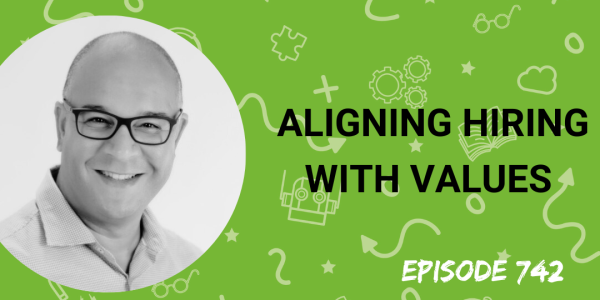
My guest this week is Leon Richards, founder of Good Talent, an Executive search & leadership advisory consultancy for values-led organizations. In our conversation, he explains how values-based recruiting actually works, why human judgment matters, and what responsible AI use looks like.
In the interview, we discuss:
• Values, purpose, and mission-driven organizations
• The importance of alignment
• Why cultural fit is often missed
• How to assess for values alignment
• AI, human skills, and accountability
• The “moral crumple zone”
• What does responsible AI look like?
• The future of TA
Follow this podcast on Apple Podcasts.
Follow this podcast on Spotify.
00:00
Matt Alder
Recruiting is moving from valuing experience to prioritising skills. But are we missing something even more critical that actually separates a perfect hire from an expensive mistake? Keep listening to find out. Support for this podcast comes from appcast. Appcast is changing the game when it comes to hiring. Using powerful tech dark with data driven insights and deep recruiting expertise, appcast helps employers find qualified candidates quickly and efficiently. In fact, companies using Appcast see a 50% drop in cost per hire and fill roles faster. Whether you’re building a brand or filling mission critical roles, appcast delivers results that move the needle. To learn more, go to Appcast.io. That’s Appcast.io. Hi there. Welcome to episode 742 of Recruiting Future with me, Matt Alder. Recruiting Future helps talent acquisition teams drive measurable impact by developing strategic capability in foresight, influence, talent and technology.
01:34
Matt Alder
This episode is all about talent. Most hiring currently focuses on looking at a mix of skills and experience, but there’s a deeper layer that often gets overlooked. Companies talk endlessly about culture and values, yet very few know how to genuinely assess candid that’s for them. This matters especially for purpose driven organizations. Whether it’s a B corp, a sustainably focused business, or any company with a strong mission, finding people whose values are fully aligned isn’t just a nice to have, it’s an essential so how do you find genuinely aligned candidates and where does technology help and where does it hinder? My guest this week is Leon Richards, founder of Good Talent, an executive search and leadership advisory consultant for values led organizations. In our conversation he explains how values based recruiting actually works, why human judgment still matters, and what responsible AI use looks like.
02:39
Matt Alder
Hi Leon and welcome to the podcast.
02:41
Matt Alder
And it’s a pleasure to have you on this show. Please could you introduce yourself and tell.
02:47
Matt Alder
Everyone what you do?
02:48
Leon Richards
Well, my name’s Leon Richards. I’ve been recruiting for Clar almost 30 years now. Pretty much in a couple of years time it will be 30 years in the world of recruitment doing a whole range of work from contingency stuff in the beginning through to executive search which is where I’m focused now. The company that I founded back in 2011 is called Good Talent and it specializes in supporting values led, purpose driven, mission led companies that need to find people whose values align with what they do as an organization so that cultural fit as well as the skills and experience.
03:32
Leon Richards
Alongside that, I’ve just Started another project called Edge Walking, which is basically a space, a reflective practice for leaders to help them navigate change, navigate uncertainty, to undress from their conditioning and relax and be who they are and get to grips with what’s going on with them and how they move forward in the world. So the work pretty much spans recruitment, a bit of advisory for some clients, some writing, some insight projects, all stuff that I’m lucky enough to enjoy and get a kick out of.
04:11
Matt Alder
Let’s dig into the value based companies a little bit. So tell us a little bit about that. What drew you to working in that particular niche? And why does values alignment matter so much in this type of hiring?
04:26
Leon Richards
A quick potted history. I did an MBA and came to the end of that year doing an mba, thinking there’s got to be more to life than just money and profit. So perhaps one of the only people that didn’t get from an MBA what they should have got from an MBA came out of it with more questions. And I remember thinking car. Well, I was open. I think I was open to looking at alternative views. And a friend a couple of years later after the mba, gave me a book from Jonathan Porritt called Capitalism as if the World Mattered. And it was that proverbial light bulb moment, Matt, where sustainability, triple bottom line, articulated what I was sort of feeling, but wasn’t able to put together in any form as yet.
05:16
Leon Richards
And that sort of started me on the path to exploring sustainability, sustainable business. Values led business. It led me to a course at Schumacher College where we did a circular economy course by Ella MacArthur. And that was it. I made a decision that I had to contribute to this new way of working. The question for me was how do I contribute as a recruiter? And it took me a few months, but the answer was pretty obvious really. It was trying to support those companies that were doing things differently. They were operating sustainably, supporting them by finding the people that they needed to find, needed to hire, to thrive. So that was the sort of embryo and the insemination of the business. And yeah, it’s been a interesting process since 2011 because it was quite early on.
06:14
Leon Richards
People sort of, I guess back then knew about sustainability, but it wasn’t as prevalent as it is now. There was a small cohort of organizations such as Big Corps that started sort of 2013, 2014 that were all sort of values led and talk the talk as well as walking the walk. Walk the walk, sorry. As well as talking the talk and engaging with them. It became clear pretty quickly that actually this value Stuff was vitally important to them.
06:45
Leon Richards
So for example, working with an energy company, a big energy, big green energy company, and were doing a marketing role for them, a senior market role for them, and talking to the md, it became quickly evident that this wasn’t just about finding somebody who could operate in a challenger brand in an established, mature industry, but it needed somebody that resonated with the values of the organization and then could articulate those and resonate with their potential audience. The role suddenly became more than just skills, more than just finding the skills and experience that somebody would need as a marketer, senior professional. But we needed somebody who got it, somebody who understood, somebody who resonated with those values. And that’s really the sort of the heart of it.
07:36
Leon Richards
These companies that are values led tend to have customers who are values led and cultures that are values led. And it’s about finding a fit with.
07:45
Matt Alder
That values, culture, mission. They’re all words that get thrown around a huge amount in our space and they don’t always have much meaning behind them. Now, obviously you’re working with companies who are different and values are kind of incredibly important, I suppose two bits to this. I mean, how do you assess the authenticity of the culture and the values of the organizations that you’re working with? And then how do you find that kind of alignment with the candidates? How does it, how does it work?
08:17
Leon Richards
Well, I mean, first as a caveat, I don’t want to get into tricky moral ground because values are values, Matt. Whether, whether your values are destroying the competition, making a million pounds, those are your values as an. And finding people that fit with those values is a similar process. It’s about surfacing them intentionally within the business and the organization. I mean, it’s not rocket science. It’s about questioning, it’s about understanding. It’s about assisting and helping the client, the hiring manager, to understand those values that they have inside the business. And that’s a process of conversation. Likewise with the candidates, it’s also a process of conversation with them.
08:59
Leon Richards
So the way that I approach it is your typical traditional competences experience, contextual understanding, but also then the questions around the cultural bit, how they view the world, what motivates them, what’s important to them, all of those softer things that are often missed. You know, if you’ve got your 10 point tick list that you’re going through, you often miss that softer cultural fit. And I find personally the most effective way is sensitivity and depth in conversation. Now I’ve looked, there is stuff out there I mean if you look at something like Barrett Value center, they’ve got a really interesting model similar to a psychometric process that you can answer questions from a client perspective and a business cultural perspective. So from a group organizational view.
09:51
Leon Richards
But you can also ask similar questions for the individual and the team or a potential employee to the business. And that can offer a more quantitative process beyond the qualitative process. But often you don’t need it. I think it’s about being sensitive, is about being mature and about understanding your business and asking those questions. I think anybody can do it if they want to.
10:18
Matt Alder
We’re in a time of great change with TA. You can’t open LinkedIn or the Internet or indeed anything without reading about disruption, AI, automation, efficiency, productivity, all of these kind of things. Where do you see AI and automation fitting into this kind of nuanced relationship based work? You know, where is it a help, where is it a hindrance?
10:43
Leon Richards
Honest answer is I don’t know. You know, sometimes I wake up and think, oh, nobody’s going to have a job anymore in the future. You know, I’ve struggled with some careers advice background, I’ve struggled to, to guide my own children. They’re 16 and 18. I mean I can’t tell you what’s going to be around in five years time, let alone 10 years time as a career option with the advent of AI and the power that it has. So some mornings I don’t know what’s going to happen, on other mornings I don’t think we’re ever going to lose that human touch. To be honest with you Matt, it’s, you know, at heart, what is it?
11:19
Leon Richards
It’s connection, you know, whether that’s engaging with a potential candidate on a search, building that trust, building that relationship, positioning and pitching the client to them, whether that’s likewise working with a client, gaining their trust. That’s human skills. And as far as I’ve seen, AI hasn’t got that agency to do that kind of relationship building. It has got some brilliant augmentation capability to help recruiters what they do, but I don’t think it’s in a position to replace them as yet. And you know, it might change in the future but for me the heart of it is going to be the human element and hopefully that won’t be replaced.
12:03
Matt Alder
It’s such an important point because ultimately you know, we’re dealing with people making very personal decisions when it comes to where they work, what they do, what they do. In their life. And I just really feel that the human element around that is.
12:22
Leon Richards
I always look at it, you know, it’s actually outside of, you know, aligning people for marriage if that’s a job, and I know it is a job in some areas, but assisting somebody to find a new position is some of the biggest impact you can ever have on somebody else’s life. And I wouldn’t leave that down to AI. That needs a human element and it needs humans to be responsible as well. Which was part of the essay that I wrote recently looking at the responsibility that we have as human, not offloading that to a system, to an unaccountable system.
12:57
Matt Alder
Yeah, you did.
12:58
Matt Alder
You kind of had an essay that you put on LinkedIn a few weeks ago, which is really, really interesting. And as part of that, you were talking about the moral crumple zone. Just talk us through your kind of thoughts around this a little bit more.
13:09
Leon Richards
It was like you waking up to LinkedIn, switching on in the morning, and somebody had actually put a post on. Oh, I think. I can’t remember who it was, but the paraphrasing it was something like, we’ve got. We’ve got AI writing CVs, we’ve got AI writing job descriptions, and we’ve just got computers talking to computers. And I thought, is that true? Let’s have a look at it. And did a little bit of research and came across some work that Madeleine Elish had done. She was at Oxford, I think, at the time. She’s now with Google, working with them in their AI Risks team.
13:47
Leon Richards
But she’d come up with this really interesting concept based on some good research looking at how humans end up being the crumple zone, the sacrificial lamb, so to speak, in these types of systems, you know, if you take an autopilot, for example, there’s not much that a human can do to override an autopilot in an airplane if something goes wrong. But the humans are the ones that take responsibility and the blame. And it was just that, thinking of, okay, if we apply this to recruitment, what does that mean? If we’re allowing AI, agentic AI and our ATS systems to do judgments, to make judgments, sorry, to make decisions on who’s appropriate for a role. And we let that system basically run through the process without our intervention, who’s responsible? Is it the system that’s making the match?
14:41
Leon Richards
Is it the system that’s making a recommendation to a client? Is it this client system that’s making a decision on who to hire, where’s the human element in all of this? And more importantly, who’s responsible? Because at the end of the day we will be held responsible for that decision as recruiters yet potentially have not had a hand in that decision. And I just thought it was an interesting exploration of where it could end up and where hopefully it won’t end up because there’s some dangers inherent in that.
15:10
Matt Alder
Yeah.
15:10
Matt Alder
And it’s not just the regulatory and the legal part of it which is actually being challenged at the moment. There’s a number of interesting cases going through about responsibility in these kind of cases, but also the kind of the ethics and the morals and the values of it.
15:24
Leon Richards
As far as I’m aware. You know, the most of the LLMs out there. Well, not most of them. They are all tools, Matt. You know, they are there at the behest of the user and therefore they will either exacerbate the good or the bad that the user puts inputs into them. So the morality question comes back and the ethical question comes back to the human. You know, it’s like again, it can be used good, it can be used for bad. So we can’t get around that. But maybe, yeah, I don’t know, I don’t have any answers for it. But I think it’s important that we don’t see AI for what it’s not. It’s not an agent, it’s not got moral agency, it can’t make decisions without your input and therefore see it as a tool to help what you do.
16:15
Matt Alder
I think that’s the thing.
16:15
Matt Alder
I think anyone really has any answers at the moment, but it’s just really important that we, that we have the debate and I suppose on the, you know, on that track, you know, what do you think responsible use of AI does look like in the context of what you do?
16:29
Leon Richards
There’s a meta layer that perhaps comes down to what these sustainable businesses were trying to do. It’s a slight alternative to our current economic model, let’s say a profit for profit sake and shareholder primacy. If you’ve got necessity parameters, drivers such as that, then they will use AI to deliver that. If you’ve got an organization that has a triple bottom line purpose, quadruple bottom line of purpose, planet, people and profit, then that alters how the AI is used. So the ethical constraint I think comes from the environment in which it’s deployed and which is used. And that’s the problem because our overriding driver is for growth, is for profit. And that inherently will lead AI to be deployed and used in such a way, which is where we’ll get the problems, no doubt.
17:26
Matt Alder
Final question for you. As you said, you’ve been in recruitment for a long time. Obviously in that time you’ve seen a lot of change, much of it driven by technology. Where do you think this is going?
17:39
Matt Alder
What’s your sort of best guess about.
17:41
Matt Alder
What might happen to TA over the sort of the coming months and years?
17:44
Leon Richards
I think we’ll probably go pendulum. I think there’ll be an all out rush to deploy AI in all shapes and forms that will probably be driven from people that really don’t understand and perhaps overestimate AI’s capability and they’ll come a cropper like Zappos are doing at the moment, you know, axing all their customer service team and slowly realizing that actually we need a human in the loop in here. And that pendulum then might swim back to the human element and perhaps a more balanced, wise approach of using AI, of enhancing and augmenting rather than replacing. That’s what I would hope. Beyond that. So that’s perhaps a short and a medium term swing of. We’ve always got swings on the pendulum. Beyond that, I don’t know.
18:34
Leon Richards
I mean, if we do truly get AGI and artificial intelligence with agency, then everything’s up for grabs, isn’t it? It’s a whole different ball game. We’re talking about a completely different world, a completely different way of operating. And that’s exciting. If it’s done well, that really does have potential. But that potential, the flip side of the coin, it could be quite bad as well. But I don’t know whether AGI is possible. Who knows. But if it is, then it really is a game changer. I think what we’ve got at the moment is a turbocharge beyond what we’ve experienced for the last 25 years in terms of that drive for automation, that drive for efficiency. And that’s good, that’s great. That’s a bonus. What comes in the future, what I know. Let’s, let’s.
19:28
Matt Alder
Leon, thank you so much for talking to me, Matt.
19:31
Leon Richards
An absolute pleasure and happy to talk anytime you want.
19:35
Matt Alder
My thanks to Leon. You can follow this podcast on Apple Podcasts, on Spotify or wherever you listen to your podcasts. You can search all the past episodes at recruitingfuture.com on that site. You can also subscribe to our weekly newsletter, Recruiting Future Feast and get the inside track on everything that’s coming up on the show. Thanks very much for listening. I’ll be back next time, and I hope you’ll join me. This is my show.