Up to 20% of the global workforce is likely to be neurodivergent and mostly undiagnosed. Understanding how to unlock the full potential of people with non-typical brains should be important to all employers. The difference between the right and wrong job fit for someone with ADHD or other neurodivergent conditions can be the difference between struggling daily and becoming a top performer.
So what if the key to creating exceptional teams lies not in trying to fit everyone into the same mold, but in asking the right questions to understand what each person needs to thrive?
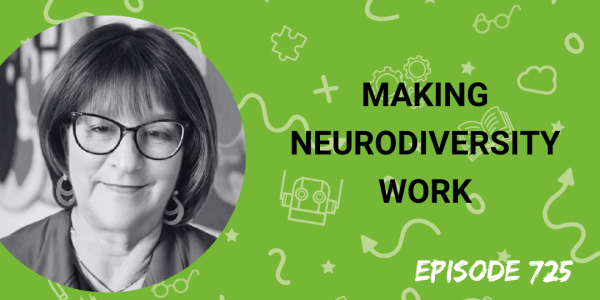
My guest this week is Shell Mendelson, an ADHD career coach with 35 years of experience helping neurodivergent individuals find their ideal work fit. In our conversation, Shell shares her proven process for identifying the “must-haves” that enable neurodivergent employees to perform at their highest level and explains why understanding individual needs benefits both employees and employers.
In the interview, we discuss:
• The challenges for ND people at work
• Why everyone’s needs are different
• The benefits of recognising the spectrum of different brains in your organization
• The contradictions of neurodiversity
• The importance of job fit and asking the right questions
• How small accommodations can make a massive impact
• Making work better for everyone
Recruiting Future helps Talent Acquisition teams drive measurable impact by developing strategic capability in Foresight, Influence, Talent, and Technology.
If you’re interested in finding out how your TA function measures up in these four critical areas, I’ve created the free FITT for the Future Assessment. It’ll give you personalised insights to help you build strategic clarity and drive greater impact immediately.
Just head to mattalder.me/podcast to complete the assessment—it only takes a few minutes.
Follow this podcast on Apple Podcasts.
Follow this podcast on Spotify.
00:00
Matt Alder
Everyone’s brain works differently. So what would happen if employers gave everyone the conditions that they needed to thrive? How much change would it take and what would be the impact on business performance? Keep listening to find out.
00:17
Matt Alder
Support for this podcast comes from smart Recruiters. Are you looking to supercharge your hiring? Meet Winston Smart Recruiters AI Powered Companion. I’ve had a demo of Winston. The capabilities are extremely powerful and it’s been crafted to elevate hiring to a whole new level. This AI sidekick goes beyond the usual assistant handling all the time consuming admin work so you can focus on connecting with top talent and making better hiring decisions. From screening candidates to scheduling interviews, Winston manages it all with AI precision, keeping the hiring process fast, smart and effective. Head over to smart recruiters.com and see how Winston can deliver superhuman results.
01:22
Matt Alder
Hi there. Welcome to episode 725 of Recruiting Future with me, Matt Alder. Recruiting Future helps talent acquisition teams drive measurable impact by developing strategic capability in foresight, influence talent and technology. Just head over to Mattalder.me/podcast to complete the assessment. It’ll give you personalized insights to help you build strategic clarity and drive greater impact immediately. Just head over to Mataulda Me podcast to complete the assessment. It only takes a few minutes. This episode is about talent. Up to 20% of the global workforce is likely to be neurodivergent and mostly undiagnosed. Understanding how to unlock the full potential of people with non typical brains should be important to all employers. The difference between the right and the wrong job fit for someone with ADHD or other neurodivergent conditions can be the difference between struggling daily and becoming a top performer.
02:39
Matt Alder
My guest this week is Shell Mendelson, an ADHD career coach with 35 years of experience helping neurodivergent individuals find their ideal work fit. Hi Shell and welcome to the podcast. In our conversation, Shell shares her proven process for identifying the must haves that enable neurodivergent employees to perform at their highest levels and explains why understanding individual needs benefits both employees and employers. Hi Shel and welcome to the podcast.
03:24
Shell Mendelson
Hi Matt, Great to be here.
03:26
Matt Alder
A pleasure to have you on the show. Please can you introduce yourself and tell everyone what you do?
03:32
Shell Mendelson
I am an ADHD ND for neurodivergent career coach. And, and I help ND individuals of all ages decide on the best career fit or job fit for them based on their specific needs and who they are. So I’m mostly, I’ve been a 35 year veteran of career coaching and I started working with ND clients about 15 years ago after my own diagnosis.
04:10
Matt Alder
I suppose for people listening who have kind of no experience of neurodiversity themselves, what challenges do you see in the workforce for neurodivergent individuals, I suppose particularly people with adhd. And how is sort of traditional work or traditional recruiting processes failing them?
04:29
Shell Mendelson
I don’t know that it’s the recruiting so much as people not really knowing what they want and need in their work, which is what I help them identify. So from the employer perspective, it’s really maybe just asking the right questions and providing them with a way to identify what they need in their work. And I focus on if you’re not fulfilled and you’re not energized by your work as an ND person, our brain wiring really will not allow us to perform at the highest level, let’s put it that way.
05:13
Matt Alder
How would someone work out what it was that they needed to perform at the highest level? How does it kind of work from that career coaching side? What is it that people need to think about if they’re in this kind of situation?
05:25
Shell Mendelson
Well, over 35 years I developed a process which originated with Richard Bull’s training that I received from him many years ago in what color is your parachute? So I used that process for many years until I strayed from my own work, started a company. And although the company was successful, I was not happy in it. Never understood as an undiagnosed person why that was. And when I finally realized that I was different, that there were things that I was not meshing with my co workers on and realized that I needed to get a diagnosis and I did. And that really changed everything. And I went back to doing the work that I was supposed to be doing originally, which was the work I’m doing now.
06:17
Shell Mendelson
And I was able to build on that over the last 15 years and recognizing that Indy people really have different needs and are very specific to each individual. But again, the bottom line is the fit needs to be there for there to be the most productivity, the most enjoyment of their work, for them to feel fulfilled, which will impact their performance.
06:53
Matt Alder
Yeah, absolutely. And if you know someone’s looking for a job. Because very often the way that a job or a company is talked about in an interview process is very different to the reality that people find when they get there. How do you sort of coach people to deal with that? What kind of questions they need to ask during the interview process? How do you, how do you know if a role is going to kind of meet those sort of very specific requirements that you might have?
07:20
Shell Mendelson
Well, personally, in my business, I do it through an eight week course called the youe Next Career Move Masterclass. And we go through the whole. We identify each of the areas that make up one’s ideal work and break it down, such asking questions like what are the skills that you enjoy using the most? And I call them the must haves in their work? And then they prioritize those. So the skills, the people they enjoy working with and for the working conditions, which is a very big piece of it, which we break down very specifically the fields, industries, areas that they are attracted to identify one or two that they will eventually begin to consider when they’re making job. Either creating as an entrepreneur, an industry they want to work within or working for a company.
08:24
Shell Mendelson
So that then also what their salary and rewards need to be, what their. Even the geographical area is important because the area that they live in needs to support who they are or at least they need to be aware of their surroundings and life purpose. We actually go to that level which helps individuals identify what their overall purpose is and how that aligns with the work they do. So believe it or not, that impacts how they perform on the job.
08:59
Matt Alder
Now obviously I know that everyone is different, but what are the kind of common barriers that neurodiverse people come up against at work? Is there anything, are there any patterns there? Are there any sort of specific things that come up time and time again?
09:11
Shell Mendelson
I think when a person doesn’t understand totally what the right fit is, usually the barriers will happen pretty much when they’re in the wrong fit. Because when they understand that the chances of them actually taking a position that is not a good fit for them is less, much less. And then they’re able to ask questions before that even happens. So the real work starts before the job even begins. But once they’re on the job, it’s really understanding if there’s any way that they can ask the employer to maybe recreate or help them with the conditions that could be impeding their work, such as even their space they’re working within, it could be the physical conditions of their work. It could be the people that they’re working around.
10:06
Shell Mendelson
Maybe some of the tasks that they’re doing that they’re spending too much time on that don’t really fit for them, that they could maybe trade with somebody else and spend more time working on tasks that would be a better fit for them. And a lot of it really comes with them understanding these things first and then perhaps and. Or the employer asking them questions related to those areas.
10:34
Matt Alder
Yeah. It’s interesting actually because as I was asking that question, I was sort of reflecting on my own experience as someone with ADHD and the difference between two jobs. If it’s the right job for you, if it’s the wrong job for you, is just remarkable. It’s almost like the things that would have stood in your way in the previous job don’t. Almost don’t exist in the next job. It’s a very personal thing, isn’t it?
10:57
Shell Mendelson
It’s very personal. I’m very glad you said that. It is remarkable because when a person is in the right fit, there’s almost no barriers, there’s no problem. You know, it doesn’t all of the issues that you see when a person’s in the wrong fit almost disappear because then they’re focused, they’re energized, they’re doing the work that they need to be doing. They’re showing appreciation, they’re showing, they’re energized, they’re again very focused and very productive. So there’s so many. Such a big difference. I’m glad you said that.
11:37
Matt Alder
Yeah. And I think it comes out a lot when very kind of successful people or high performing people announce the world they’ve got adhd. And it’s just kind of like, well, how can you have. Because how can you have achieved all this kind of stuff? But I think it’s the, that really is the sort of the crux of it. There are obviously lots of people who are in jobs that don’t have that kind of flow through for whatever reason or there’s not something that they can always maintain. One of the things that I see talked about quite a lot is the adjustments and accommodations that should be made for ND people. And I know that a lot of times employers can see. Can see these as a barrier or really onerous to do.
12:13
Matt Alder
I remember there was discussion in the industry a few weeks ago about whether interview processes should be tailored to the needs of neurodiverse people. And there was a real sense that they shouldn’t Because that was just too much work and too difficult. And what did these people expect? Which is incredibly disappointing to read, but not surprising.
12:30
Matt Alder
Can we bust some myths around this?
12:31
Matt Alder
Because very often the adjustments and accommodations that people need to really perform aren’t necessarily very big things, are they?
12:38
Shell Mendelson
No, not always if it’s the right actual fit, but it’s just some of the conditions that can be fixed in some way. Generally. Again, this is an individual thing that each person needs to create what I consider, or I call the self accommodation plan. And that’s where you break down all of the areas such as the physical, some of the cultural aspects, some of the things that when I say simple, if it’s the wrong fit, there could be a lot involved and maybe they shouldn’t even be there, they shouldn’t be in that job, period. But things that could be simple if they’re in the right job could be some of the, where they’re sitting, for example, the noise level, you know, so when we talk about the physical things, we talk about things that are, that become distractions potentially.
13:32
Shell Mendelson
So maybe being allowed to wear headsets, you’ve heard that before. Or just the chair, even the chair they’re sitting on or the space they’re working within, like the cubicle thing may not work for everyone if they feel that there’s a lot of distractions around that space. Some people need more light, some people are impacted by just really subtle things like even the carpeting or the walls. I know that sounds crazy, you can’t make those kind of changes. But before the person actually decides on accepting a position, they really kind of need to know what the must haves are for them. That’s what I call that. And so when we go into that self accommodation process, they’re breaking it all down and then they’re prioritizing the things that are the most important to them.
14:31
Shell Mendelson
So the top five things that they list really is the key.
14:35
Matt Alder
Yeah, I think that’s really interesting because I think sometimes just showing someone where they’re going to work and who they’re going to work with and how everything fits together is just incredibly important. Because you’re right, it’s not necessarily that employers can change those things, but people can make a decision as to whether they think they’re going to be able to work in that environment or deal with that. And I think that’s important. And again, everyone’s different. The headphone thing is really interesting because I’ll put noise cancelling headphones on all the time and then forget to put the music on. But actually I’ve realized over time that just the fact of having them on helps me concentrate. So it’s a kind of a really interesting thing just sitting there with them on.
15:17
Shell Mendelson
Like all of a sudden you realize you’ve just accomplished 100 things on your list, right?
15:22
Matt Alder
Yeah. And I forgot, and I was so busy doing it, I forgot to turn the music on.
15:28
Shell Mendelson
And the other thing about us in terms of our productivity is when we’re in the right fit, we are heads above neurotypical people in terms of productivity and we are the movers and shakers. So again, we are the entrepreneurs. We invent things, we create products and services. We are the ones that when we’re doing what we’re really meant to be doing, it’s no holds barred.
16:00
Matt Alder
Coming back to this thing about fit is again really important because sometimes a lot of the things I see out there about ADHD in particular in the workplace is that people with ADHD have these superhuman powers and if you give them the right set of noise canceling headphones, then yeah, they’re going to be away with this hyper focus and all this sort of, it’s going to be amazing. And I think sometimes, and I can see why people talk about that because they want to really make people understand the benefits of having someone who’s neurodivergent on your team. But I think sometimes it can underplay the problems that people have as well. It’s like not, you know, you can’t necessarily hyper focus at will or certainly not hyper focus at will on the right thing.
16:39
Shell Mendelson
Right? It’s the right thing. It’s really understanding what that is. And the person, the ND person really does need to understand that and have the ability to articulate that. And very often that is the issue is they really don’t know. They don’t understand. They know there’s something not working for them, but it’s hard to put your finger on it. And it’s not always a safe place to say something, to speak up because you don’t want to be singled out. You don’t want your co workers to give you the side eye. You don’t want anyone to accuse you of being given priority over doing specific tasks. But if you don’t understand what those accommodations need to be for yourself, there’s no way that you can really express to anyone the importance of it and being able again to identify what the must haves are.
17:40
Shell Mendelson
And I always say the must haves are the top five to 10 that you prioritize in the process that I do. And that’s why I do this process. It gives people the words, it gives them the security in knowing. It actually elevates their self confidence.
17:59
Matt Alder
I think there’s a really important point there as well, because people with adhd, in terms of asking for things or feeling awkward or feeling that they are causing problems, the kind of, the inbuilt thing about rejection in ADHD is absolutely massive. So people actually avoid that because they don’t want to feel like being rejected by someone or someone is having a go at them because it’s a kind of a massive issue. So I think that probably even compounds the problem because people won’t necessarily speak up and say what they want or they need if they feel that there is a chance that someone might say no or at least be put out by them asking.
18:37
Shell Mendelson
It’s scary. It is a scary thing to do, to reach out and say, this is what I need. But there’s always another side of it. When you, when you understand what you need, you can always say, under these conditions, you’re going to get the best employee ever. You’re going to find somebody who’s like not only dedicated but highly productive. And those are things you can actually say when you understand what they are first. But if you don’t understand that, how are you going to say it? How are you going to know it’s still that rejection thing, that sensitivity that many of us have. I have it, I understand what that’s like.
19:16
Matt Alder
Yeah, no, exactly. And I suppose from an employer perspective, I think I always talk a lot about the facets of the interview process, like looking for people who make great eye contact or have a good handshake. All those kind of things are kind of really sort of stacked against neurodivergent people. However, I think there’s a bit in there about actually if an employer is interviewing someone for a role, is asking those right questions about actually, you know, what is it that we need to do to make you the best employee that we’ve ever had. And it’s just that it’s that kind of questioning rather than kind of relying on a very kind of stereotyped view of what that person’s like or, you know, standard things that they might do for someone who’s neurodiverse in an interview.
20:03
Matt Alder
Well, actually, just asking the right questions is probably 10 times more powerful than some of the kind of standard things that employers might think they have to do in that kind of circumstance.
20:13
Shell Mendelson
Yeah, you took the words out of my mouth, Matt. That’s absolutely right. I think if employers were more likely to ask the right questions and make it safe for the person to answer without feeling like they have to pretend or mask or answer in a way that’s going to get them the work. Because it’s really important to know that if this isn’t a good fit, it is better that person walk away. It really is. Because it saves the employer, it saves the employee, potential employee, potentially months or even years of real problems and challenges.
20:56
Shell Mendelson
And so knowing that it’s that awareness that’s so important, of knowing and articulating what is important to you and feeling confident that if you are safe enough to say it and you know that if it’s the wrong fit, it’s okay to walk away, that makes all the difference in the world. I just literally had that happen with somebody who was in my masterclass the last week who said he walked away from a job he normally would have taken because he was able to ask the questions and feel confident that it was okay for him to do that. He didn’t. He wasn’t a people pleaser. What I call a job beggar.
21:45
Matt Alder
Yeah, right. Yeah.
21:46
Shell Mendelson
When you’re put in that job beggar position, you’re likely to say things that aren’t necessarily true and get yourself in trouble later on.
21:54
Matt Alder
Yeah, yeah, no, I can see how that happens as well. Is that kind of, again, that sort of people pleasing. I don’t want to feel rejected. I don’t want to, you know, make someone not like me, all those kind of things. And I think that, I suppose what’s a real shame for me is where someone has got the right fit in the job, but actually there’s just some really small things that actually, if the employer really thought about it, aren’t that important. That could be changed. That would, that would make that, you know, make them fly. So I’m just off the top of my head, things like, you know, if it’s an office job, being able to come to the office a little bit later to avoid the rush on the trains or working, be able to do zoom calls with a camera off.
22:33
Matt Alder
People not coming up to me going, can I have a quick word? And not telling me what it’s about, just all those kind of tiny little things that are actually really kind of micro adjustments. But I don’t think people realize what a massive difference they can make. And they seem ridiculous as well. It’s like, how could someone’s brain really think like that if I just change this, the world has completely changed for them. But it is like that.
22:57
Shell Mendelson
It’s the small changes, but also again, going back to the self accommodation detail of understanding those little minor things that are really laid out when we go through that process. It’s not a simple process. They have to really think about all of those conditions. I call them the physical and non physical conditions and things like culture and how the culture, even diversity is important to some people. All those things are really needed so that you feel confident enough to ask a question and the employer can say what is it that you’re looking for in a company? And answer honestly both ways.
23:43
Matt Alder
Yeah, 100. I just think that’s the thing. It’s just such a, it’s just kind of such a shame sometimes that these things really kind of get in the. Get in the way.
23:51
Shell Mendelson
They don’t have to.
23:52
Matt Alder
Yeah, exactly. And, and if they do have to, then it is because it’s not the right fit. I think that’s the sort of the key part of it. One of the things that lots of people, particularly with adhd, end up doing is, you know, being entrepreneurs, being self employed. It just kind of seems to be a direction that lots of people go in. Specifically from an employer’s perspective, are there things that they could think about in someone’s career that would sort of, I don’t know, mimic those conditions or give them that kind of stimulus to really persuade a great performer to stay and not necessarily go and set up their own thing?
24:30
Shell Mendelson
Well, number one, most people when they, we do a little exercise on working conditions where the first thing they do is list all the things that have not worked for them, things that they dislike in the working conditions they’ve had before. And one of them is micromanaging. And I think if you ask, you’re neurodivergent, right? Yeah. So, you know, one of the questions you ask is how are you at taking instruction? Because many of us don’t like to be told what to do when we already know what we’re supposed to do. And if we enjoy what we’re supposed to do, the last thing we need is somebody kind of micromanaging us or giving us artificial deadlines or not giving any structure at all to an assignment.
25:22
Matt Alder
And I think also there’s a bit about micromanagement where someone can ask you a really simple question like, you know, what are you doing today? How are you getting on with that? If it’s kind of like it can feel like an attack, they’ve come to get me, they’ve done something wrong. Just because. It’s just like, why have you asked me that when I’m obviously getting on with it? It’s like, you must have an agenda and you must hate me.
25:43
Shell Mendelson
Exactly. You know what it’s like. Yeah. I mean, I was always in. Once I got my master’s and I started working in my field and career, I worked for two companies that were. And the only way I could really work for them was that I was kind of independent within the company. And it put more on me to actually go out and get the work that I was supposed to get and meet with potential. I work with. For insurance companies who are referring workers compensation cases to me. But that really worked because I could then go out and meet them and recruit my own work. But I worked under the auspices of another company and they provided the office, they provided the support. They provided so much to me. But I was very independent within that process. And this. Yeah.
26:39
Shell Mendelson
And so I. I just want to say that I left to do my own thing and I said, well, if I can do this on my own. Right. At some point it was after that the second employer decided to become more of a corporate entity and started emphasizing how I was doing things and started kind of looking over my shoulder more and making suggestions for how to do things that I had no interest in whatsoever. Like, I wasn’t interested in being their manager and managing people. I didn’t like managing people. I liked working on my own. So it was at that point that I said no, and I left.
27:20
Matt Alder
Yeah, 100%. I think also I’ve discovered that I tend to break assessment tests because my results will come back and they’ll say, he doesn’t like micromanagement and doesn’t like all that kind of stuff. Needs the sort of freedom to. To go and do his own thing. The next question will be like. Needs lots of structure.
27:41
Shell Mendelson
Yeah, right.
27:42
Matt Alder
It’s such an interesting contradiction, and it just struck me when you were talking that you were kind of, you know, you’re allowed to go and do your own thing and do that, but you had. You knew you had that structure that you could kind of fall back on. And it’s. Again, there’s a lot of contradictions with this that can be quite difficult for people to. Quite difficult for people to understand.
28:00
Shell Mendelson
We need the structure in the sense that it’s kind of a wide berth versus we need to know where we can’t go beyond. But not the micromanaging kind of structure where somebody’s looking over your shoulder. It’s like, okay, these are things. This is the limit, and maybe this is the deadline. Deadlines. I love deadlines, by the way, because I usually beat the deadline. That’s me. I don’t wait till the last minute when I have a deadline. If I don’t have a deadline, I’m just gonna linger on and sort of get it done on my time.
28:42
Matt Alder
Yeah, again, that’s an interesting paradox, because in some ways, I’m terrible at deadlines. I’m just forever missing them. However, if I didn’t have deadlines, then nothing would get done.
28:52
Shell Mendelson
Exactly. Nothing would get. Tend to do things quicker. So if you give me a deadline, I’ll get it done like a week early, because I don’t want to even come up close to that deadline and then have to, like I’ve done in the past, try and get everything done all at once. That doesn’t work for me anymore. For some people it does, but so I’m. I’m kind of the other way with that. Not everybody’s like me with the adhd. Not everyone, Yeah.
29:19
Matt Alder
I think almost a kind of a final observation that I make is that people with ADHD are very different to each other. They have some very common things that they kind of recognize in each other, but they’re very different. And I think from a broader employment perspective, we’re obviously, when we talk about neurodiverse people, they do have brains that are wired differently, so they are very different. However, everyone’s brain is slightly different. So across the whole organization, there are ways that people want to work, there are ways that people want to think. So it’s just a kind of a spectrum of difference. And I think that if employers kind of sort of truly embrace inclusion around this, then they will have an incredible workforce because they’re giving people the best opportunity to be the best that they can be.
30:00
Shell Mendelson
Oh, I think if they don’t do that, they’re really missing out on. They’re missing out on really improving their own company and their own business, basically. I think it’s just good business to really pay attention and sort of understand that people need certain conditions and they need to be able to ask questions and feel confident enough to articulate what’s going on with them so that the employer can make the adjustment or help make the adjustment, and that will uplevel that. I mean, if you have a bunch of people who are working for you that are fully embracing what they’re doing. Guess what? That’s. That’s the best possible scenario for that business.
30:52
Matt Alder
Yeah. And I think also we’re talking about a situation that up to 20% of the world’s population has and most people are undiagnosed. And a lot of people don’t even realize that this is what’s going on. So I think that it affects people a far bigger percentage of the workforce that an employer might have than they would ever, ever realize. And I think that’s another. That’s another important part of it. Basically.
31:19
Shell Mendelson
That’s really true. I was actually diagnosed very late in life. And I think the reason it took so long for me was that I was always doing what I enjoyed doing. And I was because I was in the right career. I was kind of a rock star. Once I got my degree and was moving on, I did really well in it. And employers wanted me. It was the opposite. They tried to accommodate me even though I was undiagnosed. It was when I started this other company. It ended up doing the day to day that I really didn’t like anymore. I love putting it together. The company, as many of us entre creative types do. We like to create new opportunities and things like that. And that’s what I was doing.
32:06
Shell Mendelson
But the day to day it really wore me down and bored me and I was miserable. And that’s when I got the diagnosis because I realized why am I disliking this so much? Well, it was because I wasn’t doing the work I enjoyed doing and the work I was meant to do.
32:22
Matt Alder
Yeah. Finally. Career coaching with shell.com and or passiontocareer.com either one of those work.
32:27
Shell Mendelson
There’s two ways. Career coaching with shell s h e l l.com and or passiontod career.com either one of those work. I also wrote the book called unlock your career path, a course for neurodivergent adults and teens which literally takes everything that we’ve been talking about. It will walk you through that whole process so it will help. I’m encouraging employers to direct their employees to the book so they can at least come back with some. Either this is not a good fit for me or these are the things that I need to accommodate. Shell, thank you very much for talking to me. All those questions can be answered by going through this book.
33:18
Matt Alder
My thanks to Shell.
33:20
Shell Mendelson
It was a pleasure.
33:22
Matt Alder
Just head over to Mattalder.me/podcast. Don’t forget, if you haven’t already, you can benchmark your talent acquisition capability quickly and easily by completing the free Fit for the Future assessment. Just head over to Mataulder Me Podcast. It only takes a few minutes and you’ll receive valuable insights straight away. Past episodes at recruitingfuture.com on that site.
33:50
Matt Alder
You can also search through all the past episodes@recruitingfuture.com on that site. You can also subscribe to our weekly newsletter, Recruiting Future Feast, and get the inside track on everything that’s coming up on the show. I’ll be back next time and I hope you’ll join me.