
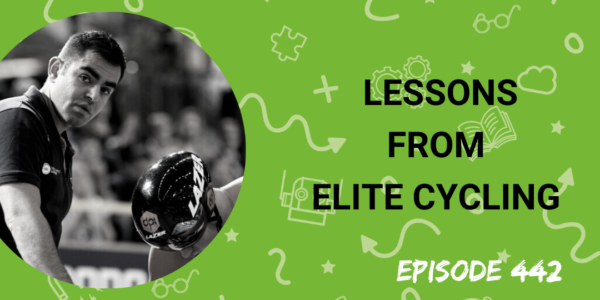
I’m a firm believer in looking outside the talent acquisition universe to see what lessons we can learn from other disciplines and areas. Elite sport is always an interesting parallel as selecting and developing talent is a critical aspect of building a winning team.
My guest this week is Mehdi Kordi, the coach of the Dutch national track cycling team. The Dutch team have had a massive amount of success in recent years, including winning three golds, a silver and a bronze at the last Olympics, despite having considerably fewer resources and less funding than some of their competitors. It was fantastic to hear first-hand from Mehdi how they have achieved this, and there are some very valuable lessons here from TA leaders everywhere.
In the interview, we discuss:
• What makes a good coach
• Managing riders, employees and partners
• Getting the best out of people
• How do you spot talent?
• The importance of resilience
• The mental versus the physical
• The role of technology
• Running a world-class team with limited resources.
• Collaboration and partnerships
• Using culture to drive performance
• Clarity and transparency
• What does the future look like for track cycling?
Listen to this podcast on Apple Podcasts.
Transcript:
Matt Alder [00:00:00]:
Support for this podcast is provided by Paradox, the conversational AI company helping global talent acquisition teams at Unilever, McDonald’s and CVS Health get recruiting work done faster. Let’s face it, talent acquisition is full of boring administrative tasks that drag the hiring process down and create frustrating experiences for everyone. Paradox’s AI assistant Olivia is shaking up that paradigm, automating things like applicant screening, interview scheduling and candidate Q and A so recruiters can spend more time with people, not software. Curious how Olivia can work for your team? Then visit Paradox AI to learn more.
Matt Alder [00:01:04]:
Hi there, this is Matt Alder. Welcome to episode 442 of the Recruiting Future podcast. I’m a firm believer in looking outside the talent acquisition universe to see what lessons we can learn from other disciplines. Elite sport is always an interesting parallel as selecting and developing talent is a critical aspect of building a winning My guest this week is Mehdi Cordy, the coach of the Dutch national track cycling team. The team have had a massive amount of success in recent years, including winning three golds, a silver and a bronze at the last Olympics, despite having considerably fewer resources and less funding than many of their competitor nations. It was fantastic to hear firsthand from Mehdi how they achieved this and there are some very valuable lessons here for TA leaders everywhere.
Matt Alder [00:02:02]:
Hi Mehdi and welcome to the podcast.
Mehdi Cordy [00:02:05]:
Thank you Matt. Happy to be here.
Matt Alder [00:02:06]:
An absolute pleasure to have you on the show. Could you just introduce yourself and tell everyone what you do?
Mehdi Cordy [00:02:11]:
Well, my name is Mehdi Cordy. I am currently the coach of the Dutch track cycling team.
Matt Alder [00:02:17]:
What would be interesting I think for people is to hear a bit about your background and how you got to be the coach of the Dutch track.
Mehdi Cordy [00:02:25]:
Cycling team is quite a convoluted route I guess. If I may, I’ll start at the beginning or 18 or whatnot. I went to university in Manchester, swore I’d never go back and I did a biomedical science degree. Thought I’d become an accountant. It’s because of my Iranian ethnicity. I just thought that I’ll stereotype, you know my DNA, I’ll be good with numbers. Turns out I wasn’t and I failed at the first attempt of any exam and then for some reason I tried to pursue that for longer than I should have done and then I was actually a rower so I went into full time rowing and just tried to see what I wanted to do there and decided I wanted to go and do a Master’s in London. I did it in aerospace physiology at King’s College London. From there I got some positions which if you wanted me to talk about later, I can in Brazil and Peru and then worked in the European Astronaut center in Cologne, Germany. But I really sort of craved performance and sort of science in performance. And I applied and was lucky enough to get a PhD at the English Institute of Sport in Manchester where I swore I’d never go back at British cycling looking at the training sciences of track sprint cycling. So that’s your Chris Hoyer and your Jason Kenny’s for the most of popular examples, I guess. And then from there I went to be after my Ph.D. i became the sports scientist for the Paris Sprint Group, then became the coach of the Paris Sprint and then got offered a job at the Dutch track sprint team where we went to the Olympics, won three gold, a silver and a bronze. Adding to our, I think it’s nine world titles we’ve got and 11 European.
Matt Alder [00:04:13]:
Wow.
Mehdi Cordy [00:04:13]:
And here I am.
Matt Alder [00:04:15]:
That’s some backstory.
Mehdi Cordy [00:04:16]:
It’s convoluted, isn’t it? It’s not like the linear progression.
Matt Alder [00:04:21]:
Tell us a little bit about what your day to day job entails just for people who are trying to sort of imagine what that might be like.
Mehdi Cordy [00:04:29]:
Well, there is no sort of day to day, so typical day I’d say. So my role is, I would say split for two reasons. Number one, we’re a small team, so that means if the shoe fits, you have to wear it. And because I have a PhD and quote, a scientific background, I do have to look after the science tech and oversee the project work of that because well, no one else would. And you have to keep all the sponsorships and partnerships we’ve developed sort of in tune with and aligned with what we want and what is the best rather than what they want or is a compromise, should I say? But then actually the more pertinent job I have is coaching the riders. At the moment I think I’ve got like 11 or 12 and managing the staff. So we don’t have full time staff. Mostly we’ve got I think three or four full time staff members, but the rest are part time. So it’s really just trying to make sure that everything is, I use this word a lot already aligned in basically optimizing performance for the athletes when we need it most. Day to day that could be anything from talking to a rider who’s having a meltdown or the opposite. They’re having a great day and Just managing their expectations. Same with staff, like trying to hold them to account what their tasks are or encourage them to go, you know, trusting them in what they’re doing. And also, again, the same really, with the partners and sponsorships we have is again, just seeing, making sure that we’re all on the same page and just moving it forward rather than just donating.
Matt Alder [00:06:18]:
I want to talk a little bit more maybe about sort of technology and resources in a second, but I just want to talk a little bit to you about coaching and talent. What makes a good coach?
Mehdi Cordy [00:06:29]:
That’s a really good question. I mean, I’ve actually been in this game now for 10 years and I’ve struggled to actually define what a coach is. If someone says, what is a coach? It’s really taken me up to about nine years to really define what it is for myself. So I’ve come to the definition, this is my kind of final definition, which I guess I can fine tune is someone who is a vehicle or someone to get the best out of someone else. That’s a coach. So what makes a good coach? So how do you get the best out of someone or make them reach their full potential? And there really isn’t a silver bullet or one methodology that, you know, it’s a one size fits all. It’s really just being open to trying new things to get the best out of whoever you’re trying to get the best out of. And one thing I’ve definitely learned is everyone reacts differently and to the situation they’re in. Let me give you an example. So, for example, a rider, I can’t sack them if they’re being bad or whatever they’re being, you have to work with them, particularly on the international level with, in cycling, they’re not very many of them, so you have to work with them. And that usually requiring trying to understand a lot of empathy, communication, being clear and being open and honest and transparent with staff. Obviously you do have the ability to change and shuffle around, but again, the same principles really apply, but in different quantities for every person. I think really you have to understand what makes people tick and really focus on that and what gets the worst out of people and try and stay away from that, but on an individual basis. And I think also you have to treat people individually, but, and I use this word kind of liberally, judge them the same, if you want to put it that way. And what I mean by that is you can get to the. You can get the best out of them in different ways. But ultimately, when it comes to performance, that’s the only thing that matters in.
Matt Alder [00:08:32]:
Terms of sort of talent and the talented people that you, that you work with. First of all, how do you spot elite sporting talent? Is it something that you can see in people early? Is it something that’s developed? What are the elements that make that up?
Mehdi Cordy [00:08:48]:
Speak for a sporting perspective here. But a lot of people assume talent is physical. And I think it really comes in almost in a non visible. All the best talent or the most sustainable performers come in things that are not sort of quick to see on the eye. So for example, we use the words mental resilience or behaviors. They’re the things that really stick out. So the only thing I’ve really come to see is those who are the best performers at junior level or under 23 level are just simply good performers at junior level, under 23 level. And that’s where it stops. It’s really the ones actually have not had that much success when they’re younger are the ones who can craft out better career simply because they can apply themselves better. They, they somebody’s expression, but I’m going to use anyway, they want it more. So what that means that they prepare more, they take it more seriously. They, you know, they’ll come back again. They’re used to adversity and want to try new things, open to ideas. So it’s more behaviors and mentality. And an example of that is recently in a race, one rider we had, she, she performed abysmally, but she fought to the end. I’m really sort of summarizing this. There was a lot more intricacies to that and that to me and she took the, and she stuck her hand up and was like, yeah, okay. That race I was not ready for, even though I thought I was ready. And she really took responsibility for it, sort of actioned the way that she was going to make it better. And then in the race itself, she didn’t just give up where she could have done because you know she was getting battered, but she just hung in there and fought and fought and fought till the end. Which, you know, that is something I believe you can work with. And that’s where the talent lies rather than just a physical beast. Having said that, there is a baseline of physical talent you do need sort of like a prerequisite so not any old person can come. But really I just for me, what I define as sort of talent or how do I spot for it is this behaviors, particularly in adversity and behaviors of what they’re doing in the time of Adversity and how they react to it. Like, do they take responsibility? Do they blame someone to look for excuse?
Matt Alder [00:11:14]:
That’s really, really interesting actually. And I think that translates so well into lots of other industries and areas as well. Just to dig a little bit deeper into resilience, how do you sort of help people to build that resilience even further?
Mehdi Cordy [00:11:29]:
Resilience is key. Allowing them and allowing you to show vulnerability. If they trust you enough to show their vulnerability and vice versa, that builds an element of trust, which means that they’re willing to show how weak they’re feeling, which can, then. I don’t know if I’m verb. I don’t know because actually this is the first. I’ve actually thought about it, really trying to verbalize it. But, but basically, you know, if you show. I think showing vulnerability is a, a way of building resilience because you’re sticking your hand up and saying, look, I don’t think I’m good enough or I need help and therefore you can work on it, rather than trying to be the proud person saying, you know, I’m tough, I’m tough, you know, I’m, I’m a hard, you know, I’m mentally really strong and then just cracking at the end of it. So I really actually believe that showing your vulnerability, you know, in a safe environment to the right people really helps build resilience. Definitely in the short term, long term, I’m, I’m, I think that resilience really comes about the passion. And what I mean by that is if you’re not very good at something, for example, bike racing, but you love it and you’re committed to it and you don’t care if you lose as long as you can keep racing and you want to get better, that’s kind of resilience built long term. So I think there’s kind of two categories to it, but really I think, you know, in the elite end, or the, or the, or the top end or the pointy end of performance, I honestly believe that showing vulnerability to the right people is a way of building sort of mental toughness or resilience.
Matt Alder [00:13:05]:
Just to sort of ask a question about sort of science and technology. How important are science and technology to what you do? Where’s the kind of the balance between the science and the humans, if you like, or how do they all work together?
Mehdi Cordy [00:13:20]:
Well, firstly, let’s make no bones about this. It’s the human that powers the bike. Without them and without the racecraft, their application, them being able to actually ride a bike 80km an hour. That’s the thing that wins you the race. However, the technology is way more important than what people think. For example, the skin suits, a lot of people don’t know this. One of the most important pieces of technology on the rider. Reason being that almost at 80 km now, almost all the resistive forces is coming from aerodynamic drag rather than say body mass, what people think it is, which means that you want to get the drag as low as possible. And the material that you wear on the skin suit, where it’s rough, where it’s smooth, really, really affects that by up to about 10%. So it’s really important that you optimize the technology, including the skin suit, the helmet, the bike relative to the person. So of course the human, like I said, is kind of the thing that brings you home the middle. But I would say the technology is about 40% of the performance.
Matt Alder [00:14:34]:
Interesting. I hadn’t realized that it was that big a percentage from everything from the.
Mehdi Cordy [00:14:39]:
Tires, the chains, the wheels, everything like it. You’d be shocked how much. Well, I was when I first found out anyway, how much that, that influences the, the aerodynamic drag, which obviously is one half the equation of propulsion. And then therefore you have to invest in that as well. And, and yeah, doing that means you, because we’re such a small team, not very much money with partners and sponsors. Yeah, from startups like us or startup.
Matt Alder [00:15:09]:
Size anyway, is there, without giving away trade secrets, how are you managing to get these kind of world class and gold medal winning performances with. With maybe less resources than some of the bigger teams.
Mehdi Cordy [00:15:24]:
So to put it in context, this is for the listener. So British cycle, I think at 28 or 30 million over four years, I think we get five. So if you stack up, you know the. And I think we’re ranked like seventh in funding or eighth in the world for cycling. So a lot of countries have their own in house specialists, engineers, almost an army of people. The way we do it is in short collaborations and partnerships with smaller firms. Let’s take aerodynamic drag quantification for example. It’s called cda. So coefficient of drag, frontal area. And to quantify that usually is in the wind tunnel. Now the wind tunnel costs a thousand euros an hour. And if you want to, it takes about a day or two to really get any sort of meaningful data for a rider. Obviously we can’t really afford that because that’s 16 grand, let’s just say if it’s an eight hour day. So we have to be creative in what we do. So we approach Partners and even people on Internet chat sites and forums to say, look, you know, how can we do this? We’ve got problem almost outsourcing it, but without actually paying the consultancy fee. So we’ll just say, look, if you want to develop a product yourself, you can do, we’ll validate it and test it and you can have the data to move on from it, however we need it moving forward and it’ll be our product to use and we can endorse it or anything like that. So it’s a mutual relationship where we go out to people saying, hey, this is what we’re looking to do, this is how we think we can do it. Can anyone help? And usually they’re kind of small firms. You sort of pipe up and go, yeah, or scientific chat rooms or forums who help us out and yeah, and just take it through that way.
Matt Alder [00:17:16]:
That’s so interesting in terms of kind of a really flexible way of working. You mentioned earlier that obviously you’re dealing with a very kind of small pool of talent. There isn’t an endless supply of elite cyclists. How important then is culture as part of the team? How do you sort of build that, build that culture and use that to drive performance?
Mehdi Cordy [00:17:37]:
Cultures are accepted behaviors. You have to stamp out toxic behaviors. And what I mean by that is people, riders who are like, you know, moaning or complaining, saying, I’m not, this is not fair, this is not fair. Whatever, you have to stop that. And the way you do that is with clarity and transparency. And what I mean by that is you have to say for us, for us, the big thing, the thing that causes the most friction is selection and selection policies. So you have to really set from the outset, okay, this is how we’re going to select, this is what we’re going to do and this is how we’re going to do it. Does everyone have a problem? And then once that’s agreed, it’s mainly about planning, again with the same principles of communicating and being transparent and open of how each rider is going to be the best version of themselves for when they need to be, but also sort of empowering them if want to better phrase, to bring them on the journey with you. So, you know, usually what happens is I go with a training plan or phase plan, call it an overview. This is how I think we, we’re going to do it. And then for the first two or three months, this is, these are the details, the day to day sessions of how we’re going to do it. What do you think? And it starts off a conversation where they get to decide and choose how they want to be the best version of themselves and get the most out of themselves in that training phase. And the reason why we do that is just so at the end they have accountability and responsibility. Their performance. They can’t just say it was, you told me to do this, so I did it blindly. And that’s not us shirking responsibility, it’s just making sure that they have a say and they believe in what they do. And if you do that, I believe that it sort of improves the culture of sort of accepted behaviors. The people are acting more not responsible, but they, they believe in what they do. They know the rules of the game, if you want to call it that, and they just set about doing it.
Matt Alder [00:19:50]:
So final question, what’s next? What does the future look like for your sport, do you think? Are we going to see more technology, more innovation? What do you think’s on the horizon?
Mehdi Cordy [00:20:01]:
We’re going to see much more technology. I think these past three or four years the cat was out the bag about technology and access to technology. So I think that’s kind of petering out. I think what we’re going to see is more people participating. And every year track cycling is improving its numbers of participation, particularly at the elite end. So I think we’re just going to get more and more better and more unique athletes and a higher standard, which I think is really exciting for the sport. And yeah, I’m just looking forward to it because I think the times are getting quicker and I was looking forward to seeing more sort of broader range of athletes. So we have people from Trinidad and Tobago, Sudan, Thailand who are all kind of at the top end and I’m just looking forward to more and more nations participating and having some more and more competition.
Matt Alder [00:20:57]:
Mehdi, thank you very much for talking to me.
Mehdi Cordy [00:20:59]:
Thank you.
Matt Alder [00:21:01]:
My thanks to Mehdi. You can subscribe to this podcast in Apple Podcasts, on Spotify or via your podcasting app of choice. Please also follow the show on Instagram. You can find us by searching for Recruiting Future. You can search all the past episodes@recruitingfuture.com on that site. You can also subscribe to the mailing list to get the inside track about everything that’s coming up on the show. Thanks very much for listening. I’ll be back next time and I hope you’ll join me.