The current challenges talent acquisition teams face are well documented, and on this podcast, we explore the strategies and technologies that TA leaders are using to address them. The one thing we don’t talk about enough collectively as an industry is the considerable effects two years of unprecedented pressure and disruption have had on everyone’s mental health.
While wellness, in general, is a big industry topic, there hasn’t been much direct conversation on the importance of self-care and strategies to build resilience for Talent Acquisition leaders and their teams.
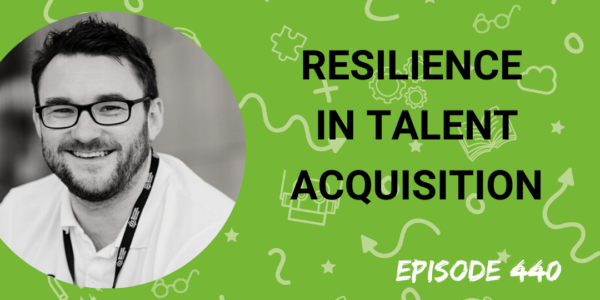
My guest this week is Ben Gledhill, a Talent Acquisition leader who has done innovative work for several UK based organisations. Ben is one of the talent acquisition community’s deep thinkers and, over the last two years, has done a lot of research into the importance of building individual resilience and the role it plays in the effectiveness of talent acquisition strategies.
In the interview, we discuss:
• What it has been like to be a Head of Talent Acquisition during the pandemic
• Why we need to talk more about mental health
• Resilience as part of the TA stack
• Five elements to build resilience
• Adapting to sudden change
• Self-compassion and self-care
• Changing the narrative
• Purpose and control
• Forgiveness
• Is technology a help or a hindrance
• What does the future look like for talent acquisition?
Transcript:
Matt Alder [00:00:00]:
Support for this podcast is provided by Candidate id, an ISIMS company. Candidate ID is an award winning marketing automation software built for talent acquisition. It enables recruiting teams to hyper target best fit most engaged candidates with unique lead scoring and automated marketing campaigns. Candidate ID recently joined ISIMS and together they’re redefining recruitment marketing. Visit candidaid.com to learn more about transforming your talent acquisition strategy.
Matt Alder [00:00:52]:
Hi there, this is Matt Alder. Welcome to episode 440 of the Recruiting Future podcast. The current challenges talent acquisition teams face are well documented and on this podcast we explore the strategies and technologies that TA leaders are using to address them. The one thing that we don’t talk enough collectively about as an industry though is the considerable effects two years of unprecedented pressure and disruption have had on everyone’s mental health. While wellness in general is a big industry topic, there hasn’t been much direct conversation on the importance of self care and strategies to build resilience for talent acquisition leaders and their teams. My guest this week is Ben Gledhill, a talent acquisition leader who’s done innovative work for several UK based organisations. Ben is one of the talent acquisition community’s deep thinkers and over the last two years has done a lot of research into the importance of building individual resilience and the role it plays in the effectiveness of talent acquisition strategies.
Matt Alder [00:01:59]:
Hi Ben and welcome back to the podcast.
Ben Gledhill [00:02:02]:
Hi Matt, great to be back.
Matt Alder [00:02:04]:
An absolute pleasure to have you back on the show. For people who may not have heard some of your previous interviews, could you just introduce yourself and tell everyone what you do?
Ben Gledhill [00:02:13]:
Yeah. Hi everybody. So my name’s Ben Gledhill, formerly the VP for TA at World Remit, in between gigs at the moment. Been in TA since 2005 in various formats, which is quite scary. And yeah, just enjoying a little bit of downtime before I start my, start my new journey.
Matt Alder [00:02:34]:
Fantastic stuff and there’s a few things I wanted to ask you about. But to start off with, talk us through what it’s been like to be ahead of TA for the last, for the last two years because I think a lot of the content that we, we have out there, you know, it’s about challenges and solving challenges and using and strategy and all that kind of stuff. But what has it felt like for individuals? What’s it felt like personally?
Ben Gledhill [00:03:01]:
Do you know what I think? I think there’s probably a couple of ways I can answer this. But I think I’ll kind of, you know, I’m probably gonna give a little bit of an insight how it’s been personally and I think a lot, I think it will resonate with a lot of people, but I think it’s just been really, really, really tough. I mean, I think if we kind of take the two year period, obviously that’s kind of covering the pandemic up until now, you know, there are kind of wh of what’s coming around the corner. You know, kind of all the kind of the various factors across the globe are hinting at a recession. And I think on a, on a real personal level, you know, I think it’s very safe to say that’s been quite stressful. You know, I know stress and they always say is a kind of silent killer in terms of, you know, it can have a huge impact on your, on your mental health. But I think more than anything, I think people’s resilience, both at home and in the workplace, it’s been really, really, really tested. And I hate to say it, and again, speaking from a personal perspective, I think our resilience has been really, really tested in terms of we probably haven’t been resilient enough. And I don’t think that’s anybody’s fault. I just think, you know, kind of, yeah, pre2020, you know, there were a lot of budgets out there, a lot of kind of hiring growth, and then all of a sudden the world absolutely changed over the space of two or three weeks and we were left with a blank canvas, but not in a good way. So yeah, I think for me, kind of stress and resilience, it’s, you know, it’s kind of really, really been brought to the forefront.
Matt Alder [00:04:37]:
So I want to dig into and talk about resilience in a second, but before I do, I think it’s just important to kind of really flag this up, that we just really don’t talk about mental health and self care enough in this industry, do we?
Ben Gledhill [00:04:51]:
We don’t. And you know what I mean, I kind of, you know, I used to, you know, play a little bit of rugby back in the day. And obviously, you know, rugby, like many sports, some of the kind of personal avenues, you know, there’s been a lot of talk around being kind to yourself, it’s okay not to be okay. There’s a lot of kind of campaigns and kind of social things that we’ve seen, but we really, really don’t. I mean, it’s kind of, you know, if you go on LinkedIn it’s all, yeah, the new, the new bit of tech that we’re seeing, conferences that we’re going to meet, ups, we’re attending. I hardly see anybody admitting, saying, you know what, I’m not feeling great at the moment and I think there still is a huge negative connotation about putting your hand up above the parapet and saying, you know what, Matt? I’m really, really not feeling at the moment, whether it’s personal, whether it’s work and I think that’s really sad. You know, it’s 2022, everybody’s probably being mental health or I hate to say suicide in, in whatever form. And I think that’s, I think it’s really, really dangerous that still there’s not more being said and done to really kind of raise this, especially in ta, which, let’s be honest with you, you know, most weeks are a battle sometimes.
Matt Alder [00:06:09]:
No, absolutely. I, I couldn’t agree with you more. It’s such an important topic and it’s just so important I suppose as an industry to kind of create those safe spaces where people can. Recently you put an excellent article up on LinkedIn, sort of digging into, digging into resilience and I thought it was really worth talking to you to kind of share that and really sort of get, get your thoughts on it, talk us through what your kind of findings are or what you sort of put out there about resilience and resilience being part of the TA stack.
Ben Gledhill [00:06:43]:
Yeah, well, I kind of, I know we always kind of talk about stacks quite a lot, whether it’s kind of technology or you know, other bits and pieces. But over the last kind of two years I have done quite a lot of self care myself like a lot of people. But I have read and researched quite a lot about resilience and really how to build resilience through very kind of tangible activities. Because as I said, you know, not, not saying that other functions haven’t faced it as well, but in ta, you know, one week we’re hiring through the hill, the next there’s a hiring freeze, the week after that we’ve got to cut our budgets and our teams etc. So you know, TA being a little bit selfish has probably first real kind of rough end of the boot. So a lot of the things that I kind of worked through and kind of read and I’ve kind of, you know, been put into real, real everyday practice is around building this kind of, I don’t know, resilience stack of almost kind of five, you know, kind of five elements and these are things that I’ve kind of, you know, created myself. And this is through kind of research and you know, whether it’s kind of, you know, some of the US colleges or some great kind of psychologists out there, but kind of really five factors that when you add them together, they’re actually very tangible and relatable into the world of work. Things like self belief, flexibility, optimism, purpose and control that when you kind of put them into place. So for example, I’ll pick on self belief, belief. So we always probably don’t give ourselves enough credit in terms of what is the narrative. So I think it’s really important kind of, you know, when we talk about self belief and as somebody who has kind of suffered from imposter syndrome in the past, you know, really being able to kind of back yourself and have that ability to change a narrative. And what I mean by that is, you know, when things don’t go to plan and when things don’t kind of, you know, we walk out the the office or we shut down the kind of the zoom column. Do you know what? It’s really, really not happening for whatever reason at the moment. You know, being able to really back yourself through that kind of thick and thin period and being able to kind of project an air of confidence in yourself that other people kind of hitch onto, I think it’s really, really important. And I think another one that I’ll kind of pick up is flexibility. And I think flexibility is a huge, huge staple of being resilient. I know that we have our one year, two year, three year plans, but let’s be honest with you, I think most TA leads at the moment, it’s probably week by week or month by month. So I think having that resilience, to be able to quickly change paths in terms of catching those kind of curveballs and being able to really adapt. I know a lot of people always say that you should be like a good swan in terms of above the water seems very car, but under the water the kind of legs are going kind of ten to the dozen. But really being able to kind of adapt to sudden change, I think is one of the, it’s one of the greatest traits as a leader. You know, obviously this is the day after, you know, the day after that the Premier League got, you know, got sort on on the final day. But you know, Pep Guardiola yesterday, you know, Manchester City losing two nil. All of a sudden he brings on substitutions in quite a calm, measured, is still kind of, you know, giving out instructions. See, there he Illustrated really strong flexibility in terms of. Right, okay. The situation isn’t going the way that we want it to. I have to do something quick. But more importantly I have to illustrate a level of I can adapt to change and I can adapt to change well because I know personally, you know one of the hardest things that really tests resilience is you know, really sudden change. So you know, for example first three months at Thames Water we had to create a virtual hiring strategy like many others did. So yeah, I think, you know the self belief and flexibility for me are two, two key ones really.
Matt Alder [00:10:59]:
I think what’s interesting and those of you who don’t follow the English Premier League the sort of weekend we were recording this, it was the last game of the season. Very, very, very tense between Man City and Liverpool about who was going to win. The Man City manager, Cool head got his team through it but what was really interesting I thought felt was they won and he burst into tears. It was overcome with emotion and wasn’t afraid to show that.
Ben Gledhill [00:11:25]:
No. And I, and you know what, that’s, that’s another, that’s another thing that I’ve really kind of not come to terms with but really kind of invested a lot of time and in terms of self compassion and self care, you know, going back to what I said a while ago, you know, that’s why it’s really, really important to kind of change the narrative sometime. And it’s even, it can even be a case of writing down what has actually happened in your head that is negative to actually visualize. Well do you know what, this isn’t actually as bad as it may seem but I think you know, kind of self compassion, being kind to yourself, you know, opening the taps sometimes when you know you’re feeling quite emotional and just being mindful of, you know, every day, you know, a lot of people say someday, some days are win, some days are losses, some days of draws, you know, you’re not going to win every day. So I think in terms of, you know, remembering that you’re probably not the only one that is struggling or suffering or you know, maybe resilience is not where it wants to be. Being quite mindful in terms of, you know what today I’m hurting or today I’m a little bit under the kosh and then being kind to yourself in terms of, you know what, today I’m switching the laptop off at 5 o’clock and I’m going for a walk, I’m going to the gym, I’m painting, I’m doing whatever is my kind of my escape. Because I just think, you know, we’re really, really harsh on ourselves. And I think in terms of optimism, which again, I kind of discussed a little bit in the kind of blog that you mentioned, you know, I think it’s really important that, you know, sometimes we admit there’s. That we’re going to be a little bit negative, but we don’t let, we don’t let that derail us too much, you know. So, yeah, I think it’s really, really kind of important to just remember that at the end of the day, we’re not robots. We’re. We’re human beings. I guess.
Matt Alder [00:13:23]:
The other two things that you talk about in the article are purpose and control. Talk us through those two.
Ben Gledhill [00:13:30]:
Yeah, so the kind of purpose element, I think, again, this really came through during the pandemic and I think it’s going to come quite a lot in the next kind of six to 12 to 18 months. In terms of, you know, as, as TA, we’re always going to get pulled in many, many different kind of directions. And we know as well as me, finance way more important than tech, Tech’s way more important than sales, and sales is way more. Every vacancy or every project or program is way more important than the rest. But I just think, you know, it’s really essential to have a really clear purpose and direction in terms of being a leader. In terms of, you know, this is what I know we need to do. This is the way that I want it to work with my team, and this is how we’re going to achieve it. Because again, I think all good leaders, and you’ve just mentioned it, you know, just mentioned it again, then all the good leaders I know, whether in TA or wider kind of fields, they, they give off this confidence in terms of their plan and how robust it is, but how adaptable to change it is. Whatever’s going to happen, we, we have this path and you can kind of, you know, you can lead, you can follow me, I will lead you. We will kind of go on this journey together. So I just think it’s really important to kind of, you know, improve resilience by having that very, very clear purpose. And you know what, the purpose may be really simple. The purpose may be we will just fill vacancies or the purpose will be we’re going to transform. But just having that very clear mindset on what you want to achieve and not letting that be derailed in terms of, you know, kind of people kind of chipping in with score creep, etc, I Just excuse me. I just find that’s really, really important because, you know, I think again, as a leader, if you want to not only be resilient, but give off resilience, you need to show that you have a good level of purpose and control. Really?
Matt Alder [00:15:39]:
Absolutely. And I suppose just to kind of round this off, what would your overall advice be to people in terms of building their resilience in the context of, you know, all the craziness that we’re seeing in talent acquisition at the moment?
Ben Gledhill [00:15:55]:
Yeah, you know, I mean, it’s, it’s a really, really tough one to answer, but hopefully I’ve got a few kind of bits and pieces. I think, you know, reading and researching and kind of doing some kind of self coaching on resilience has really, really, really kind of helped me. And I think, you know, I think, I think the first one is what we’ve already mentioned in terms of, you know, look to change the narrative in terms of don’t always look for bad in, in what you think is happening. You know, you know, whether it’s keeping a diary or a journal, just in terms of being able to put your thoughts down and kind of recap them and just kind of being able to kind of say, well, actually, you know what? This has happened and that’s happened. Actually, the narrative is not as bad as I, as I thought it would be. So I think that, I think that’s, that’s a key one. I think one thing that I’ve started to, well, I did years and years ago to kind of look at my imposter syndrome. What was face your face? So I started speaking, going on podcast and I think Matt, one of the first podcasts actually did was for yourself. So, you know, if there is something that you think is horrible holding you back, you know, everybody has their fear, so don’t be scared to kind of, you know, slowly expose yourself to something that might put a little bit of fear into you in terms of, you know, kind of getting, getting to grips with that. We’ve already discussed self care and being kind to yourself. So, you know, I’m hearing this in a lot more people now doing things like meditation, other kind of activities that really kind of just give you a little bit of solace and quiet time. But I think the over, I think the overarching one is, you know, really, really creating an area forgiveness around yourself. You know, you know, grudges are really, really tiring. Negativity is even more tiring. And I think the real kind of key to building good resilience is, you know, being able to say, yeah, you know what? Today hasn’t gone as well as it could do, but these things did go well. So I’m going to carry those into tomorrow. Forgive yourself if things don’t go slightly to plan. So you’ll have that kind of, that flexibility. Forgive yourself, certainly if you need to ask for help, which I still think people just do not ask for help enough and, you know, give, you, give yourself a little bit of slack, you know, when the day is when, you know, we do have a little bit of a, a little bit of a meltdown and a little bit of, oh, my God, the other world is coming to an end, so to speak. You know, that’s when it’s really, really important to kind of show a little bit of control. Maybe just kind of remember that there’s, you know, there’s other things that could certainly go wrong and then you kind of come back for, for another day. Because as I said, I don’t think resilience is something that you can kind of get the certificate on. I think day by day, week on week, you know, it gets stronger. You kind of build that experience and, you know, hopefully there’s some kind of TA leaders out there that this will certainly resonate and hopefully help them to. Yes. Kind of cultivate it in the way that I have.
Matt Alder [00:19:06]:
Absolutely. And it’s, it’s so great that you’re, you know, that you’re talking about this, because I’m sure it’ll be of tremendous help to lots of people. A couple of final questions before we finish. First of all, obviously one of the dominant narratives, if you like, over the last few years has been the absolute kind of explosion of, of technology and technology innovation in talent acquisition. Is that a help or hindrance when it comes to, you know, when it comes to resilience and mental health?
Ben Gledhill [00:19:35]:
I mean, it’s a, It’s a real tough one. Is it? Because it’s kind of. I think there’s a lot of unnecessary pressure. You know, I know when I first started in ta, you know, what were the main bits of technology that was out there? You know, there was an ats, there was a CRM, you could get some cool assessment technology, whereas now there are so many kind of solutions out there. So I think, for me, I think any technology solution that can aid both yourself as a leader and your team, I think that’s going to help. But I also do think there’s a, as I said, there’s an unnecessary amount of, you must get this or you Must get that. I know. I think for me any engagement or comms platform is really, really important as a team and being a little bit more straight and direct in regards to general ta, I think any solution that’s going to add real ROI and value is always going to be really, really important. But for me, as I’ve always said, I think it’s the basics. I think getting too mixed up in kind of tech solutions can actually add more of a bigger burden, if that makes sense.
Matt Alder [00:20:53]:
Yeah, absolutely. As a final question, you sort of mentioned at the start that with the markets and everything that’s going on in global economies, it looks like things are going to change again. But I think it’s very uncertain in terms of what’s actually going to happen. From a TA perspective, what are you seeing from the markets that you’ve been working in and the organizations, organizations that you’ve been speaking to?
Ben Gledhill [00:21:16]:
I think there’s a lot of fear and uncertainty. I think everybody is a little bit kind of just creeping around the corner in terms of trying to, you know, predict, forecast, analyze what, what’s, what’s going to happen. I know there’s a few organizations and a few sectors that we’ve seen over the past week that have put, whether it’s, you know, kind of a period hiring freeze or an indefinite hiring freeze, we’re seeing that a lot of the tech companies might be, might be slowing down hiring. You know, there’s, there’s kind of conversations around whether PE backed businesses may struggle. I think as a, as a TA leader, I think the, the biggest thing that we can kind of do is make sure that our house is in order. So in terms of budgetary control, make sure that everything that we’re doing does have, that, have the ROI in terms of a headcount perspective, make sure that everyone’s optimized and delivering as much as they theoretically can in what is a very, very, very difficult hiring market. And I think one thing that we don’t probably do enough, especially in times like this, is really collaborate and liaise with other functions. You know, whether it’s finance, sales, wider business in terms of, you know, if there is a slowdown, as we saw through the pandemic, you know, what other activities can TA add, You know, whether it’s talent, intelligence, whether it’s sporting wide initiatives such as internal mobility. I do think, you know, if you look at the events in the Ukraine and the slowdown in natural resources and kind of materials, fmcg, you know, I think it’s going to be quite a testing run up to the the end of the year and the start of the next one.
Matt Alder [00:23:07]:
Ben, thank you very much for talking to me. Cheers.
Matt Alder [00:23:09]:
My thanks to Ben. You can subscribe to this podcast in Apple Podcasts on Spotify or via your podcasting app of choice. Please also follow the show on Instagram. You can find us by searching for Recruiting Future. You can search all the past episodes@recruitingfuture.com on that site. You can also subscribe to the mailing list to get the inside track about everything that’s coming up on the show. Thanks very much for listening. I’ll be back next time and I hope you’ll join me.