The challenges for recruiting in hospitality at the moment are unprecedented both in the US and the UK. The jobs market has inverted, and there are currently many more roles than there are people searching for jobs. The extent of this imbalance has taken the industry by surprise and put many companies on the back foot and struggling to reopen fully. So what can employers do to get the talent they need, not just in the hospitality industry but also in other sectors where talent is in short supply.
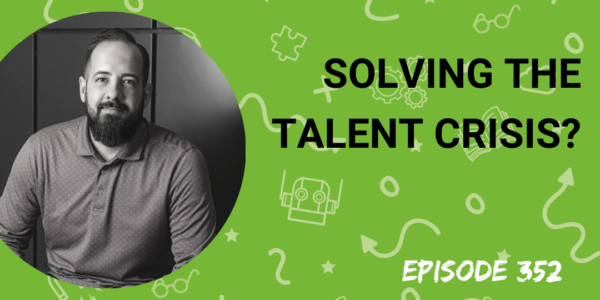
My guest this week is Brandon Batt, Director of People at Savory Restaurant Fund. Savory has several restaurant brands and is being very successful at staffing them despite the current talent market crisis.
In the interview, we discuss:
▪ The current challenges in the hospitality industry
▪ An unprecedented imbalance in supply and demand
▪ The importance of thinking creatively
▪ Focusing on the fundamentals of culture
▪ What is important to employees
▪ Telling employee stories and reflecting the EVP
▪ Equipping employees with the right tools for referrals
▪ Using recruiting technology to its full extent
▪ Thinking outside of the ATS
▪ Communicating with candidates in their chosen channels.
▪ What does the future look like for recruiting?
Listen to this podcast in Apple Podcasts.
Transcript:
Matt Alder [00:00:00]:
Support for this podcast comes From Avature, the AI powered total talent platform trusted by 110 of the Fortune 500 from initial candidate engagement. Through onboarding, talent mobility and performance management, Avature enables organizations to meet their unique needs while delighting and engaging all stakeholders. Just listen to what Nilesh Boote, Director of recruitment at L’Oreal, has to say. The solutions that we have created are so specific to L’Oreal that it just feels like a team sitting outside of L’Oreal and working for us. If you sign up with Avature, it’s for sure signing up with a company with whom you will be really able to design solutions the way you want and also embark on a journey where innovation is at the core. Visit avature.net and discover why global leaders like L’Oreal join use Avature to power their recruiting and talent management strategies.
Matt Alder [00:01:17]:
Hi everyone, this is Matt Alder. Welcome to episode 352 of the Recruiting Future podcast. The challenges for recruiting in hospitality at the moment are unprecedented. Both in the US and the uk, the jobs market has inverted and there are currently many more roles than there are people searching for jobs. The extent of this imbalance has taken the industry by surprise and put many companies on the back foot and struggling to reopen fully. So what can employers do to get the talent they need, not just in the hospitality industry, but also in other sectors where talent is in short supply. My guest this week is Brandon Batt, Director of People at Savory Restaurant Fund. Savory has several restaurant brands and is being very successful at staffing them despite the current talent market crisis. Hi Brandon and welcome back to the podcast.
Brandon Batt [00:02:12]:
Matt, how are you? It’s so great to be back.
Matt Alder [00:02:15]:
An absolute pleasure to have you back on the show. Could you just introduce yourself and tell everyone what you do?
Brandon Batt [00:02:21]:
You. Yeah, absolutely. Name is Brandon Batt. I work with the Savory Restaurant Management Group. We run and have a great time doing it restaurants. So we partner with restaurant founders that have anywhere from three to five units and essentially we plug them into our platform here at the at Savory Management and go from there and we have a lot of fun doing it. My my position director of People operations myself and as well as my team we handle all the hiring here at the platform level or I guess corporate as a lot of people would say. We find that kind of stuffy. So we’re the we call ourselves either the platform or the Restaurant Support center. But yeah, we oversee all of the hiring here at the Restaurant Support center and as well as our restaurants. Right. We’re here to serve all of our general managers and above store leadership and essentially make their lives easier. So we do all the team member hiring, general managers, DMs, district managers.
Matt Alder [00:03:36]:
So all the fun, fantastic stuff. So all around the world, it’s been a challenging time for everyone, but it’s going to be particularly challenging time for, for the hospitality industry now. You know, those challenges have varied by sort of geographical location, but it’s kind of fair to say there’s probably a lot in common. Talk us through the last 12 months from your perspective. What’s been happening? What have the big challenges been?
Brandon Batt [00:04:02]:
Yeah, absolutely. Yeah, it’s. A lot has changed, Matt, since the last time we talked, that is for sure. Yeah, the last 12 months, you know, we, we’ve kind of gone in from one pandemic into, into another, right? The COVID 19 pandemic with a bunch of closures and shoot, you name it. We can go on for, for hours about that. Now we’re, we’re coming out of that and straight into what people are calling, you know, the pandemic of 2021, and that’s the, the war on labor. So we were very fortunate at the beginning of the COVID 19 pandemic to remain open. We didn’t close a restaurant, not even for a single day. And we pivoted. We pivoted very, very quickly. But I think a lot of the praise, Matt, has got to go to our restaurant teams and just how hard they worked for us to, to stay open. But yeah, we were, we were very fortunate to remain open, to remain busy and employ people. We were in a spot where it was actually very easy to hire a lot of concepts, restaurant concepts around us getting shut down and, and people needing work. So we were fortunate enough to remain open and provide opportunity for people, which is kind of the exact opposite right now with this war on labor. Now everybody’s opening back up and yeah, companies all around us need 15, 20, 50 people that they need to get hired up so they can, they can get back to full operations.
Matt Alder [00:06:01]:
It’s been something that I’ve seen more and more commentary on, more and more people talking about and looking at the data literally in the last few, in the, in the last few weeks in terms of an increasing number of jobs, but for whatever reason, people unwilling to fill them or a very, very huge amount of competition for, for, for, for Talent. Tell us more about what you’re seeing happening.
Brandon Batt [00:06:26]:
Yeah, no, I’d love to. And I think that it’s all about perspective. A lot of challenges going on, but necessity is the mother of all invention. So this is a great time to think outside of the box. Right? And it’s. A lot of companies don’t have the option. And just like at the beginning of COVID those that pivot quickly have much greater success. And right now, it’s the. The same thing on this, this war on labor. Who’s gonna, who’s gonna pivot? Who’s gonna think outside of the box? It’s just, I think, Matt, we’re in a great time, and I know that there’s gonna be a lot of people that are listening to this that are probably screaming at me right now, but I am excited. I am so excited to see what’s gonna happen from the recruiting perspective and the recruiting industry and the experts and what they’re gonna do and all the fun ideas that we’re gonna see kind of come about. Right. And I think that a lot of people are marching in the same direction and competing on the hourly rate. Right. I walk down the streets here in Utah and I see now hiring signs on every. In every single window and every single drive through all over. Indeed. And the local, the local news outlets, whether it be radio, old school paper format, or classifieds on the Internet, and they’re all boasting, you know, make up to 16 an hour, every single one of them. And, you know, it’s. It’s all background noise right now. To me, I think it’s. It’s overwhelming the labor market to where nothing’s standing out. So what we’ve tried to do here at Savory and, and with our concepts is to go in a different direction, to stand out. If we try to compete in the, you know, how much we’re going to pay battle, we’re going to lose every single time because there’s always going to be somebody out there that is paying more. Right. If they even see us to begin with, because there’s 100 other restaurant concepts or business concepts having a difficulty hiring right now. So that’s. Even if they even see us, we’re gonna lose that battle. So what we’ve tried to do is really focus on the fundamentals and what makes our restaurant concepts so great, what makes our culture great, what employees are saying and why they’re working for us. Let’s promote those things. Let’s step above and out of the chaos of how much we’re willing to pay and sign on bonuses. And let’s talk about what, what truly matters to the, to the workforce. Right. I think that’s been something that’s really, really been beneficial for our brands. It’s, it’s changing that mindset.
Matt Alder [00:09:51]:
Absolutely. And that makes a, that makes a lot of sense in, in kind of such a competitive, competitive market. You know, standing out is obviously critical. What is important to employees at the moment. You sort of, you men mentioned the culture, you know, all those kind of things, you know, in terms of the employee experience other than hourly rate and sign on bonuses and those kind of things. What’s important to employees in hospitality at the moment?
Brandon Batt [00:10:16]:
Yeah, great question, Matt. And we recently with one of our concepts, we’ve been working on our, our EVP employee value proposition and we’ve polled a lot of our current workforce to see what they’re interested in and we’ve found out that a lot of our current employees want stability. Right. Weird, weird that they would want that with everything that’s been happening. Yeah, they want stability. They want to feel safe, they want to feel a part of something, a part of a team. They want recognition and not necessarily praise. And I think there is a difference between praise and recognition. But yeah, they want recognition, they want a pat on the back, they want to have fun, they don’t want to be stressed. It’s been a stressful time for the, in the entire world this last 12 months. They want, you know, a breath of fresh air, no pun intended. And not, not a single one of them mentioned compensation, mentioned more pay. Not a single one.
Matt Alder [00:11:32]:
And how have you, you sort of mentioned your EVP there. How, how do you sort of reflect all of that in your brand and your marketing and your communications?
Brandon Batt [00:11:41]:
We can get really deep here really quick because it’s, there’s so many intricacies that go into it, right. You see in a lot of places of business or restaurants specifically for, for myself, posters on the wall talking about culture and you know, different company mottos, but it’s so much deeper than that, right? You can’t just have a, a poster on the wall. You’ve got to be living it, right? That general manager has got to be living in every single day, that culture. They’ve got to be talking about it. It’s got to be in the day to day routine of, of the general manager of every single employee. And if it’s not, it’s, it’s not going to work. It’s just going to be a poster on the wall again. Background noise that nobody sees that when you’re getting slammed and there’s 50 people in your queue waiting to be served or waiting for their order to be taken. Those, those posters, you know those, those go to the wayside really, really quick if you’re not living it every single day. And our customers can feel it, the employees can feel it. So it starts, it starts there, right? It starts on the ground level in our restaurants. And it gives such a great opportunity, Matt, to, to promote it, to go into a store and use the happiness of our employees as marketing material, if you will, right? From there, it’s easy. It’s easy to get a quote from a very happy employee after they just got slammed at the lunch rush and for them to just be super excited and to hear it in their voice. And from there, it’s. That’s easy to share, right? Our, our employees, that’s where, that’s where all of our new hires are going to come from. I know it’s cliche, and everybody in the recruiting world talks about it. Referrals, referrals, referrals, referrals make the best type of hires, right? Referrals stay longer, your turnovers lower. But at the end of the day, it met. It’s. It’s that simple. That’s truly what matters. And it’s. How can we, how can we equip our employees with the right tools to go out and do the, the recruiting for us? And it starts with, with living the culture that has been identified in, in each brand, and that’s going to make employees happy, which is going to lead to happier customers, which is going to lead to more sales. And it just, it goes on and on from there.
Matt Alder [00:14:32]:
You were last on the podcast two years ago back in June 2019, and we were talking about recruitment automation, so using technology to automate parts of the recruiting, recruiting process. And we were talking about some work that you’d done a few years before in terms of sort of building automated processes from various bits of software that were around at the time. Things have obviously moved on exponentially in the last two years. When it comes to recruiting technology, how important is recruiting technology to, to. To what you’re doing now in terms of creating a great candidate experience and getting people kind of on board quickly?
Brandon Batt [00:15:10]:
Yeah, it’s. It’s very important. More so now than, than ever. And there are so many different technologies out there now that it’s, it’s almost overwhelming. And at the end of the day, it doesn’t matter which technology you choose as an employer. If it doesn’t matter if you’re not going to really make every last process within that technology work to its fullest. It could be the greatest technology in the world. But if you’re going to only use 50% of it really well, you’re not going to get a lot of value value out of it. But if you can dive in and use every feature the way it’s meant to be used and get creative with it, right, what, how can you make it work within your own processes? Kind of like a transformer, right? How can you connect the two and have it transform into this amazing, this amazing process for your, your company? And I think that a couple years ago I had mentioned the personal touch as well and not losing touch with, you know, an actual voice over the phone or, or in person, right? So how can you create, how can you combine the technology with your processes as well as that human touch? And if you can do all three things right now, that’s where you’re going to win. We try to hit every touch point from the technology and the automation, whether it’s the artificial intelligence chatbots that are speaking with candidates to the phone calls from our general managers and our people operations team here. We especially now, we try to hit every single touch point. So I think that what we’re doing here at Savory is, is working and again it’s, it’s getting super creative. So it’s. So we have companies have their applicant tracking systems, right? Their technology and a lot of companies, that’s all they’re relying on. Well, there are limitations to an applicant tracking system or whatever technology. There always will be. It doesn’t matter in what industry you’re in, whether it’s recruiting, marketing. Right now technology can only do so many things and a lot of people get tunnel visioned into. That’s what I have to use. That’s the only thing I can go through. And if it doesn’t work well or how I want it to work, then I guess we’re just out of luck. It’s the best we can do. So what we do here at Savory on our people operations team and kudos to my team, but they go above and beyond. So we are working within our ATS system and we’re working outside of it as well. So when you’re posting job ads, right, every market’s different. Whether it’s state or city to city, it’s all different. So we’ve done is we’ve posted our jobs within our ATS system, but we’ve also Gone outside of the system as well. So we’re, we’re posting open jobs on Indeed, straight through Indeed. Now, I know the ATS systems, right? They all push to Indeed, right? And everybody knows Indeed. And, you know, the. One of the biggest platforms in the, in the industry. But you’ve got to, you’ve got to go outside that. And if you’re in a spot where you’re fortunate enough to be able to throw some budget at it, there are some really cool features on Indeed for sponsoring job posts that you just can’t get within an ATS system. So we’re going straight to Indeed and posting jobs as well. We’re going straight to Facebook and posting jobs on Facebook jobs as well. As, you know, again, if you are fortunate enough to be able to throw some budget at it and boost those, that’s going to help you significantly as well. We’re going straight to, you know, some of our local classified sources, and then we’re, we’re using our, our employees as well. So it starts with, you know, you got to throw out, you got to cast a wide enough net. You’ve got to get creative. You got to kind of live outside of your ATS system a little bit. You can get creative in different kind of ways. And you know what’s going to work in your specific scenario or instance. And then from there, it’s all about hitting every single touch point. So if you’re posting straight to Indeed or through your ATS system or through Facebook, we’re using every resource that we have. So we’re having our, our technology that’s reaching out automatically reach out to the candidate. We’re reaching out to our, our candidates through, if it’s a Facebook job, through Facebook messenger. If it’s on Indeed, we’re reaching out through Indeed’s technology. We’re texting people ourselves. We’re having our general managers call people. We are sending out confirmations. Right. Your interviews coming up. We are literally hitting every single touch point because everybody’s different, right? All of the candidates, they’re in different places in their lives. Some are good with email, some are good with text, some are bad at up. All of it just don’t communicate at all. So the more touch points we can hit, the more, you know, there’s a better likelihood that we are going to get in contact with this candidate, and we’re going to find whatever means of communication that they communicate best through, and we’re going to, we’re going to use it. We aren’t going to leave. We’re not leaving anything to chance right now. And is it more work on. On my team and our general managers? Yeah, absolutely it is. But we’re having really good success.
Matt Alder [00:21:53]:
As a final question, you talked earlier about the potentially really exciting future for recruiting in terms of innovating to solve the challenges that we have now. And increasingly the spotlight fall on recruiting in terms of solving big challenges for organizations. Well, what do you think the future looks like? Where do you think we’re going to be in sort of 18 months, two years time?
Brandon Batt [00:22:17]:
The whole recruiting industry, we’re in the spotlights right now. Right. It’s no better time than right now to. To perform. Right. The stage has been set. And as a whole, as an industry, if we can perform and get creative and create new systems and processes right now, it’s only going to set the entire industry up for the future. For the next 12 to 18 months, I can see the recruiting landscape being completely different. I think there will be a lot more than there are now, believe it or not, recruiting firms. And I think that a lot of companies that haven’t had a specific recruiting division within the overall structure of that company, I think that we’re going to see a lot of these employers create these specific divisions for recruiting. Right. It’s not going to kind of be an afterthought or when we need to hire somebody, we’ll worry about that then. Yeah, this is the perfect stage for, for us in the recruiting industry, that’s only going to set us up for success. It’s going to create more opportunity within the human capital sphere of things. Recruiting, at least from my experience, has been a stepping stone for a lot of individuals within the human capital world. And now that the spotlight is Ana, all of the, the hiring. Right, and all the recruiting managers and recruiting recruiters, excuse me, out there. I don’t think in next 12 to 18 months in the human capital world that being a recruiter is going to, you know, it’s not going to necessarily be a stepping stone anymore onto, you know, deeper roles within the human capital world. It’s going to be a home for a lot of people. This is a great opportunity just to show how fun it is to be a recruiter.
Matt Alder [00:24:22]:
Matt, Brendan, thank you very much for talking to me.
Brandon Batt [00:24:25]:
Thank you, Matt. It’s been great.
Matt Alder [00:24:27]:
My thanks to Brandon. You can subscribe to this podcast in Apple Podcasts on Spotify or via your podcasting app of choice. Please also follow the show on Instagram. You can find us by searching for recruiting future. You can search through all the past episodes@recruitingfuture.com on that site. You can also subscribe to the mailing list to get the inside track about everything that’s coming up on the show. Thanks very much for listening. I’ll be back next time, and I hope you’ll join me.