Gartner Research predicts that by 2020 75% of business will be a digital business or preparing to become one. Digital Transformation is the number one priority for many CEOs and I think it is crucial that HR and Recruiting positions themselves to be key drivers in this business revolution. The companies who can attract and retain the right talent at the right time in the right way are going to be the ones who win the race
Governments tend to have terrible track records when it comes to technology and the UK government is no exception. However in recent years The Government Digital Service has managed to break the mould and make some fantastic progress with the digital transformation of many core UK Government services.
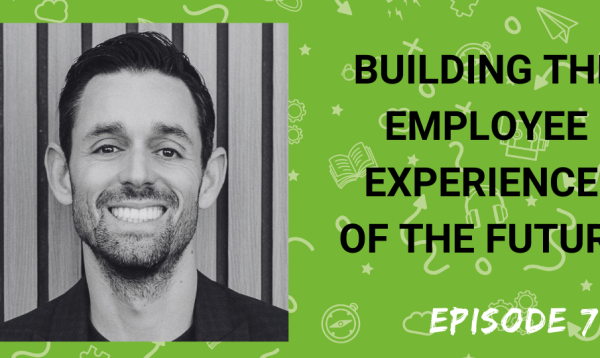
My guest this week is Zeshaan Shamsi who is now Head of Talent Acquisition at background check company Onfido. Previous to this he was Head of Recruitment for the Government Digital Service and his experience there is the main focus of our conversation.
In the interview we discuss:
• The background to the Government Digital Service, how it came about and what it is tasked with doing
• The benefits of challenging the status quo and questioning everything especially entrenched recruiting processes
• Honest open communication and why it is so important in driving change
• The importance of data driven approaches to recruitment
• Cool tools and silver bullets
ZeShaan also tells us why he can’t predict the future and shares his frank opinions on “celebrity” recruitment gurus!
Subscribe to this podcast in iTunes
Transcript:
Matt Alder [00:00:00]:
Support for this podcast comes from Guardian Jobs. Guardian Jobs provides a range of recruitment and branding solutions with access to a monthly audience of 149 million users. They offer a range of innovative talent attraction and content options, ranging from the latest programmatic and behavioral targeting to developing content partnerships on themes such as the future of work and women in tech for organizations like Deloitte and Sky. To find out how they can help you, visit recruiters.theguardian.com that’s recruiters.theguardian.Com
Matt Alder [00:00:57]:
Hi everyone, this is Matt Alder. Welcome to episode 51 of the Recruiting Future podcast. Gartner Research predicts that by 2020, 75% of businesses will be a digital business or preparing to become one. Digital transformation is the number one priority for many CEOs, and personally, I think it’s crucial that HR and recruiting position themselves as key drivers in this business revolution. The companies who can attract and retain the right talent at the right time in the right way are going to be the ones who win the race. Governments tend to have a terrible track record when it comes to technology and the UK government is no exception. However, in recent years, the Government digital service has managed to break the mould and make some fantastic progress with the digital transformation of many core UK government services. My guest this week is Zeeshan Shamsi, who is now head of talent acquisition at background checking company or Fino. Previous to this, though, he was head of recruitment for the Government Digital service and his experience there is the main focus of our conversation. Hi Zeesh and welcome to the podcast.
Zeeshan Shamsi [00:02:14]:
Hi Matt, how are you?
Matt Alder [00:02:15]:
Very good, very good. It’s a very wet, rainy Monday in Scotland. I’m hoping the weather’s better where you are.
Zeeshan Shamsi [00:02:22]:
It’s yeah, nice. Nice spring day here in London.
Matt Alder [00:02:25]:
So yeah, good, you’re more than lucky. So could you sort of introduce yourself and tell us a bit about who you are and what you do?
Zeeshan Shamsi [00:02:34]:
Yeah, sure. So my name is Zeeshan Shamsi. I’m a recruiter. My background off the university, I started off in agency recruitment, spent about about three years there working doing developers and tech, initially into the investment banking industry and then to kind of wider tech. Then I moved in house to the BBC, spent four years there as a recruiter and then kind of progressed my way up to kind of heading up recruitment for what was known at the time as the BBC Future Media department. And then after, as I Said about four years there. I left to join the Cabinet Office and the government digital service to kind of lead on recruitment there and yeah, spent two wonderful years there and about to start my new job as head of talent acquisition at OnFeedo, which I’m really looking forward to as well. So, yeah, that’s me in a nutshell.
Matt Alder [00:03:31]:
Fantastic. Now I think you’re actually starting at On Video tomorrow. So I want to come back and talk about digital and digital transformation in the government and the civil service. But before we do, can you just give us a quick overview about who On Video are and what you can be doing for them?
Zeeshan Shamsi [00:03:47]:
Yeah. So OnFeedo are a company which have automated do background checks and they’ve got. Where they stand out is their product. Basically you can do a lot of these background checks which you need to do for either candidates or for people that use kind of shared economy, things like Deliveroo or things like that online. And that’s where it stands out from a lot of other organizations and other kind of background check processes in the government. It takes about six to eight weeks for us to do background checks and obviously that takes. That adds to the end in terms of the length of the time to hire as well. So when I saw a product that could basically solve that problem and shorten the timescale it took, I was particularly impressed. And then when they reached out saying that they’re looking for somebody to come in and join us, the head of Talent Acquisition, we started the conversation and it’s kind of gone from there as well. So, yeah, they do bits and pieces there as well as with the. In the banking industry with Know your Customer and Anti money laundering as well. So, yeah, so I think they’re about four years old now and so they’re about to grow and develop in London, Lisbon and San Francisco. And I’ve come to join them, to help them do that. So really excited to look forward to it.
Matt Alder [00:05:06]:
Great stuff. So. So just sort of delving back into your past a little bit. I mean, I think one of the things that I’m particularly interested in, I know that there’s a lot of talk about this at the moment, is digital transformation. How organizations are going through digital transformation and what the implications are for HR and recruitment. Now, you’ve obviously worked in the public sector for two organizations that are sort of, I suppose, held up to great acclaim for being able to do this. Well, what was your experience? What does digital transformation look like in the public sector?
Zeeshan Shamsi [00:05:46]:
You’re right. I mean, it’s currently a hot topic as well. I think certainly in the BBC, it was a little bit more kind of the wheels already in motion and with things like iplayer and other products already being digital, it was, as I said, the wheels were already in motion in the government. I joined in the beginning February 4, 2014. So GDS had already kind of started the work as well. I think it’s an interesting time in government. Digital transformation, I said, is important. And the thing about the civil service is because it as a whole had been outsourced for so long, it’s a mentality, in a way, and an approach of problem solving which is new to government. But I think as difficult as it is, I think there is a lot of appetite. There’s a lot of fantastic people, not just in gds, but all throughout government that have been brought in or have actually been in government for a while as civil servants themselves that are kind of already either a know and understand the benefits of kind of digital and using, using that to build services which focus on the user need. But, but also the challenges, I guess, with anything like an organization like the civil service, which is so vast and so much so complex in many respects, it’s almost the changing of mentality. You have to constantly challenge the status quo because with all due respect to ex colleagues there, some of them don’t know any different. So people by nature are apprehensive to change. And if you go in and you want to change the way people have worked for not just one or two years, but decades potentially, in some examples, people are naturally apprehensive. So it’s almost the challenge is education to actually, you know, for want of a less cheesy phrase, for to take people on that journey with you to show them the benefits and then not only just that, but show them how they can be part of that, that situation, that, that transformation, that journey, for want of a better word, because otherwise, you know, sometimes you can go in and actually just say, right, this is what it’s going to look like and we’re going to basically change the way you do everything. And then people are scared because they don’t see how they fit into it. So that was one of the biggest challenges. And sometimes you see it working well and sometimes you see it not working so well. But as we, you know, I believe recruitment is fairly simple. It’s just talking with people, it’s talking to people, it’s having conversations. And it’s the same with any walk of life. It’s almost just being proactive in your communication and, and people like to be involved in that conversation rather than being talked to or talked at. So I think that’s something that government could always be better at. But that’s every industry, every organization, every hr, every recruiter could be better at just by being a little bit more kind of open and forthright with communication and just by being honest with people. I think everyone makes mistakes, but holding your hands up and admitting to those mistakes and learning from them can, you know, is something that gets you a lot of credibility and gives you a bit more kind of leeway to a certain extent. So probably not the technical answer in terms of what’s happening in terms of digital transformation, but that’s from my perspective, kind of what I saw and kind of my experience of it.
Matt Alder [00:09:22]:
No, that’s great. I mean that’s exactly what I was interested in. The really the sort of the people side and the culture side. I just want to talk about the recruitment bit in a second, but before we do, I’m just conscious that there’s probably quite a few people listening to the podcast who won’t know what the government digital service actually does. Could you just give us like a very quick overview of, you know, what the services are and what they’re actually trying to do?
Zeeshan Shamsi [00:09:45]:
Right, okay. So GDS started about 2000, about four or five years ago now the remit was to essentially it was started from a paper that was written by Martha Lane Fox Revolution or Evolution. And in a nutshell what it said was government services were really complex. If you wanted to use a government service, you needed to understand how government works. You know, all the different departments and arms and bodies and all of that. Well, you shouldn’t really have to understand how the state works. The mentality being shifted away from what the government wants and needs to actually what the user needs. So GDS was set up to do kind of three main, kind of keystone parts essentially, or how to describe it. First was kind of transition. It was to move everything to a single domain where you could go and trust the information that was being given to you because you know, there’s 20 plus different departments, arms and bodies etc, etc and each of them had their own website, their own style, their own format, their own tone, their own language. So to get it into one consistent place. So that’s what ended up being the Gov UK alpha and that’s progressed to an award winning platform. The second part was kind of transformation. So what GDS decided to do with government is to pick the top 25 highest transaction relationships that users and by users. I mean citizens and people that do business in the UK companies, people that travel here for business or for holidays. So essentially at any given point, I guess half the world that they interact with government and to almost use those 25 as what we called them at the time, exemplars, some of them were very successful, some of them not so much. But it was the learning that came back out from them. And the third bit was kind of the digital engagement and inclusion. So making services which are faster, easier, simpler for users to use. But then also you’ve got to realize that not everyone has access to WI fi and to the Internet. Not everyone is digital savvy or literate. And so how do you, their users and citizens too, how do you give those people access and the ability to use those services as well? So that’s why government started, GDS started. That was kind of our phase one. Phase two is kind of being mapped out now and the business plans and the strategy and whatnot will be announced directly by GDS and Cabinet Office, etc. Soon. So probably best to keep an eye on that rather than me actually spouting what that might be and look like. But in a nutshell, it’s going to be a more collaborative approach with government departments and yeah, all in together to a certain extent.
Matt Alder [00:12:38]:
I think some of the outputs are very, very impressive indeed. Having just had to change my driving license address online, I couldn’t believe how easy it was to do.
Zeeshan Shamsi [00:12:47]:
Yeah, props to the teams working on that as well. So that’s in collaboration with the dvla. So obviously it’s not something that GDS owns or control. That’s something that that particular department and the Department for Transport as well. So it’s collaboration and using kind of service design standards that makes basically users like yourself just say that it was so easy to do. Actually, why can’t all services be that easy? Whether it’s your tax returns, whether it’s, you know, paying for any sort of service or getting a refund from government, etc. So that’s the, that’s the kind of the MO of actually people like you, people like me saying that, oh, actually that was really easy. That was really simple. That was really fast to do. That’s it, job done.
Matt Alder [00:13:32]:
Now, having. Having worked in digital for quite some time, I know just how difficult simplicity is to achieve, particularly when you’re in a, an organization like the government. And you know, I can only begin to imagine the, the stakeholders and the processes and all that sort of stuff in that context and also in the Context of the skill shortages that the market. What were the recruitment challenges that you kind of face getting digital talent into the organization?
Zeeshan Shamsi [00:14:03]:
Well, I mean, when I joined gds, I joined without a particular. I didn’t actually have a, you know, a bonafide role that said, this is your job to come and do this. So I met with Rebecca Ramsey, who was the, you know, heading up something called the Recruitment Hub. And in a nutshell, we had the conversation. He said, look, I don’t know what the role is, but I know I need somebody with your skills and experience. So I joined and you know, GDS had and still does have a very, very attractive brand. Because what we’re trying to achieve, I still say we, what we’re trying to achieve is everything we’ve just discussed. And a lot of people can see the value and the interest in that. So that was a big win. There didn’t need to be a lot of work around building that employer brand to a certain extent. What we did do at the time though was we just automatically inherited the Cabinet Office and the civil service kind of recruitment methodologies. And so this was the biggest challenge because we’re doing all this innovative digital transformation work around all these great products and services. But when it came to kind of the HR element, the people based bit, the things that you actually can build your organization on, nobody even looked at it. It was just like, yeah, okay, we accept the status quo. That’s how we have to do recruitment. So when I was doing my discovery of kind of piecing together what recruitment actually looks like, you know, the end to end process with hiring managers, I said, you know, okay, so you’ve got a vacancy to fill. What do you do? And you know, had to join up, you know, the breadcrumbs and you know, put together the kind of the service design as it was. A lot of people say, these are the rules, this is what we have to do. And you know, we have to do this, we have to do that, we have to advertise for this long, we have to do. And so I said, okay, fine. But I guess the biggest win or the best thing that I did was I questioned everything, just said, why? And so people say, oh, that’s the rules. And so the thing was, the next question I asked was, okay, where does it say that? And then I said, they’re like, what do you mean? I said, where does it say that? Show me where it’s written down that that is the rule. Because if that’s what’s written down, fine, that’s the rule. But nobody could point at anything, nobody could point at any sort of writing or policy, policy or legislation that said that was the rule. And that was almost like the biggest win where people have been doing this it for so long, they’d accepted it as that’s the way to do it and by proxy accepted it. That’s the only way to do it. So I went and challenged that and all we could have, all I could really find that people could point to was the recruitment, the civil service recruitment principles, which are fair, open and on merit. And then so I took that to our commissioner at the time and I said, look, you know, looked at our recruitment process and it was competency based application forms and people were spending all this time writing about competencies. And I remember speaking to Ben Terett briefly in one of my first few days. He was the director of Design at GDS at the time. He just come out of an interview for a designer and he said, you know, the candidate scored really well in the competencies but hadn’t got any design experience, not a single day’s design experience. So it was a flawed process because it was asking for evidence of competencies but not actually asking for evidence of any of the skills. So I believe that, you know, competencies are behaviors and how you do things, but it’s all well and good of how you do things, but if you don’t have the what as in the actual skill, in this case, the design experience, then it doesn’t matter how you do the what and how, if that kind of makes sense. So, you know, I’m looking at things like it’s not revolutionary for the recruitment industry, but moving to CV based applications, you know, just upload your cv, do a simple statement of suitability. And you know, I proposed this to our commissioner and the commissioner said, yeah, well why are you not doing this already? And that for me at that moment was a big win because, you know, the commissioner said, look, you understand your business better than we do. As long as you’re fair, as in, you know, your recruitment process is fair. Everyone goes through the same process, it’s open. Anyone who wants to apply to can. And then you point on merit the best candidate for the role, then yeah, we’re fine with that. So that was a big win. And you know, I didn’t do anything revolutionary, I didn’t do anything groundbreaking, but all I did was, was challenged the status quo and actually looked at recruitment and challenged bits and pieces. So, you know, we started the journey and that there’s a team now at gds that will continue to do that and then looking to share those learnings and that with the rest of the civil service as well. Because it’s not just GDS that are looking to recruit, it’s the whole of the civil service that are looking for digital and tech and data specialists as well to continue the great work.
Matt Alder [00:18:51]:
Really, really interesting. I mean that kind of challenging the way things that have always done. I mean that to me is kind of the core of making digital transformation work in kind of big established organizations. Just kind of broadening out slightly. I just wanted to get your thoughts on as an in house recruiter. He’s been doing this for, been doing this for a while. What have you seen change about recruitment in the last few years?
Zeeshan Shamsi [00:19:25]:
There’s so many tools and tools available to recruiters. I think people have started to respect and value the role of a recruiter and the value that they can add to an organization in terms of an in house role. So there’s so many amazing products which have either been developed or being developed that can help organizations actually understand who they are, but then also understand the market. So it’s a very, very interesting time. I mean, but you know, I’ve listened to a lot of your previous podcasts and Matt Buckland of Twitter and BBC fame came out and he said something which, which kind of stuck with me about, you know, as recruiters or kind of generalist HR people, we like to almost oh, look at the shiny, shiny. Oh, this is a new tool that’s going to solve all of our problems, I don’t think. You know, a lot of tools kind of market themselves as this to solve all your problems. There’s no silver bullet, you know, there’s nothing that’s going to basically automate and fix everything for you. It’s about picking the tools and the products that can actually help you do bits of your role better. So that’s what I’ve seen. You know, there’s a lot of things and I think Matt mentioned this as well. LinkedIn bashing. I’m a big fan of LinkedIn as a product because it’s actually got you. It’s an access to a database or connections globally. And as I said earlier, I think recruitment is just about having. Recruitment is quite simple. It’s as I said, having conversations with people and then tools like LinkedIn and whatnot are just something to enable that conversation. So I think that there’s a lot of products out there, you know, a lot of ATS is that are going to help you automate the parts of your job as a recruiter which you don’t like doing, you know, scheduling interviews or you know, automating feedback notes and bits and pieces like that. I mean those tools are just basically going to help everyone just cut out the time when you’re doing admin. So those are really important. But I think we need to be a little bit more apprehensive and skeptical about people that are going to sell you products that say, do this. We’ve got an algorithm that’s going to basically find you all the Ruby developers in the world and they’re only going to work with you. I’ll take that with a pinch of salt. Nothing beats hard work as a recruiter and nothing beats having those connections and talking with and to people. Good old recommendations and referrals really. So, yeah, interesting times in the tech space in recruitment.
Matt Alder [00:21:59]:
Yeah, it’s a kind of interesting sort of dichotomy between humans and tools and technologies. And there’s obviously a lot of debate, you know, a lot of quite passionate debate about how this, how this all works and what’s really sort of providing value and what’s just a red herring or you know, sort of vaporware, basically. Final question. So you know, where are we going next? What are you looking forward to seeing happen in recruitment over the next 12 to 18 months?
Zeeshan Shamsi [00:22:33]:
I don’t know if I can answer that, Matt. I don’t know what the future holds. I’m not, I don’t, I don’t think I can predict it. I just think one thing that I, one kind of curve that I’ve seen more and one thing that I’m really excited to, to do at Onfido is the data driven approach to recruitment. I think that’s going to hold. There’s going to be a lot of development in that space to a certain extent because you can use a lot of companies, oh, time to hire and cost to hire. It’s about kind of stepping back and actually saying actually what information is important to us as an organization, what do we want to know? And then I guess looking upon the industry, what are different organizations setting themselves in terms of data metrics and data points to measure themselves and see whether we as a recruitment industry can have some standardized data points and then use data as it should be, not just to make reports and send them out to your senior leadership team. And they go, yes, we’ve got mi, we do mi, but actually use those to make actual future strategic decisions. To say, actually this worked for us, this didn’t work for Us not just take that as gospel to actually why did this work for us? Can we use, is there anything that we can spot in the data to help kind of escalate that and say actually we should do more of that? And this is why it worked and this is why it didn’t work and use those kind of test hypotheses. Another thing that I’m excited to do at on Fido is companies create all these amazing different products but we don’t look at kind of recruitment and HR as a product as well. So I’m looking to, I don’t know how I’m going to do it yet, but looking to introduce recruitment as a product and you know, use hypotheses and user stories and testing and learning and applying agile and lean methodologies to recruitment to see if we can kind of make it better as well. And on FIDO have been very open to that and excited to see where we can go with that. So that’s what I’m going to do. I’m not pretending I’m a thought leader or industry leader and know where the whole industry as a whole is going to go in 12 to 18 months. I think anyone that tries to say that is looking for kind of speaker slots at conferences and looking for attention on their blogs. I don’t think anyone knows, I don’t think anyone can confidently shape the direction of a whole industry and I think it’s only the people that do it that are actually doing the day to day recruitment that can actually help shape where it goes rather than people that are talking on soapboxes about what the industry might or might not do. With all due respect to them, a lot of people that I see talking along the kind of recruitment HR circuits are people that had done recruitment a number of years ago but are not, with all due respect to them, that relevant anymore because when was the last time they filled the vacancy? So I think it’s people like people that are hands on that can shape the future. And from what I’m seeing from the people that talk to in the DBR group, which is a network of in house recruiters, it’s about data driven recruitment and recruitment not just being the responsibility of the recruitment team, recruitment being the responsibility of an organization because everyone wants to work with good people, everyone wants to have the best people working with them and for the organisation to grow and develop. So why should that be the responsibility of, you know, one or two or people or one or two teams? It should be everyone’s responsibility. Yes. Led by the recruiters, but everyone plays their part in it. And yeah, onfeedo really give me that confidence that they’re looking to do that as well. So yeah, excited. That’s the reason why I’m joining them.
Matt Alder [00:26:19]:
Well, I look forward to following your progress and seeing how you get on. Zeesh, thanks very much for talking to me.
Zeeshan Shamsi [00:26:26]:
Cheers, Matt, Pleasure.
Matt Alder [00:26:28]:
My thanks to Zeeshan. You can subscribe to this podcast on itunes and on Stitcher. You can find all the past episodes of the show at www.rfpodcast.com and on that site you can subscribe to the mailing list and find out more about working with me. Thanks very much for listening. I’ll be back next week and I hope you’ll join me.