When industry commentators write and speak about talent acquisition, there is a tendency towards generalized truisms that seemingly apply to all employers. The actual truth is much more nuanced and there are distinct differences in the reality of talent acquisition both between industries and between SMEs and large enterprises.
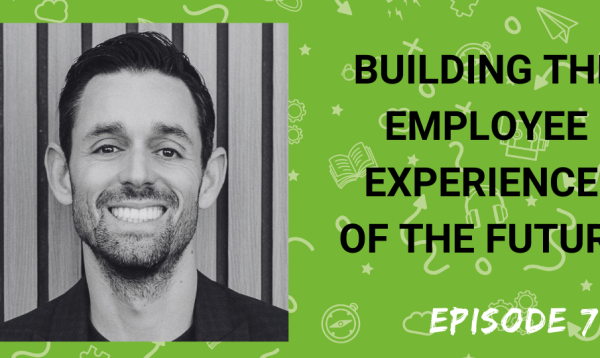
My guest for this episode is David Mason. David has worked at a senior level driving talent acquisition innovation at a number of very large corporates in some progressive industry sectors.
In the interview we discuss:
• Three key things that have changed in Talent Acquisition over the last five years
• Which industries are driving innovation and why
• The problems large corporates have with embracing new technology
• Where Talent Acquisition leaders should focus in order to drive change
David also gives us his views on the future and the role he sees being played by “Applied Artificial Intelligence” in recruiting.
Subscribe to the podcast in iTunes

Transcript:
Matt Alder [00:00:00]:
Support for this podcast comes from Guardian Jobs. Guardian Jobs provides a range of recruitment and branding solutions with access to a monthly audience of 149 million users. They offer a range of innovative talent attraction and content options, ranging from the latest programmatic and behavioral targeting to developing content partnerships on themes such as the future of work and women in tech for organizations like like Deloitte and Sky. To find out how they can help you, visit recruiters.theguardian.com that’s recruiters.theguardian.Com.
Matt Alder [00:00:57]:
Hi everyone, this is Matt Alder. Welcome to episode 49 of the Recruiting Future podcast. When industry commentators talk about in house talent acquisition, there’s a tendency towards generalized truisms that seemingly apply to all employers. The actual truth is much more nuanced and there is a real distinct difference between industries and in particular between SMEs and large enterprises. My guest this week is David Mason. David has worked at a senior level, driving innovation in talent acquisition, a number of very large companies in some progressive industry sectors. Keep listening to hear his thoughts on how talent acquisition has changed and where it’s likely to go in the future.
Matt Alder [00:01:44]:
Hi David, and welcome to the podcast.
David Mason [00:01:47]:
Thank you very much.
Matt Alder [00:01:48]:
So could you introduce yourself and tell everyone a little bit about who you are, what you do and what you’ve done?
David Mason [00:01:55]:
Yes, I’ll keep that very brief. I have been in talent acquisition and resourcing for the last 20 years. I spent the first 10 years of my life in the army and then the last 20 years has been focused in principally three different industries, IT, engineering and financial services. And my background is really nowadays running large scale talent acquisition and talent management operations. Quite focused at restructuring, change management and really trying to bring best practice into what we do as a profession.
Matt Alder [00:02:32]:
And I think I first met you when you were sort of doing working for the engineering company, sort of five or six years ago now, maybe even longer. How, how have you seen recruitment and resourcing change over, over the last five years?
David Mason [00:02:49]:
So it’s a good question. I think there are three clear areas. One is one of greater professionalism. And what I mean by that is people getting into the science of recruitment and talent acquisition, understanding how it works and some of the component parts. So in all facets, from recruiters up to leaders in the profession, getting a lot more professional, none of these conversations would go without a mention of technology. It’s having a huge impact out of all the HR functions, resourcing and talent acquisition is one of them that has been mostly affected by what has been going on in the world of technology, whether it be social media, whether it be applied artificial intelligence, and also everything that’s going on in the world of marketing. So big, big impacts for us there. I think the third place is then in some the more leading companies, talent acquisition, talent management really starting to become the fore of what companies are doing. There’s been a lot of talk and it has been a lot of talk around about people being at the heart of what we do, recruitment being vital for organizations to move forward. Some companies are now starting to live and breathe that. And I think that’s been a very welcome change over the last five years.
Matt Alder [00:04:14]:
And has the change been consistent across industries? Do you think certain industries are doing things differently or ahead of other areas of the market?
David Mason [00:04:26]:
No, I don’t believe it to be consistent in any shape for us. And I think three things I mentioned are probably held within a small group of 10% of the leading companies, maybe 20 if I was being generous and I have no way to substantiate that. And I think the industries I would pick out where I’ve seen some notable success are areas like IT technology, engineering and maybe pharma and pharmaceutical. Why? Because they have immense pressures on their talent pools. They are short of qualified people to do their work. And those industries are expensive, expanding or at the forefront of some areas in terms of technology or how we live. And as a consequence they find it very difficult to find the right people. It’s also absolutely fundamental. It’s very easy in those organizations to identify the key talent you need to succeed. And it’s a very, very easy line to draw that all to the bottom line from a commercial perspective.
Matt Alder [00:05:31]:
I think that’s interesting. And I on the podcast I’ve talked to lots of heads of resourcing in technology companies who are doing some kind of amazing things because of the skill shortages they have. I also sort of talk to people in other industries who are kind of really struggling to make the kind of changes and reap the sort of benefits that we’re talking about. What would your advice be to someone who is sort of running talent acquisition or resourcing in an industry that isn’t cutting edge in terms of how they could make the most of the technology, the difference in approaches to get the best talent for their business?
David Mason [00:06:15]:
Yeah, again, I’m trying to keep this to three good pieces of advice. One would be get a strategy and what I mean by that is really engaging stakeholders. Don’t become somebody who is reacting to events. Gauge your stakeholders and start to build a clear roadmap in terms of that. If you’re just responding to the bright ideas from senior people, that’s all that’s ever going to happen and you’ll have nothing consistent or platform to build from in terms of that. So that’s one layer I think absolutely tied into. That third area is really around about stakeholder engagement and getting close to the business and your key HR stakeholders and almost wrapping them up into a virtual team and treating them as such. Because without their support and engagement, you’re going to find it really very difficult to prosecute anything. And also by gaining the confidence, you’re able to start pushing the boundaries. If you start doing that from ground zero without that political buying, you’re going to find it tremendously difficult in the organization to push forward innovation. I think the final point which underpins all of those, both the strategy and stakeholder is getting to and being very, very close to the business driver. And for me it’s understanding what is important to the success of the business. I work for Ch Tim Hill. When the first time we met and they had a little book called the Little Yellow Book was all about the culture of the organization and what was important to it and it ran throughout the whole of Ch tune Hill. One of the things it said was if you. I’m not sure I’m quoting this exactly right, but basically if you put all of the executive leadership under a bus, the company would soldier on for a month or two. If you wiped out all the program and project managers, it would stop trading the next day. And it became very, very clear from a talent management and talent acquisition point what was the really important thing to focus on. Even to the point that Ch Tim Hill would take somebody off the board of the company, the main board and then they would put him into a major program. So they did that when they were doing the Olympics build. They took somebody from the board and they put them in to be the program director of that. That sent a very, very powerful signal not only to the customers but also to the industry and everybody inside the organization around about what was important. So I come back to those three points. Be very, very clear on how your business generates money and what are the key positions. Because if you can crack that as a recruiter, then you’re going to get the buy in to your stakeholders both in HR and in the business and then be very, very clear on the strategy because it’s also a very good way to engage everybody about the journey you’ve got to take them on.
Matt Alder [00:09:25]:
You mentioned technology as being one of the sort of most important things that’s driven change. What aspects of technology in particular do you think are the most interesting? People should pay the most attention to what’s being the most disruptive element of that.
David Mason [00:09:45]:
Okay, so I’ll talk about what I think I’ve seen the most disruptive over the last five years. And I think then the next piece we’ll talk about is what I think is going to disrupt certainly our work over the next five to 10 years. Without a shadow of doubt, for me that has been social media. But if we cut through the hype that what has been for me the most fascinating is our ability to identify the right people to talk to very, very quickly. And whether that’s on Facebook or whether that is on LinkedIn or other sort of platforms, what it’s enabled us to do is to strike up the right conversation. So when I started in this 20 years ago, you know, a leading edge practice was slapping out an advertisement in the Sunday Times or Computer Weekly or whatever it has to be. And you get hundreds of responses and you sift through that. What’s changed for us is the ability to identify 10 people that we can talk to right away who fit that profile because we can identify it from their Facebook profile or we can identify it from their LinkedIn profile and we can engage in a conversation very, very quickly. So for me that has been a major disruptor because it’s allowed us to grow the in house functions, the RPOs as probably a or one of those potential streams of ways of doing things besides just using an agency in terms of the future. I think the thing that has my attention at the moment is what I call applied artificial intelligence and for a number of reasons. First of all, the ability to genuinely start automating some of the work that we do and whether that be searching for candidates across multiple sources or whatever it happens to be. And I think that will start to have an impact on that. There’s a piece of work being done by McKinsey and a number of the large scale consultancies. But they are predicting that not that whole scale jobs will disappear, but that about a third of the content that we’re doing today will disappear. And I think that that’s very relevant for recruiting. I think the other areas that it will impact is on smarter marketing and targeting, particularly as we get into recruiting the millennial population, because they are a Generation very used to being marketed at and operating in that sort of environment. I think the other area which is of huge interest at the moment is really about how it’s being applied in selection and the use of psychometric tools. But then really starting to, because we can do better analysis and we can use artificial intelligence to screen through those results, starting to get better matches into organizations and better fits into roles. And I think that will become very, very, very powerful over the next few.
Matt Alder [00:12:52]:
Years and sort of, I suppose carrying on from that, on the podcast a couple of weeks back I was talking to Ian from Cisco. He was talking about sort of predictive analytics around talent. How important do you think analytics are and how are they going to develop over the next sort of 18 months, two years?
David Mason [00:13:17]:
Yeah, I think with all the things, I think they come into the very, very useful tool if used correctly. And, and I think it’s going to be hugely important. But I think there are also some significant barriers to the implementation of it. So let’s talk about the positives first of all at a senior level in terms of talent and I mean in much broader things, not just the talent acquisition, resourcing piece, the ability to predict attrition, to predict structures of organizations and what you will need to do that will be hugely influential in terms of our roles over the next 10, 20 years. And I think it will become much, much more common use and certainly in the leading ed organizations predict what they need in the workforce, build scenarios very, very quickly and do the sort of what ifs and the predictive side of it. So I agree with that comment. I think it’s extremely powerful and I think it will be certainly become one of the best practice ways of working as we work our way through the technology. I think some of the challenges that we face around that is first of all, we’re at the early stages of adopting and using that technology with all the pitfalls that come with that. And the second element, and I think this is more crucial, is that one of the things I’ve observed is the ability of senior leadership, both HR and commercial, to absorb technology changes is getting less and less. So if you look at what’s available in the world of apps and probably to small businesses and SMEs and perhaps how they can trade and what’s happening in large corporates, there’s starting to be quite a disparity because the large corporates can’t absorb that technology or can’t really see the value or don’t have access to it. It’s not in the way that they operate. And I think that’s going to be a fundamental break on some of this technology being adopted. Understanding AI requires some understanding of mathematics and reasonably advanced mathematics. And that’s not always a skill set that’s hugely in place in a lot of HR departments.
Matt Alder [00:15:41]:
That’s interesting I think, because, you know, my personal experience is when I’ve, when I’ve worked with smaller organizations, it’s been a lot easier for them to adopt new technology than some of the larger organizations giving them an advantage. Is that something that’s going to be solved, do you think? Is it inevitably going to change? What might it sort of look like, you know, a few years down the track?
David Mason [00:16:11]:
I’m not sure. I’m not entirely hopeful of that because I think if you operate in large organizations there is a very strong, I almost say paranoia, but it’s probably justified in terms of, around security and particularly web security. And they find it very, very difficult to get over that point in terms of adapting and balancing risk. So if you take a tool like slack.com which, if you’re running a small business or you’re running a medium sized enterprise would be a fantastic tool and there’s a couple of collaboration tools that has the sheer procurement process or bring that inside or onto platforms or actually melding that into a large corporate process would be fairly prohibitive in terms of that and would build significant cost into the platform. So I think that is not necessarily going to be solved by companies being in the current structure. I think as we go forward, companies are starting to find out that they need to be much more fluid in reaction to the marketplace. And only when that starts to break down some of the traditional hierarchical structures will we start to see that technology perhaps having a faster adoption in larger corporates.
Matt Alder [00:17:45]:
So final question. You’ve talked about applied artificial intelligence and automation and I think that, you know, just looking at, you know, looking across all industries, that there is an inevitability about the take up of the growth of that. Where, where do the humans fit in as far as recruiting’s concerned? Could you ever replace all of a recruiter with an algorithm?
David Mason [00:18:12]:
No, I think actually, and it’s interesting, I was involved in a couple of conversations over the last few weeks about this. I think there is a drive back to human contact. Certainly in my mind what I have is a vision of recruiters and talent acquisition consultants having a focus on working with the line manager and the key sort of candidates for a role and possibly where appropriate, some keep warm activities, whether it’s with a sourcing function or with a recruiter for high value candidates to those organisations. I think that human contact, I think particularly when we start to talk about employer brands and engaging people is going to be absolutely vital if you’re going to win the best talent. An algorithm or a slick piece of software will help, but it will never at this stage is not going to replace the human contact in terms of talking to somebody or somebody explaining about the culture or what the job is and the hiring manager and recruiter both being in that process. It’s interesting and I think one of my last comments is, you know, one of the things I’ve noticed with a little bit of sadness over last probably six months and has been brought more to my attention is the still the lack of candidate care, good old customer service that is going on in our industry, both in house and in the agency or the supplier world. And I think somehow I think the organisations that do that the best are going to give themselves a really, really great competitive advantage because it’s not difficult.
Matt Alder [00:20:03]:
I couldn’t agree with you more, David. Thank you very much for talking to me.
David Mason [00:20:08]:
Thank you very much.
Matt Alder [00:20:09]:
My thanks to David Mason. You can subscribe to this podcast on itunes and on Stitcher. You can find all the past episodes of the show at www.rfpodcast.com on that site. You can also subscribe to the mailing list and find out more about working with me.
Matt Alder [00:20:28]:
Thanks very much for listening.
Matt Alder [00:20:29]:
I’ll be back next week and I hope you’ll join me.