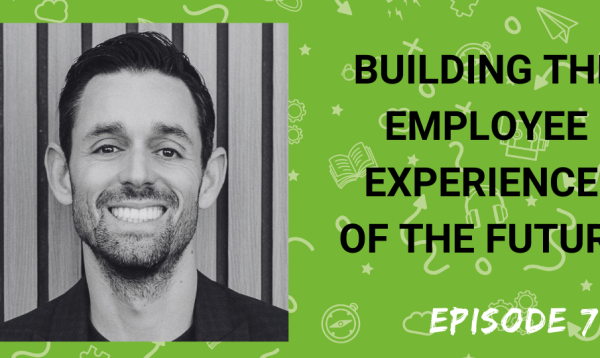
In this episode Matt Alder talks with Lars Schmidt of Amplify Talent
Employer branding is a much discussed and often much misunderstood topic. Over the last ten years the digital revolution has brought a significant shift in how companies are addressing the topic
In this interview Matt and Lars discuss what the modern definition of employer branding should be and how digital engagement and social media are driving thinking in this area. Lars also shares a case study about the work he has been doing with Hootsuite which embraces new technology to push the envelope on employer branding.
Transcript:
Matt Alder [00:00:00]:
Support for this podcast comes from Wreckfest 2. Wreckfest 2 is the in house recruitment festival of the summer with an incredible lineup of speakers and the biggest conversation of like minded recruiters in the world. Wreckfest 2 is taking place on July 9th aboard the HMS President in London. Get 50% off your ticket to the conversation right now by going to wreckfest2.com and using the discount code podcast.
Matt Alder [00:00:43]:
Hello and welcome to episode 17 of the Recruiting Future podcast. Employer branding is a topic that’s always fascinated me. I worked on my first employer brand project over 10 years ago now and since then it’s been very interesting to see how the Internet and social media in particular have made it critical for employers to evolve the approach they’re taking. My guest this week is Lars Schmidt. Lars has an interesting background as a practitioner in both recruiting and hr and he’s now working with his own clients at the leading edge of employer branding. Hi everyone and welcome to another Recruiting Future podcast interview. You. My guest today is Lars Schmidt. Hi Lars, how are you?
Lars Schmidt [00:01:29]:
Hey man, I’m doing great. How about yourself?
Matt Alder [00:01:31]:
Yeah, very good, very good. It’s, it’s Friday when we’re recording this and I think I’m very much looking forward to the, forward to the weekend. Could you just sort of tell everyone a little bit about you and your kind of story in terms of how you got to do what you do and, and what you’re doing, what you’re doing at the moment?
Lars Schmidt [00:01:53]:
Yeah, so I started my. I pretty much spent my entire career in recruiting in HR. I fell into it back in the late 90s really by accident, but ended up working for a good technical recruiting agency and from there went on to work at a startup out in Los Angeles and so got some experience inside and really kind of made the conversion at that point that I wanted to stay inside. And so then I spent the next seven years at Ticketmaster, probably in seven different jobs I think that time. But I left as a VP of hr, overseeing global HR and global recruiting and a few other areas. But from there I went on to another startup called Magento that was doing open source e commerce, then landed at National Public Radio in dc, which was a role running recruiting and innovation for them. That was a lot of fun. I did that for about three years and then left the corporate world to start my own firm, Amplify Talent. So I’ve been doing that for about a Year and a half now. And we mostly work with, kind of broadly speaking, we work with organizations that are looking to modernize how they go about recruiting. So that can mean a lot of different things for different companies. We still do a little bit of executive search as well, but primarily focused on the kind of consulting and strategy side.
Matt Alder [00:03:12]:
Cool. Fantastic. And NPR Radio, the home of many hit podcasts as well, must have been an interesting place to work.
Lars Schmidt [00:03:22]:
It was, yeah. It’s an interesting place to work when you, you know people initially from their voice. So you might be in an elevator and you hear somebody talking, you’re like, that’s Robert Siegel. Okay, so that was a unique experience of working in npr.
Matt Alder [00:03:38]:
Fantastic. Now, I know that you do a lot of work in terms of employer branding and you have some, I suppose what I describe some quite sort of contemporary approaches in terms of how you’re doing that and you’re working with some sort of pretty forward thinking organizations. How would you define employer brand? What does employer brand mean to you and the people that you’re working with?
Lars Schmidt [00:04:05]:
Yeah, I mean, to me, I think employer branding really at its core is how you’re conveying the employee experience. I should say, not necessarily how you convey. That’s how you kind of operationalize it. Employer branding itself is essentially the employee experience. What is it like to work at that organization? And that could be the culture, the people, the career path, the tools, the environment, the office space. All of those things collectively make up an employer brand. I think that where that’s kind of shifted over the last couple years from a recruiting standpoint is we’re much more aware of the kind of idea of an employer brand. And I think we’re much more aware of the need to have an active role in helping shape that in a real and authentic way. Because every organization has an employer brand, whether they’re consciously crafting it or not. But there’s a real opportunity for organizations, I think, that do take that time to try to shape that perception and do it in a real and honest way that shares the employee experience. I think that those are the organizations that tend to be a little stickier and both magnetic to the talent that they want, but also repelling the talent that can see an open and honest view of what that organization is like and decide that’s not for them.
Matt Alder [00:05:25]:
I think that’s a really sort of good definition. I think that when I sort of first got involved in employer branding projects, I can’t even think now. Sort of probably over 10, 15 years ago, it was very much about doing research, coming up with what really amounted is just a strap line about that company and sticking it on some posters or in some big press ads. I think it’s really interesting how probably the Internet and social media has now opened that up and made things more authentic. Has that been your experience as well?
Lars Schmidt [00:06:01]:
Yeah, absolutely. Employee branding isn’t new. Obviously you’ve been doing this back 10 or 15 years. I have as well. Earlier it was more about recruitment marketing and recruitment slogans and snazzy materials you can bring to conferences and maybe a good website. But I think the way that social has evolved, the way digital engagement has evolved, not even just from a recruiting perspective, but just how ubiquitous it’s become. Companies have so many different ways that they can convey that employer brand and convey that and kind of share that employee story with the world. So it’s so much more complex. But I think it’s also for people that kind of work in this space, it’s a really exciting time because really, employer branding is storytelling and there’s so many different vehicles and channels that you can use. And I think because it is this kind of iteration of employer branding, if you will, is maturing, but there’s still a lot of room to do things that haven’t been done before. So that kind of creative side of recruiting, that creative side of employer branding, there’s still a lot of opportunities there. And that’s one of the things that, for me, makes it really fun.
Matt Alder [00:07:16]:
Fantastic. And following on from that, I know that you’re doing some really interesting stuff with hootsuite at the moment. Could you sort of talk us through what that’s about? Maybe it might be a good place to start to actually tell people what hootsuite is if they’ve not used it. But it’d be interesting to know what. What it is you’re kind of doing with them.
Lars Schmidt [00:07:40]:
Sure, yeah. Hootsuite is the world’s largest social media management platform. I think over 400 of the Fortune 500 companies are using at an enterprise level, Hootsuite to manage their social media engagement and activity and metrics, but they actually have three different tiers. So there’s a free version that I think the vast majority of customers, and certainly kind of where I got my experience with hootsuite, there’s a pro version which is a little more feature rich, and then an enterprise version that most organizations at that Fortune 500 and kind of large scale use. The role there is really interesting. So for me, I’ve been a user of Hootsuite for years. I’ve been a fan for years, and particularly I’ve known their VP of talent, Ambrosia Vertesi, for probably four years now. And I’ve always admired her work. We met when I was at NPR and we hit it off because we were both in positions where we were leading teams of recruiting and HR respectively, but also really the kind of lead person championing the employer branding efforts. And so we really kind of connected on that level. And she has been doing amazing work at hootsuite and we had always talked about trying to find something to do together. And so when I left NPR and started Amplify Talent, obviously we had stayed in touch. And then the opportunity finally presented itself to join forces and have me come in as an employer brand strategist to really help HootSuite continue to push and extend their employer brand and also kind of be an internal evangelist within the team to help augment and support the work that Ambrosia has been doing. Because she has a very big job at this point. They’ve grown tremendously. There are almost 900 employees and she’s responsible for all of talent. So she has a lot on her plate. And so it’s an opportunity for me to come in and kind of help her and the team continue to push forward on employer branding. And so for me, it’s really, it’s a dream client because it’s a company that, it’s a product that I use, it’s a company that I admire. But also I think on the employer branding side, they’re very unique in the sense that they get it on every level. So most roles, and you’ve probably experienced this, you’re, you’re kind of having to advocate why employer branding is important and you’re making the case as you’re actually operationalizing it. The case is fully established there. So the mandate there is to really push the envelope and do new things. There isn’t much case making to be done, which makes it really unique and fun.
Matt Alder [00:10:13]:
That’s fantastic. I’m very jealous that you have a forward thinking client like that. Talking about pushing the envelope. What kind of things have you done? I know you’ve just done an interesting excerpt exercise using Periscope. Could you tell us a bit more?
Lars Schmidt [00:10:31]:
Yeah, that probably is a great illustration of what I mean by forward thinking. When Ambrosia and I were at south by Southwest in March, it was when Meerkat came out and we were having a conversation at talentnet around how we can use Meerkat for Employer branding and some of the different possibilities there. Then when I came on, it was about a week after Periscope had launched. We basically picked that conversation up again and said, how can we use Periscope in a meaningful way to share the employee experience at hootsuite and help people get a sense of our global scale and global operations. The timeline on this was something that was really fun to be a part of because we had that conversation on one day and we said, let’s do a campaign called Follow the Sun, where we will start with our operations in Singapore, and literally every hour on the hour, we’ll follow the sun around the globe and have a different employee from that local office, nine offices worldwide, do a live Periscope broadcast on what it’s like to work in that office. So that was the concept, literally. She pitched it to Ryan Holmes, their CEO, and the marketing. Within a day, we had the green light. They said, yep, let’s do it. And about a week and a half later, we actually executed it. So from conception to actually execution was maybe two weeks. And keep in mind, this is a platform that had only existed for a week at that point, and it was a global scale. We actually shared the Hootsuite Life Periscope account using LastPass. So it was a fairly complex thing. Many of the people that were broadcasting was the first time they’d ever used Periscope. So it was a pretty complex undertaking. But it worked and it was great and we had a lot of fun with it. So for me, that kind of. I mean, I’ve worked with other companies where you’re, you know, you’re working for months just to get the okay to launch a Twitter platform.
Matt Alder [00:12:26]:
Yeah, I suppose it’s important in the. In the space that they’re in, you know, being a social media and a technology company, that you can respond quickly to things like that. And that’s. I mean, that’s great. What kind of. What kind of came out of it, do you think, in terms of, you know, what was it driving? Was it numbers of viewers or response or what was the, you know, what were the kind of the metrics that you sort of found from it?
Lars Schmidt [00:12:52]:
Yeah, so it was a mix of a couple things. So it was viewers, it was follower growth. So I think globally, across all the broadcasts, we had, offhand, I want to say around 5,000 viewers around the world, we had, in terms of channel growth, we grew our Periscope Hootsuite Life Periscope account by 230 new followers. So that was another kind of intended outcome around letting people know, hey, we’re going to be using this for things and getting people to sort of building.
Matt Alder [00:13:25]:
A platform for the future.
Lars Schmidt [00:13:27]:
Exactly. So those were. The metrics, frankly, were a little softer on this. It wasn’t so much. There wasn’t a specific call to action around. Go to our career site now and apply. Frankly, that was one of the things that we missed. One of the other projects that we’ve launched there is a campaign called open source hr and the idea behind that is we want to what we’re calling kind of work out loud and show our work. And for projects like this, we’re going to write up case studies where we’re going to talk about things like where the idea came from, how we pitched it internally, how we executed it, what the expected outcomes were, what the actual outcomes were with metrics, but also what we got wrong. Yeah. So I think we missed an opportunity with that particular campaign to have a stronger call to action around jobs in the local market. I think that would, that would have been something that would have made this more directly impactful from a recruiting perspective.
Matt Alder [00:14:24]:
I mean, that’s a fantastic level of transparency and it’s not something that I think I’ve ever seen with any other company actually. So, yeah, that’s. I look forward to kind of seeing how that develops. That’s very interesting.
Lars Schmidt [00:14:39]:
Yeah, you can check. The full case study on the campaign is called Follow the Sun. So the full case study is on the HootSuite blog. It’s on the HootSuite SlideShare channel, and I have it on the Amplify Talent blog as well. But this kind of gives a sense of the format and flow for the case studies that we’ll put together. And really our view around this is people will look at a company like hootsuite and say, well, of course you can do campaigns like this because you’re a big global social media company. And they’re right. That certainly gives us some advantages. But I think from an openness and transparency standpoint, we want to be able to say, yeah, despite all of that, we’re still going to get things wrong and that’s okay. And I think that our hope deep down is that other companies will kind of be open to this open source HR approach and be willing to kind of share their work from an HR and recruiting perspective. Because I think the more organizations that are doing that and they’re being open and they’re being transparent, even with the things they’re getting wrong, the more it gives permission to somebody in a small to medium sized business somewhere in Manchester or Des Moines or wherever, who’s trying to make a case internally to do more employer branding or social HR or whatever the campaign might be in recruiting. Having some other organizations that are showing what they’re doing and even what they’re getting wrong, I think might help them make a better case.
Matt Alder [00:15:58]:
Absolutely. I think it’s. Yeah, I couldn’t agree with that. Couldn’t agree with that more. Just sort of last question. Just kind of thinking about the future of all this. So in the previous podcast to this one, I was talking to Mat Charney and he was getting very excited about the possibilities of recruiting and Oculus Rift, you know, virtual reality. And obviously that’s now literally launched either yesterday or today. I’m not quite sure, you know, but they’ve, you know, they’ve kind of announced that it’s. That it’s. That it’s coming out to the, to the public. What are your thoughts? Is that, is that a possibility? Is it a red herring or, you know, does the future of all this stuff lie in a different direction?
Lars Schmidt [00:16:46]:
You know, I think that that’s. It’s kind of funny when you think about the future of all these things. There’s so many different directions. I mean, you could pick almost any new platform and say, how can we leverage this for employer branding? And you’ll find some way to use it. I mean, virtual reality and Oculus Rift could be massive. You could do really interesting things like have a day in the life of somebody doing that job and have somebody sit in or a tour of the office where you’re literally walking through the entire offices around the world. I mean, there’s lots of ways you can use that. I imagine a barrier might be. Somebody needs to have the hardware to experience that. That’s certainly a hurdle to overcome, but there could be incredible options with that. But that’s kind of what I think is really exciting about the space, is there’s at the pace of technology evolving and scaling and growing and new types of platforms. I mean, Meerkat and Periscope aren’t new. You know, live broadcasting. You know, apps to do that were existed four years ago, but the market wasn’t ready for them then, you know, so.
Matt Alder [00:17:48]:
Yeah, yeah, exactly. I think, I think that that could be the same with Oculus Rift as well. Because of course, a lot of the things that people are thinking of in terms of recruitment were things that people tried in Second life ten years ago, so. Right, yes. No, very interesting, Lars. Thank you very much for talking to me.
Lars Schmidt [00:18:07]:
Yeah, it’s been a pleasure. I enjoyed it. Matt.
Matt Alder [00:18:10]:
My thanks to Lars there. You can subscribe to this podcast in itunes or Stitcher. You can listen to past episodes and read show notes@www.rfpodcast.com and also subscribe to the mailing list there to get exclusive content and find out more about future guests. Thanks for listening. I’ll be back next week and I hope you’ll join me.